Tell us about the job
Takes about a minute. No obligation.
A contractor quoting central AC in Essex County has to settle a prior question before sizing equipment or pulling permits: whether the house actually needs it. Homes in Essex County, NY have essentially no cooling season — no month of the year is warm enough to call for it. A compressor that never runs accumulates a different kind of failure than one that runs hard. Seals dry, refrigerant circuits lose integrity during long idle periods, and the first call for cool air after years of dormancy lands on a system nobody has checked. The install still has to be done right if it goes ahead, because a poorly charged or undersized system finds its faults faster in a house that runs the equipment rarely and hard when it does.
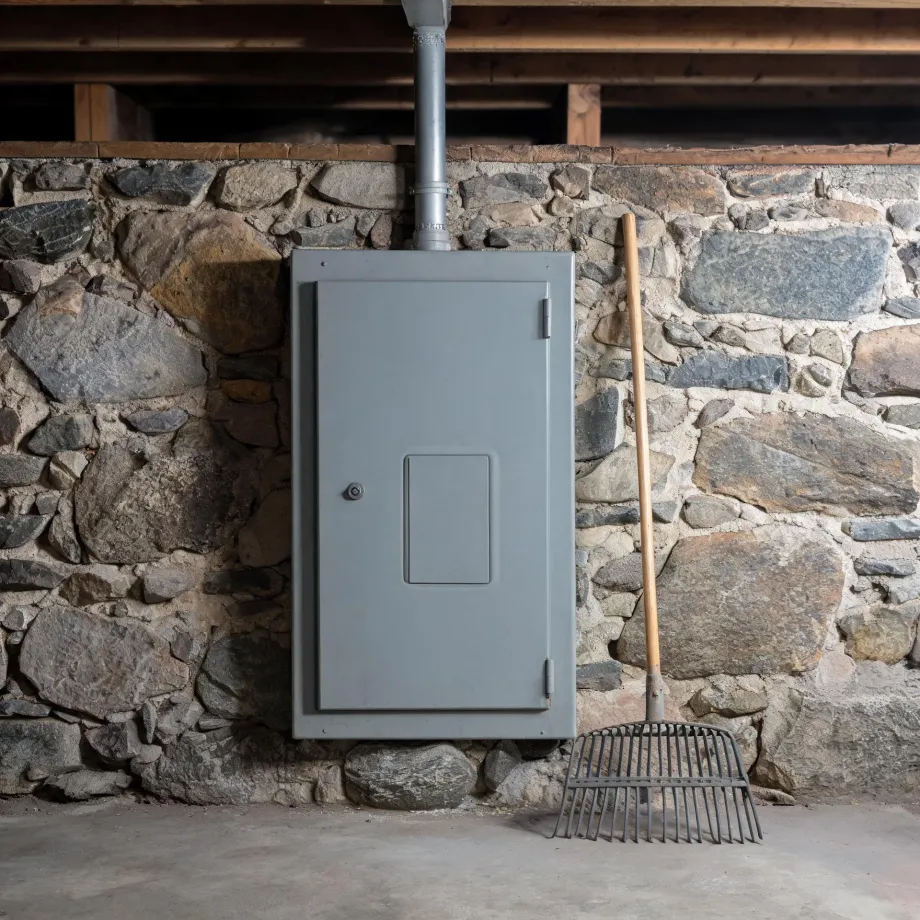
Ductwork laid out for a furnace and a wood stove does not automatically carry a central AC system. The routing, the sizing, and the static pressure all get checked before a contractor can commit to a scope. Half the homes in Essex County, New York were built in 1969 or earlier (2020-2024 ACS 5-year). That history shows up in the crawl spaces and attic runs: ducts sized for heat delivery, not cooling distribution, and service panels that may need assessment before a new unit can be connected. The electrical load a modern central AC draws is the second variable a contractor works through, and in stock this age it is rarely a formality.
What Gets Installed With a New Central AC
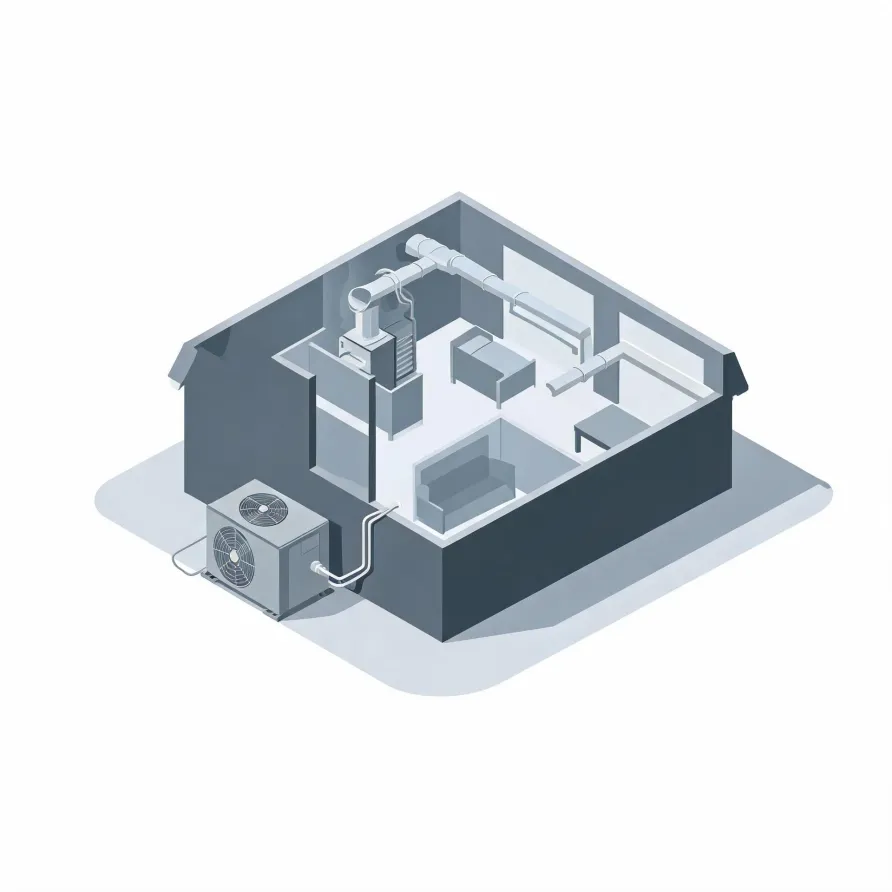
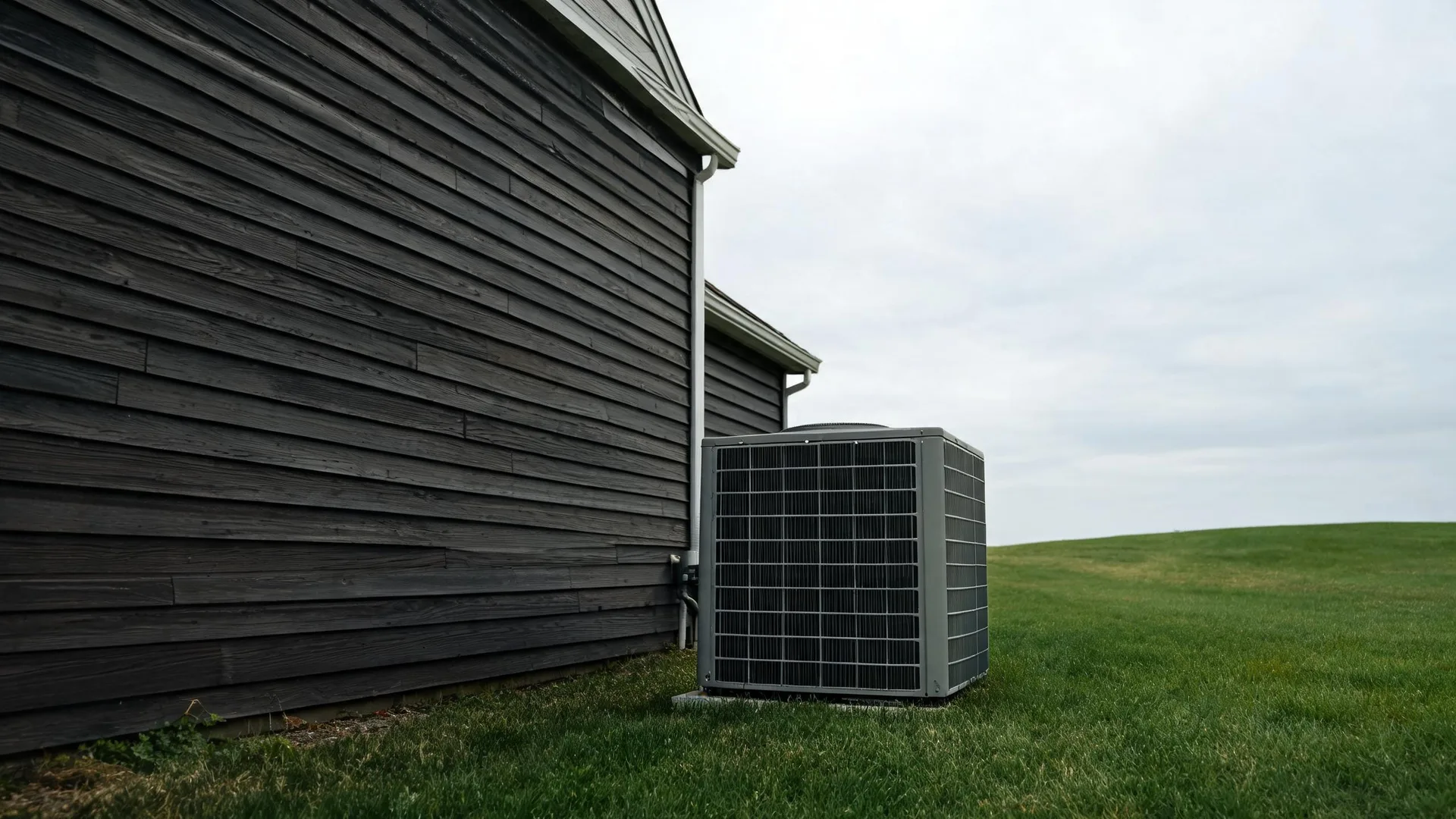
The outdoor condenser unit sits on a concrete pad beside the house and holds the compressor and condenser coil, the two components that shed heat to the outside air. Inside, the air handler mounts in a utility space, basement, or closet and pushes conditioned air through the home. These are the two primary pieces a contractor sets in place.
The refrigerant line set runs between the outdoor unit and the air handler, connecting the two halves of the system through a small penetration in the wall. A thermostat goes on an interior wall where it can read the home's ambient temperature and signal the system to run.
The drawing shows a typical layout, and a licensed contractor determines exactly how each piece fits the structure of your house.
Get matched in Essex CountyEssex County, New York, by the numbers
182 severe weather events were recorded in Essex County, New York between 2015 and 2024.
NOAA National Centers for Environmental Information, Storm Events Database, bulk CSV export, events 2015-01-01 through 2024-12-31.Half the homes in Essex County, New York were built in 1969 or earlier (2020-2024 ACS 5-year).
U.S. Census Bureau, 2020-2024 American Community Survey 5-Year EstimatesEssex County, New York holds 25,484 housing units (2020-2024 ACS 5-year).
U.S. Census Bureau, 2020-2024 American Community Survey 5-Year EstimatesOwners occupy 77.3% of the occupied homes in Essex County, New York (2020-2024 ACS 5-year).
U.S. Census Bureau, 2020-2024 American Community Survey 5-Year EstimatesRules & Standards Governing Central AC Installation in Essex County, New York8 sourced rules and standards
What the Installation Actually Looks Like
Split-system central air conditioners rated below 45,000 Btu/h manufactured on or after January 1, 2023 must meet a federal minimum of 13.4 SEER2.
Split-system central air conditioners rated at or above 45,000 Btu/h manufactured on or after January 1, 2023 must meet a federal minimum of 13.4 SEER2.
Split-system central air conditioners manufactured between January 1, 2015 and December 31, 2022 had to meet 13 SEER, the metric that preceded SEER2.
Single-package central air conditioners manufactured on or after January 1, 2023 must meet a federal minimum of 13.4 SEER2.
Space-constrained central air conditioners manufactured on or after January 1, 2023 must meet a federal minimum of 11.7 SEER2.
Federal efficiency standards for split-system central air conditioners and heat pumps are set on each certified combination of outdoor unit and indoor coil rather than on the outdoor unit alone.
Residential and light commercial air conditioning and heat pump systems assembled in the field, including mini-splits and unitary systems, may not be installed on or after January 1, 2025 using a refrigerant with a global warming potential above 700.
A field-assembled system whose specified components were all manufactured or imported before January 1, 2025 carries no installation compliance date under the refrigerant restrictions and may still be installed.
Severe Weather Events in Essex County
Weather puts a measurable load on cooling equipment, and that load is shaped by what actually happens in a given place. Knowing the local pattern is part of sizing and installing central AC that holds up over time.
182 severe weather events, 2015–2024. Source: NOAA National Centers for Environmental Information, Storm Events Database.