
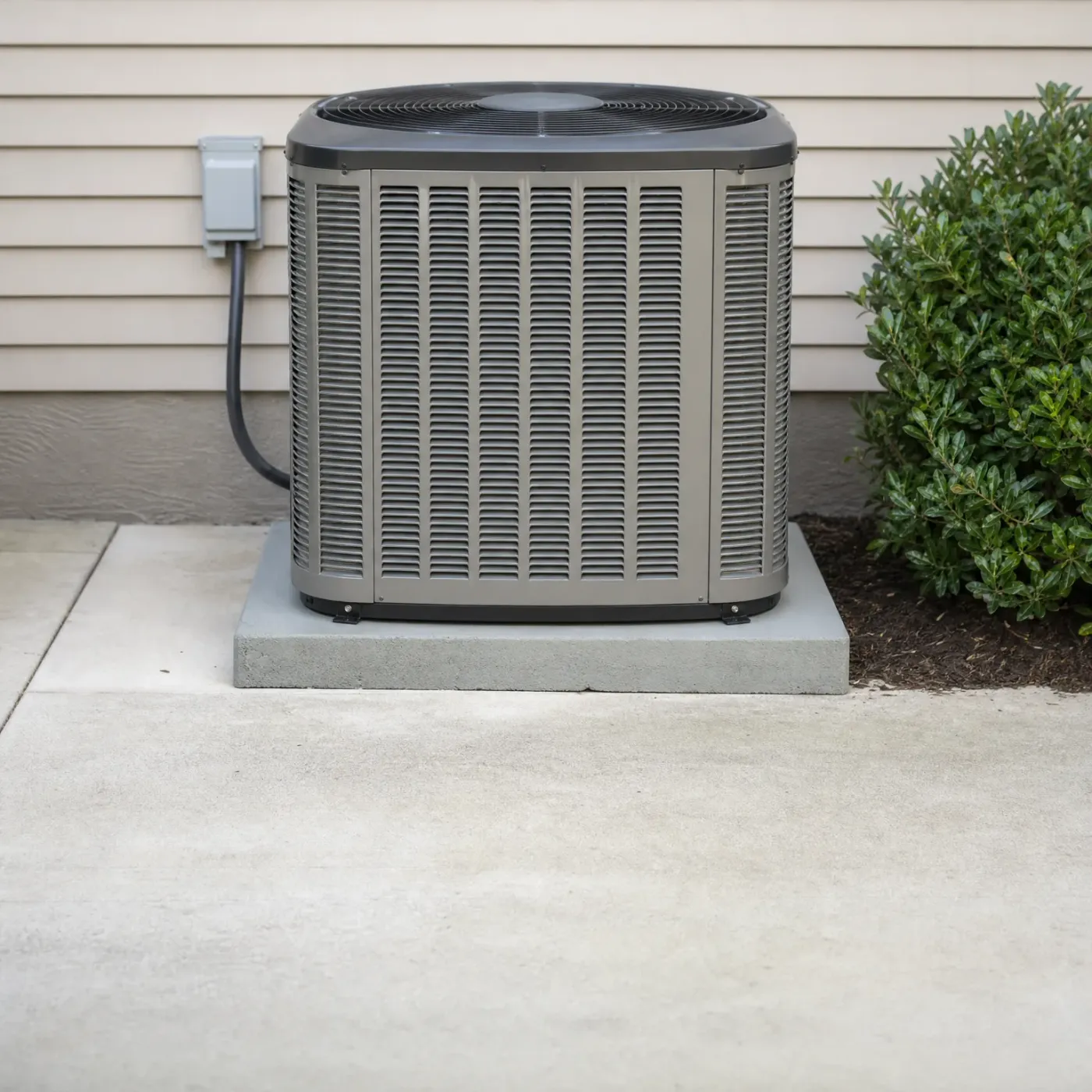
Clean and clear
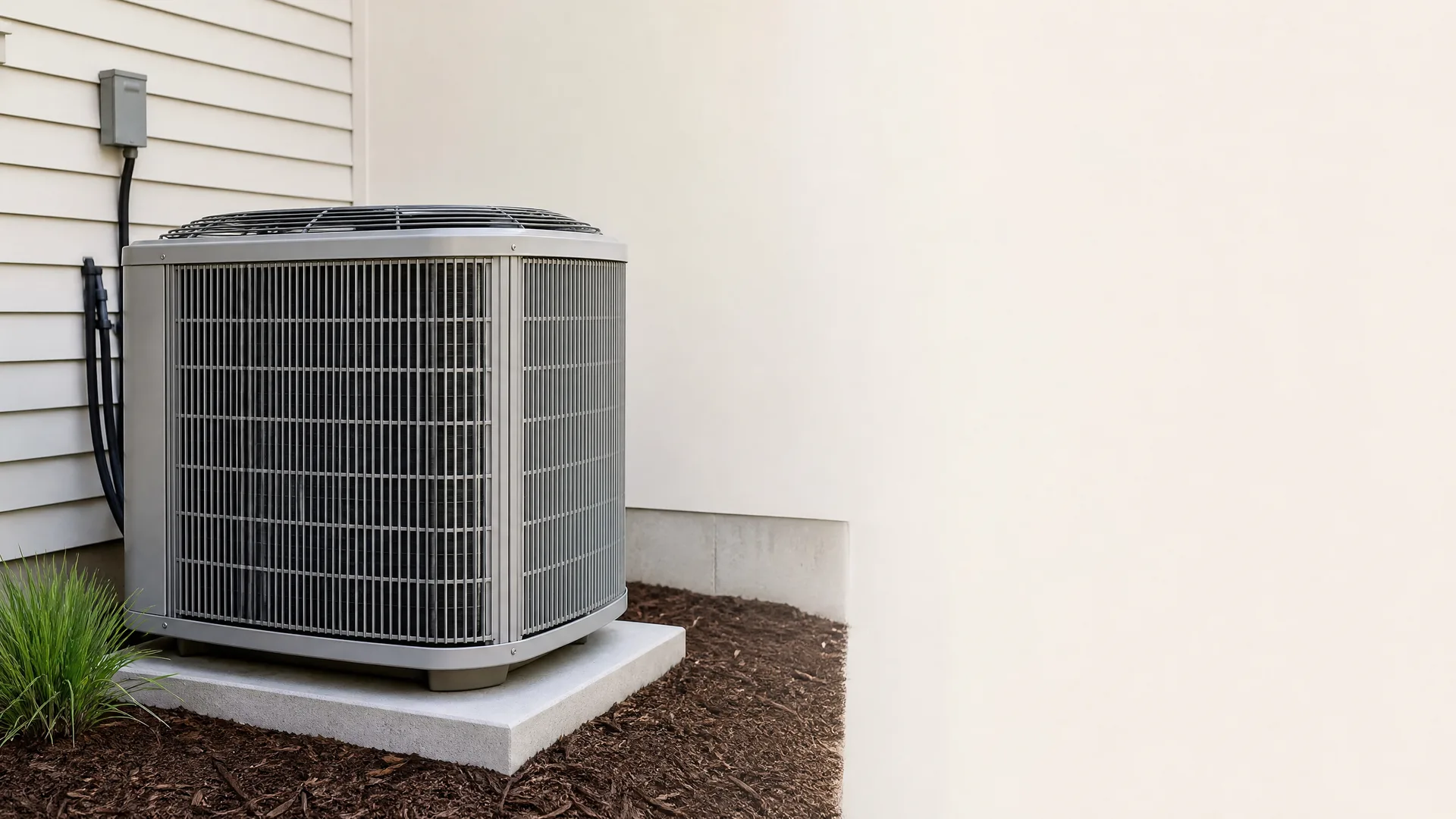
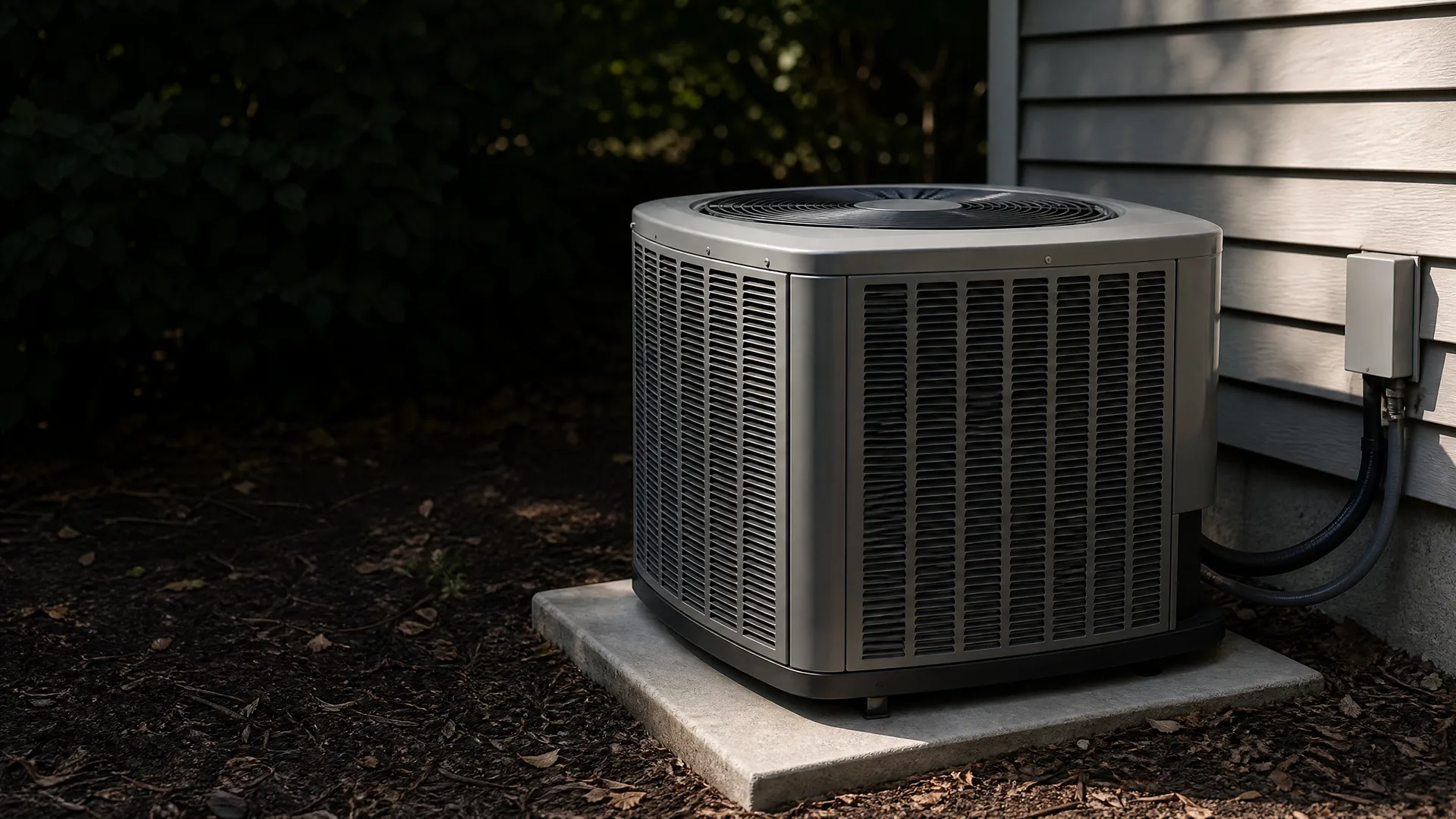
This condenser sits out in the open, with a few inches of space on every side. Air moves through the coil and up through the fan without any fight. It cycles on, does its job, and shuts off when the thermostat is satisfied.
Get matched with an air conditioner pro in New York County
Your AC is running but the air coming out isn't cold, or it's not running at all, and in a Manhattan summer that's not something to sit with. This page walks through what usually causes it, from a thermostat setting to a bigger problem in the system itself, and points you to a contractor who can get eyes on your unit.
Find an air conditioner proWhen your AC runs but doesn't cool, the problem is usually one of three things: the thermostat is set wrong or not reading the room right, the outdoor unit is dirty or blocked and can't release heat, or the system is low on refrigerant from a leak. A dirty air filter can also choke airflow enough that the air coming out feels weak or warm even though the system is working. If the unit isn't running at all, it could be something electrical, like a tripped breaker or a bad capacitor. A system that's low on refrigerant won't fix itself, and running it that way can damage the compressor over time, which is the most expensive part to replace. In a Manhattan summer, with the heat and humidity both working against you, figuring out which of these it is matters for how soon you get the house comfortable again.




Most of these problems start small and build. A dirty outdoor coil can't shed heat the way it should, so the compressor runs longer to do the same job, and eventually it falls behind. Low refrigerant is never just low, it leaked out somewhere in the copper lines, and the system will keep losing charge until that leak is found and sealed. Airflow problems move the other direction, inward. A clogged filter cuts off air to the evaporator coil, the coil gets too cold, and ice builds up on it until no air can pass through at all, sometimes for hours before it clears. Water causes its own shutdown. The condensate line drains moisture off that coil, and if it clogs, a float switch notices the backup and cuts power to the whole system on purpose, before it floods. And a capacitor that's starting to go won't always fail outright. It can let the fan or compressor struggle to start, so the system runs rough, or short cycles, or just doesn't start at all.
A unit that runs without cooling isn't resting, it's working at full draw and getting nowhere, and that shows up on a power bill in a city where electricity already costs more than most places. If you're on a top floor or an upper unit in an older building, that heat has nowhere to go once the compressor falls behind, and the apartment can still feel warm come evening even with the system running since morning. Some of these problems get worse the longer they sit. A refrigerant leak doesn't seal itself, and a compressor run low on charge for weeks can take damage that a same-week repair would have avoided. A frozen coil is the same story in a different direction: ice builds, then melts, and what melts has to go somewhere. Past a certain point that's water on the floor or coming through a ceiling below, not just a puddle in a drain pan. Outdoor space in Manhattan is often tight, a courtyard, a gap between buildings, a spot crowded by someone else's storage, and a condenser boxed in like that can't push heat out no matter how long it runs or how low the thermostat is set. None of this means the system is ruined. It means the strain is real, and it's the kind that shows up in the electric bill before it shows up as a unit that won't start at all.


A heat wave in Manhattan doesn't wait for a good time to show up, and neither does a dead AC. Once you've ruled out the thermostat, you're looking at a dirty condenser, a refrigerant leak, or a frozen coil, and none of those are things you fix by waiting another day. Finding someone to look at it usually means searching, calling a few places, explaining the same problem over and over, then sitting with quotes trying to guess who's worth the money. That's the part worth skipping. Tell this page what your system is doing and a licensed contractor who works on AC systems like yours in Manhattan will reach out directly, so you're not the one chasing down help while the apartment sits warm.
Your indoor unit depends on steady airflow across the evaporator coil to pull heat out of the air. A clogged filter, a closed vent, or furniture blocking a return can slow that airflow enough that the coil gets too cold and ices over. Once ice forms, it blocks the air path further, and the problem feeds itself. Checking the filter is the one step you can do before calling anyone.
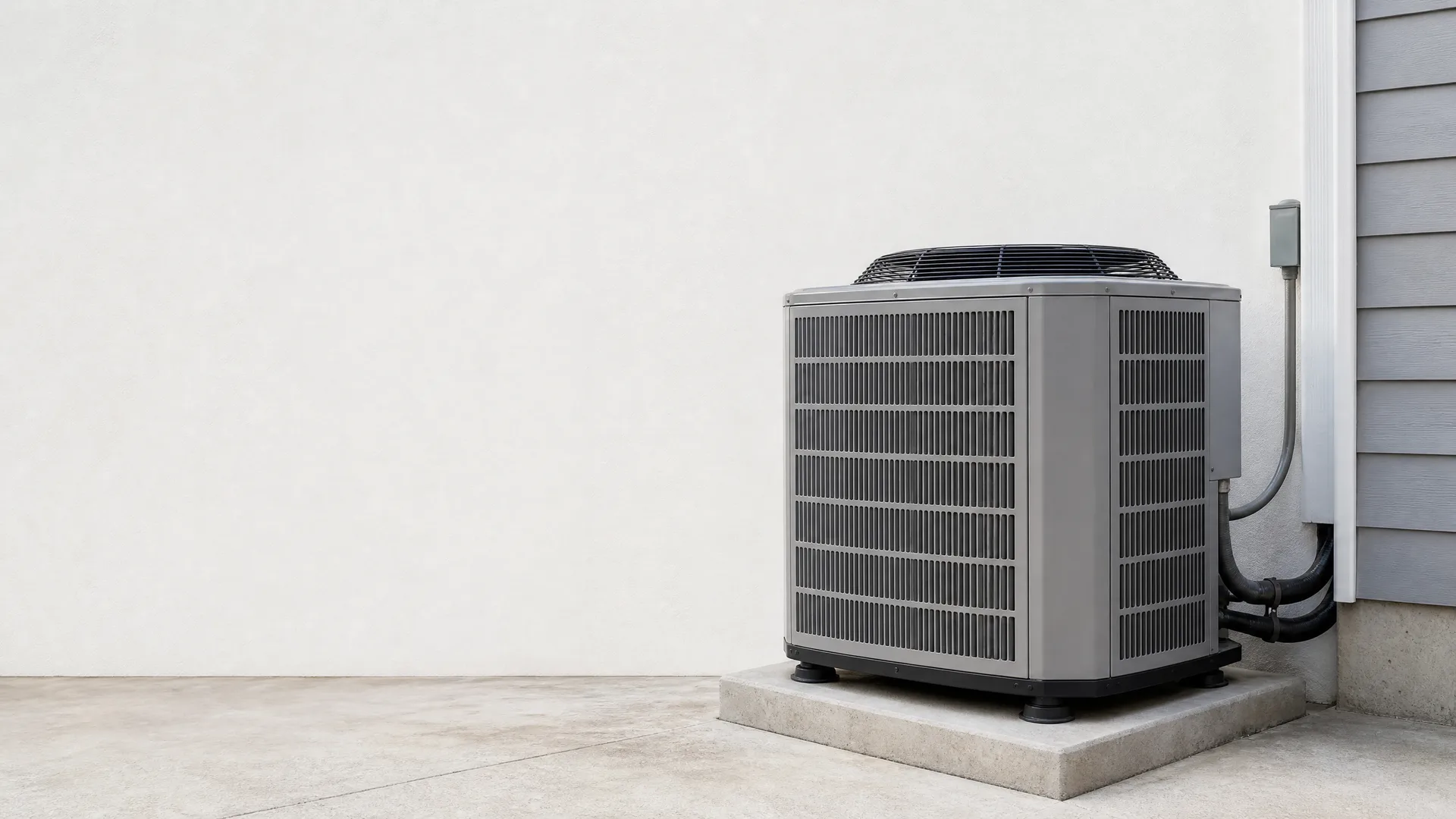
The compressor is what moves refrigerant through the system, and it works harder when the outdoor coil is dirty or when the charge is low. In either case it runs longer to do less cooling, which is why a struggling AC often runs close to nonstop in a Manhattan summer without bringing the apartment down to the set temperature. A compressor that keeps working under those conditions wears down faster over time.
Why is my AC blowing warm air instead of cold?
You set it to 70 and warm air still comes out of the vents, so something past the thermostat is wrong. Inside, your air handler pulls heat out of the air and the outdoor unit releases it outside. If that outdoor unit is dirty or boxed in by a fence or mulch, the heat has nowhere to go and the air coming back inside stays warm. The other common cause is refrigerant. If the system has a leak, there's less of it moving through the coil, so the coil can't pull much heat out of the air passing over it. Either way, the fan keeps blowing. It's just blowing air that never got cooled.

New York County summers average a dew point of 62°F across June, July and August, according to NOAA climate data. That's the kind of air that feels heavy even standing still. Your AC has to pull more moisture out of the air before the room feels cool, and that's extra work on top of just dropping the temperature. A system that's already struggling, whether from a dirty coil or a refrigerant leak, runs longer in air like this and still falls behind. You'll notice it as a room that stays sticky even when the thermostat says you've hit your set point.
NASA POWER T2MDEW
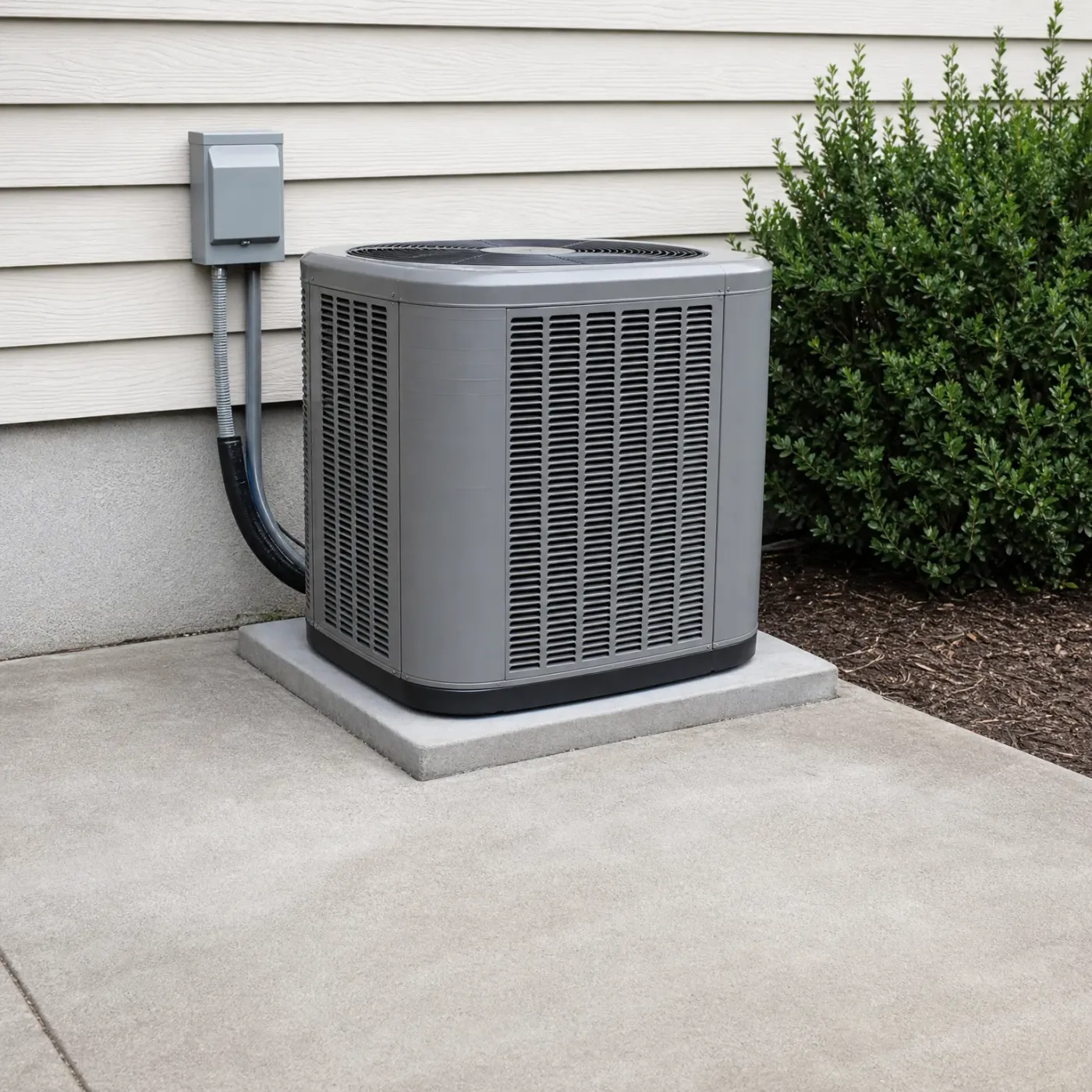
Warm indoor air passes over the evaporator coil inside your home.
Refrigerant inside that coil absorbs the heat and turns to gas.
A line carries the gas out to the compressor outdoors.
The compressor squeezes the gas until it gets hot and dense.
Four months is all your AC gets off the bench here, June through September, and it has to work the whole stretch. When it quits in the middle of that run, there's no mild stretch coming to bail you out, just more hot weeks ahead.
NOAA nClimDiv 1991-2020
This condenser sits out in the open, with a few inches of space on every side. Air moves through the coil and up through the fan without any fight. It cycles on, does its job, and shuts off when the thermostat is satisfied.
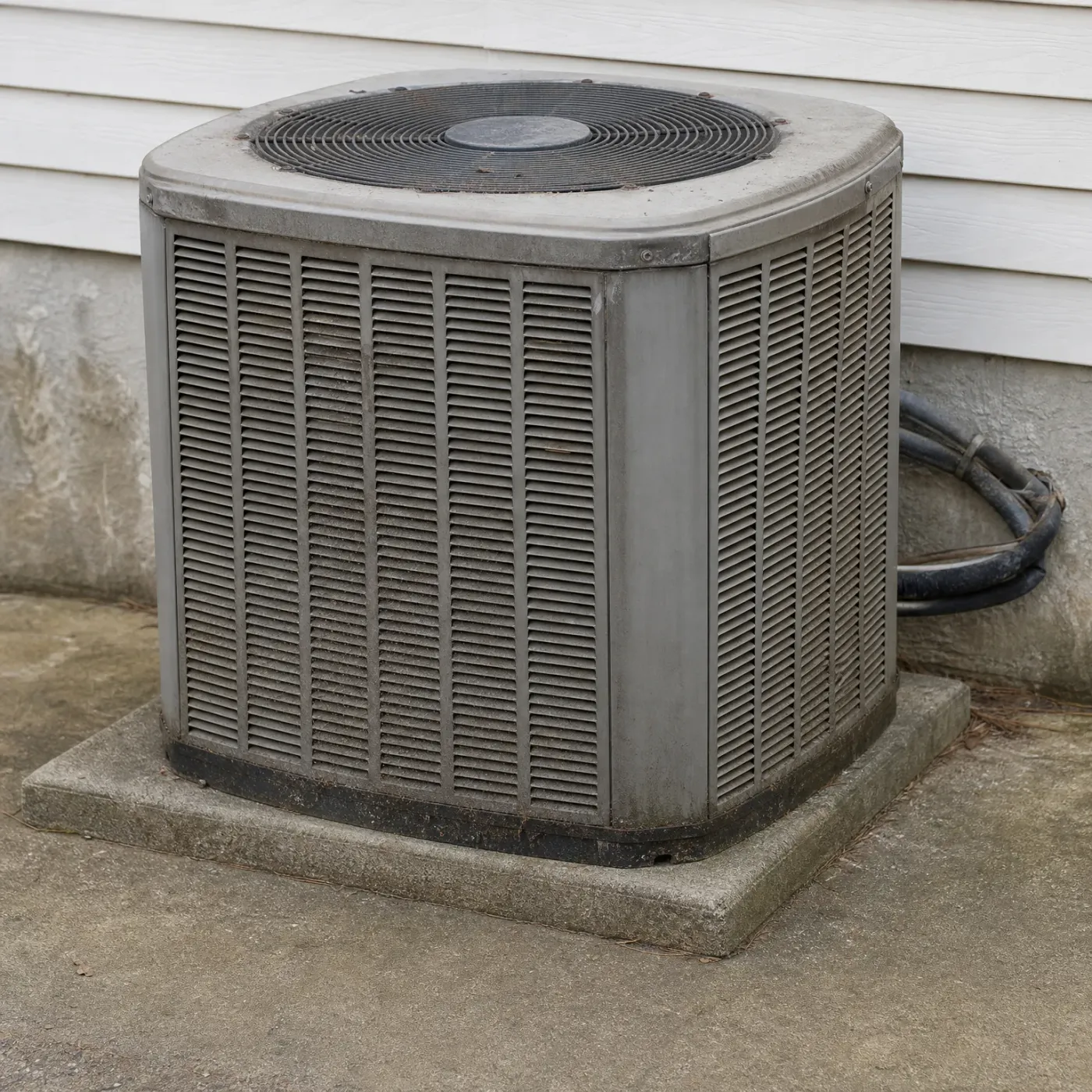
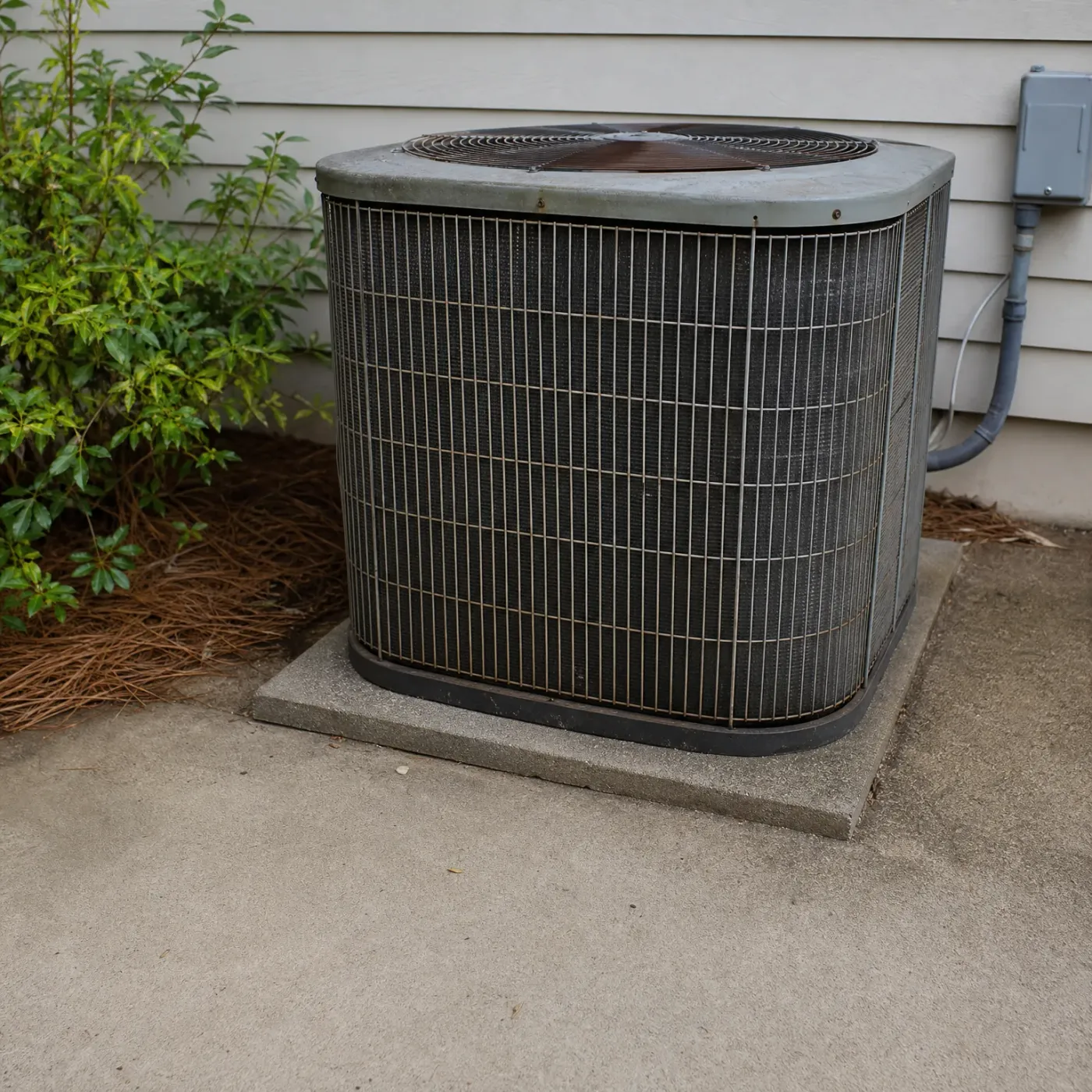
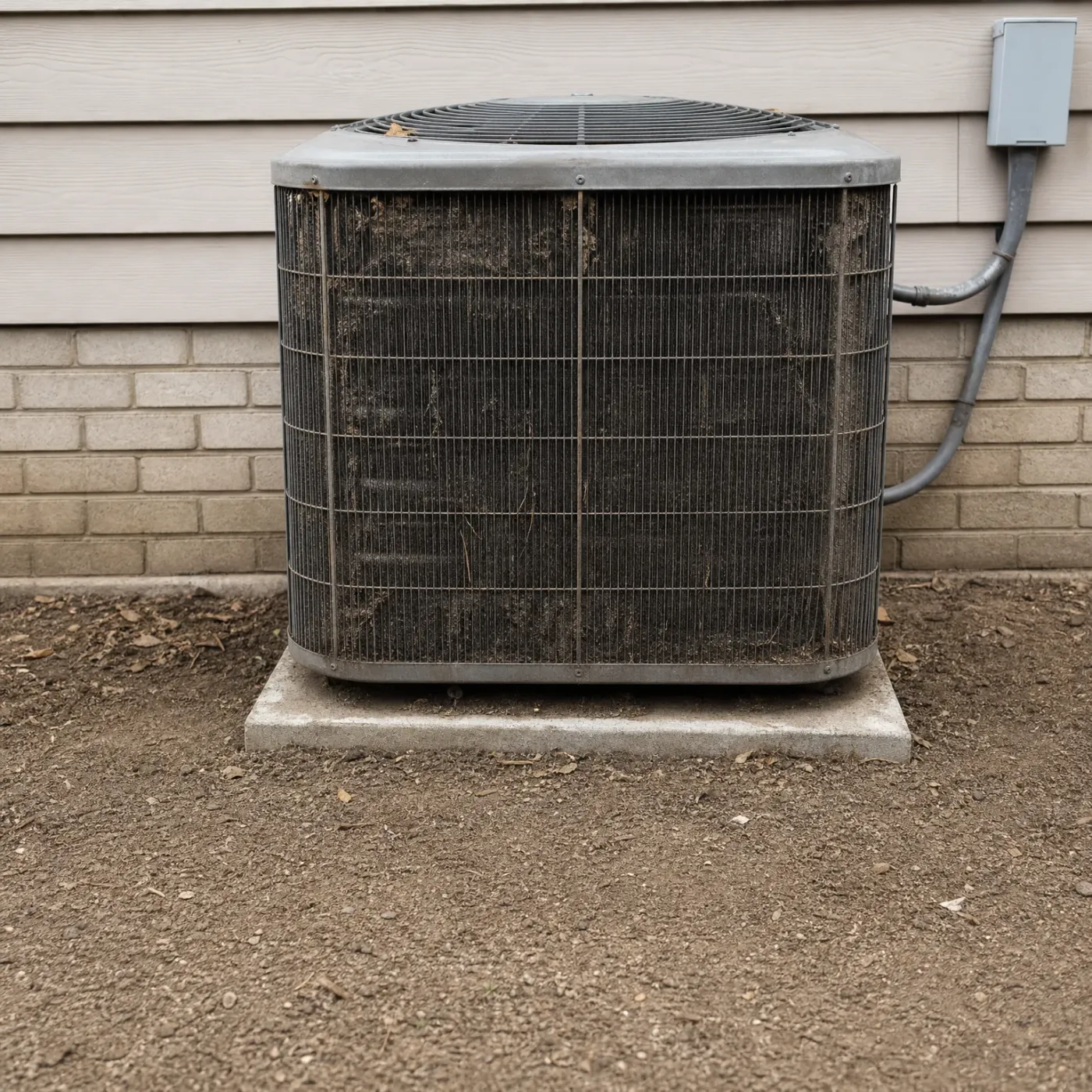
This unit's louvers are caked with grime and the top grille is thick with dust. The lines at the back still carry refrigerant, but the coil underneath can't shed heat the way it needs to. It runs longer and cools less.

A thermostat that's reading wrong, a condenser that's caked with grime, a coil frozen over from weak airflow, refrigerant leaking out of the lines. Those are the places this kind of problem comes from, and each one needs a different fix. None of them get better by waiting through another hot week.
Finding a contractor who'll actually look at your unit, show up, and explain what's wrong in plain terms takes time most people don't have when the apartment's already warm. You can skip the calling around and the comparing of quotes. Answer a few questions about your system and you'll be matched with a contractor who handles this kind of repair and reaches out to you directly.

Get the right pro for your air conditioner