Tell us about the job
Takes about a minute. No obligation.

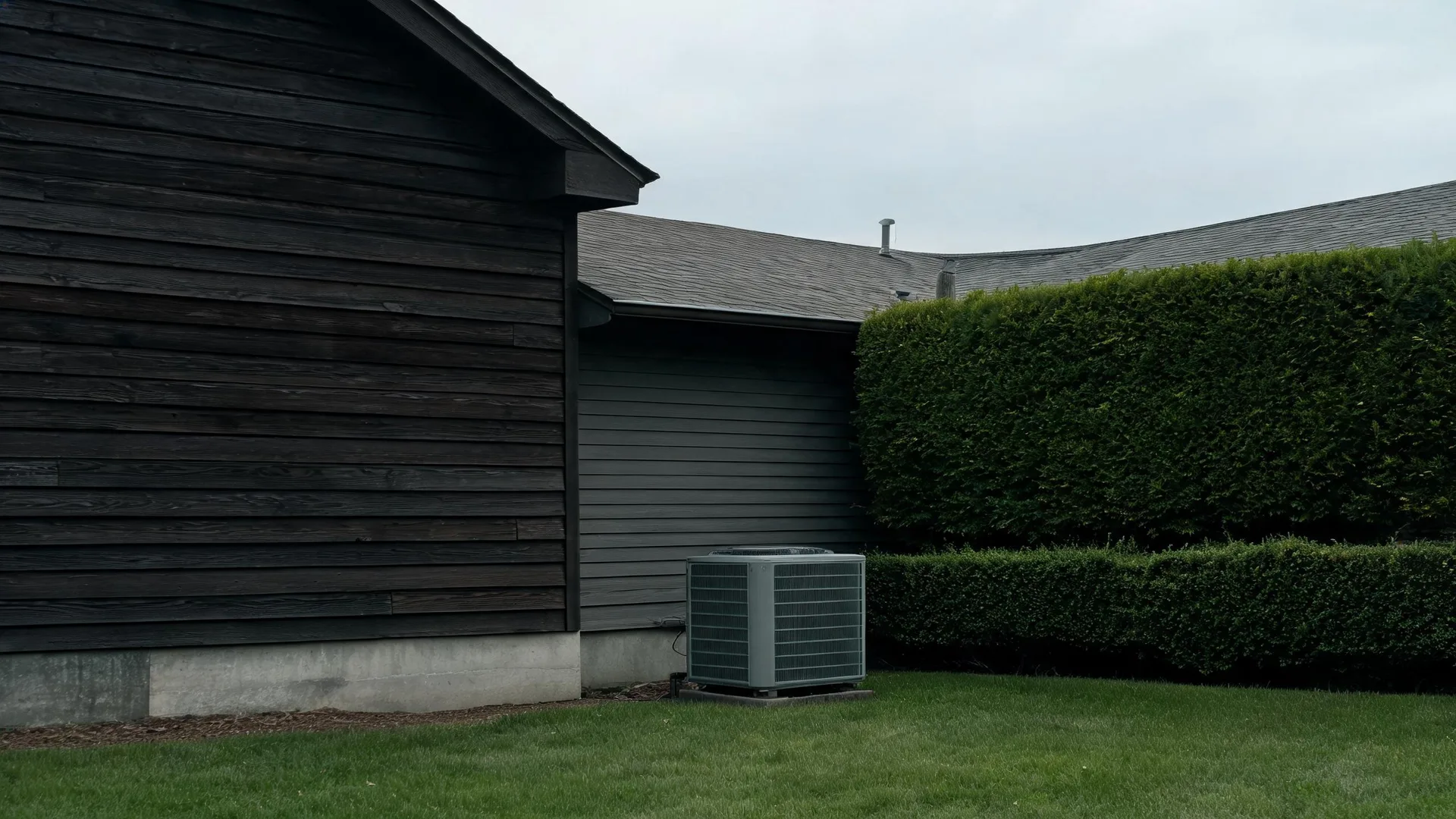
Central AC in Albany County sits idle for most of the calendar year, which means a failed compressor or a seized contactor has usually been building toward that failure across multiple summers rather than one hard week. Homes in Albany County, NY run cooling in a single month of the year, July. A contractor diagnosing a repair here checks the compressor windings and the contactor contacts for cumulative heat damage before pricing anything else, because the short annual run does not eliminate wear on those parts, it just concentrates it into a narrow window that repeats. Faults that develop slowly through start-stop cycling stay hidden until the first hot day, and by then the underlying cause is often seasons old.
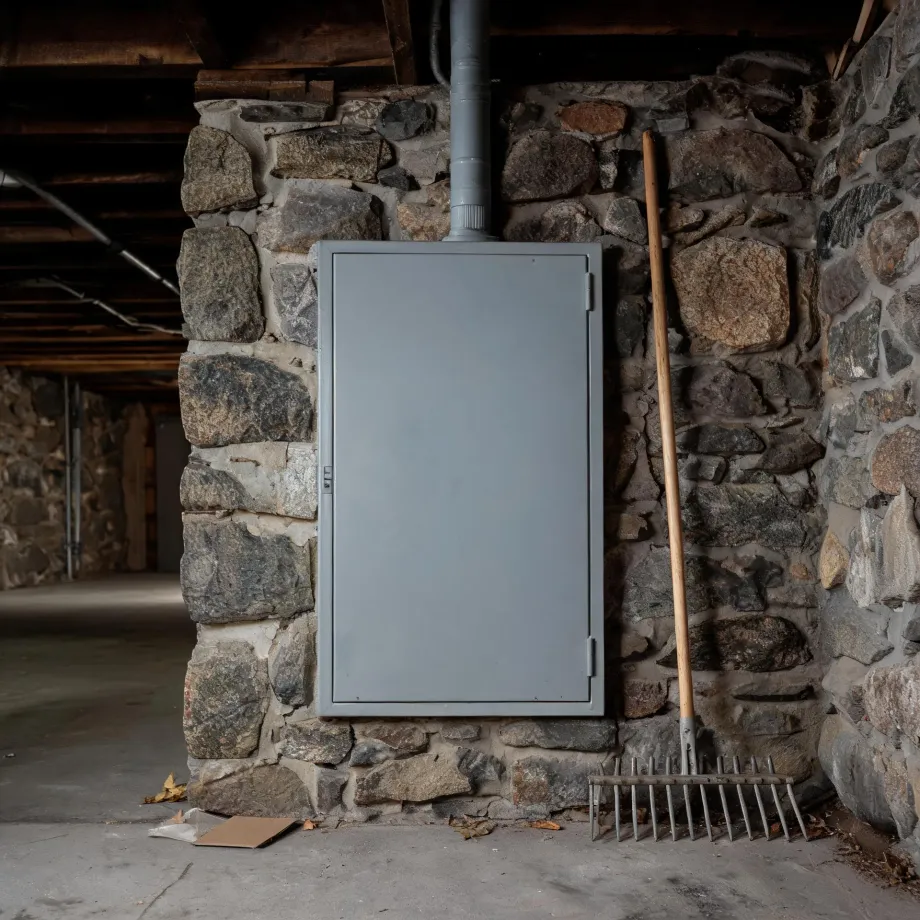
Ductwork laid down for one generation of equipment and then left in place as systems came and went does not always move air the way a current central AC unit needs it to. Half the homes in Albany County, New York were built in 1964 or earlier (2020-2024 ACS 5-year). A contractor opening a system here has to account for that gap: what the ducts actually deliver, where they restrict, and whether what they find inside the air handler reflects a single aging failure or something the distribution side has been forcing on the equipment for years. That distinction changes what gets replaced and what gets left alone.
The Parts of a Central AC a Contractor Checks First
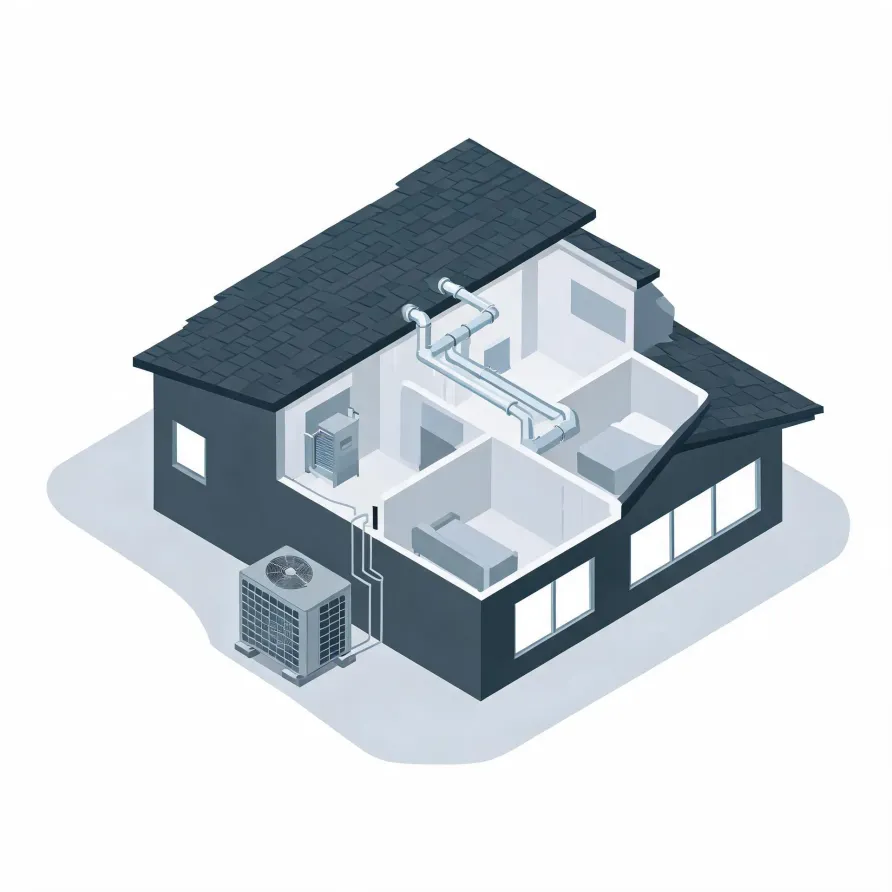
The outdoor condenser unit sits outside the house, usually on a concrete pad along an exterior wall, and it carries the compressor and the condenser coil. These are the pieces a contractor reaches first when the system stops cooling, because the compressor is what drives the whole cycle and the condenser coil is where heat has to go.
Inside, the air handler holds the evaporator coil and the blower. The evaporator coil sits in the airstream above the furnace or in a dedicated cabinet, and the blower pushes conditioned air through the house. A refrigerant line set runs between the two units, and a contractor checks that connection as well as the expansion valve that controls refrigerant flow into the coil.
The drawing shows a typical layout, and a licensed contractor determines what applies to this particular house and system.
Get matched in Albany CountyAlbany County, by the numbers
435 severe weather events were recorded in Albany County, New York between 2015 and 2024.
NOAA National Centers for Environmental Information, Storm Events Database, bulk CSV export, events 2015-01-01 through 2024-12-31.Half the homes in Albany County, New York were built in 1964 or earlier (2020-2024 ACS 5-year).
U.S. Census Bureau, 2020-2024 American Community Survey 5-Year EstimatesAlbany County, New York holds 147,662 housing units (2020-2024 ACS 5-year).
U.S. Census Bureau, 2020-2024 American Community Survey 5-Year EstimatesOwners occupy 56.6% of the occupied homes in Albany County, New York (2020-2024 ACS 5-year).
U.S. Census Bureau, 2020-2024 American Community Survey 5-Year EstimatesCodes & Licensing Rules for Central AC Repair in Albany County, New York8 sourced rules and standards
What HVAC Repair Looks Like in Albany County
Split-system central air conditioners rated below 45,000 Btu/h manufactured on or after January 1, 2023 must meet a federal minimum of 13.4 SEER2.
Split-system central air conditioners rated at or above 45,000 Btu/h manufactured on or after January 1, 2023 must meet a federal minimum of 13.4 SEER2.
Split-system central air conditioners manufactured between January 1, 2015 and December 31, 2022 had to meet 13 SEER, the metric that preceded SEER2.
Single-package central air conditioners manufactured on or after January 1, 2023 must meet a federal minimum of 13.4 SEER2.
Space-constrained central air conditioners manufactured on or after January 1, 2023 must meet a federal minimum of 11.7 SEER2.
Federal efficiency standards for split-system central air conditioners and heat pumps are set on each certified combination of outdoor unit and indoor coil rather than on the outdoor unit alone.
Residential and light commercial air conditioning and heat pump systems assembled in the field, including mini-splits and unitary systems, may not be installed on or after January 1, 2025 using a refrigerant with a global warming potential above 700.
A field-assembled system whose specified components were all manufactured or imported before January 1, 2025 carries no installation compliance date under the refrigerant restrictions and may still be installed.
Severe Weather Events in Albany County
Albany County weather puts real load on central AC systems, and that load shortens the life of components and raises the likelihood of a breakdown. Repair needs here are shaped by local conditions, which is why that history is worth seeing.
435 severe weather events, 2015–2024. Source: NOAA National Centers for Environmental Information, Storm Events Database.