

Call around yourself
You'd be checking licenses, explaining the same symptoms to three different companies, then comparing quotes that aren't really for the same work.

You want the house cool and ready once the heat sets in, not an AC that quits on the first 90 degree day with every repair shop in Queens already booked solid. Picking the right week to get it looked at matters more than most people think.
That window works because your AC has sat unused since last fall, and a system that's been idle for months is exactly when a weak capacitor or a low charge shows up once it's asked to run again. Queens summers turn sticky fast, often by May, and once that happens every contractor in the area is working emergency no-cool calls first. A tune-up booked in early spring gets a technician out on a day that works for you, with time to order a part if something needs replacing. Wait until July and you're calling around during a heat wave, hoping someone has an opening before the weekend.
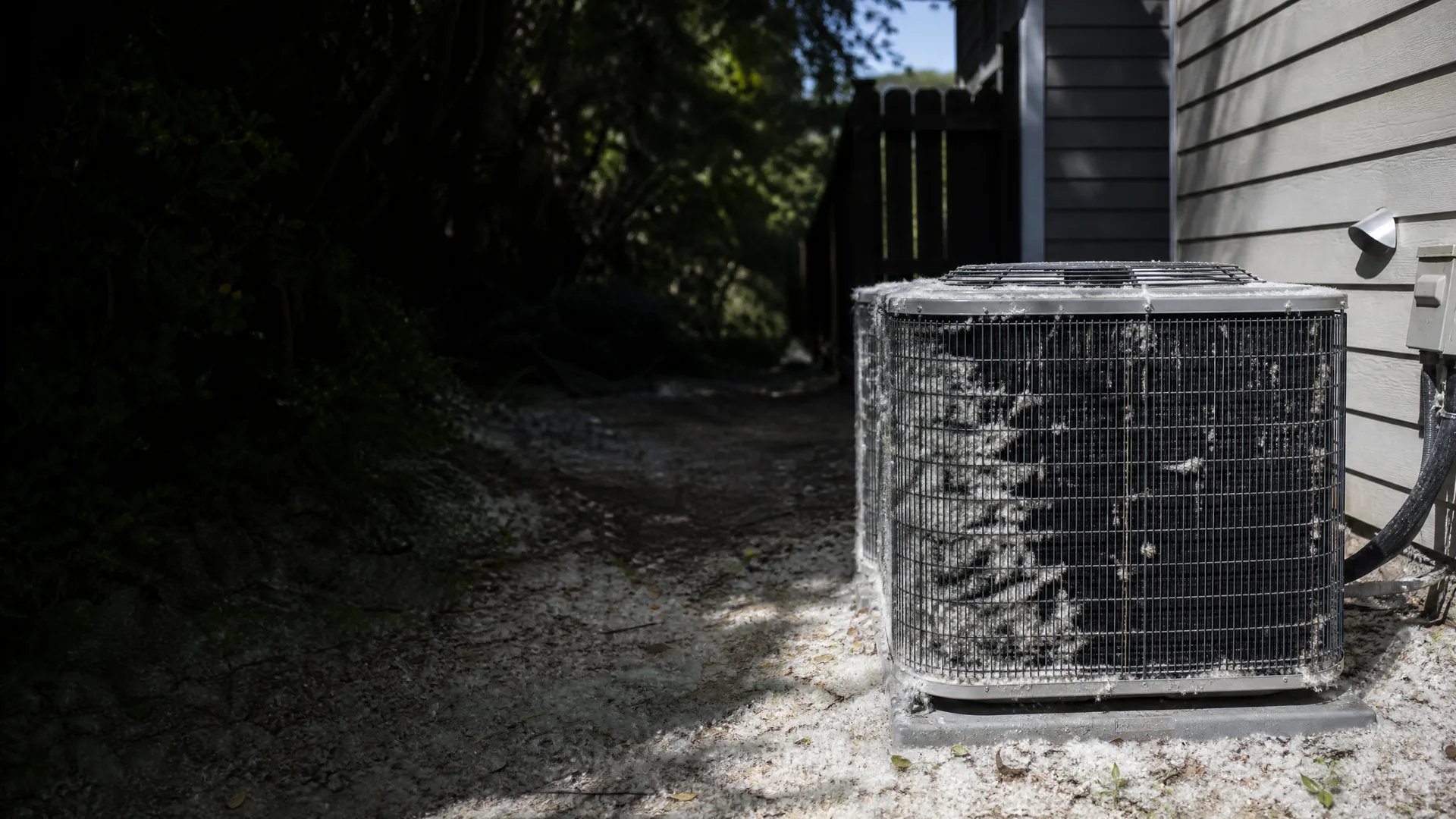
You're out back in late May, coiling the hose, when you notice the condenser against the fence looks wrong. The fins are packed with white fluff, the cottonwood seed drifting off the trees this time of year, thick enough that you can't see the metal underneath. It's caught in the mesh like lint in a dryer trap. You run a finger across it and it just packs in tighter. The unit hasn't even run a full cycle yet this year, not with the mild stretch Queens gets before the heat actually arrives, so nobody's noticed the hum change or the air coming out warmer than it should.




The tech checks refrigerant pressure against what the system is rated for.
The condenser coil gets washed clean of dirt and cottonwood seed.
The capacitor gets tested, since a weak one strains the compressor.
The blower and fan motors get checked for wear and lubricated.
Go stand by the unit and listen. A steady hum is fine. A clicking, a rattle, or a hard metallic bang when it kicks on is not. Inside the house, feel the air coming out of the vents. If it's lukewarm instead of cold, or one room stays warm while the rest of the house cools, the system is already struggling. Check how long it runs. An AC that used to cycle off after twenty minutes and now runs almost constantly is working harder than it should. A musty smell from the vents points to a coil that's dirty or wet when it shouldn't be. None of this means the system is finished, but ignored into July, a small problem like a weak capacitor or a low charge is what turns into a dead compressor on the hottest day of the year.


The pro who gets in touch is licensed in New York and works in Queens County.
Sending the form costs nothing.
Every central AC is rated for a specific refrigerant charge, and that number is on a plate on the condenser. A tech connects gauges to the lines and compares what's actually in the system against that rating. Low charge almost always means a leak somewhere in the lines or coil, not normal loss, since refrigerant doesn't get used up the way fuel does. Running low makes the compressor work harder to move heat out of the house, and that strain is what tends to end a compressor's life early. Catching it in April means a slow leak gets found and fixed before July, instead of showing up as a warm house on the hottest day of the year.
The capacitor stores the electrical charge that gets the compressor and fan motors started and keeps them running smooth once they're going. A tech checks it with a meter against its rated microfarad value, printed right on the part. One that's drifted low won't always fail outright. It can let the compressor start hard, pulling more current than it should every single cycle, which wears down the motor over time. A capacitor that tests weak in April gets swapped for a few dollars worth of parts. One that fails in August takes the compressor down with it, and a compressor is most of the cost of the whole system.
You'd be checking licenses, explaining the same symptoms to three different companies, then comparing quotes that aren't really for the same work.
Someone who services Queens AC units all season and knows what the cottonwood season and the hot stretches tend to break first.
Four months is all your AC gets to prove itself here, June through September, and most of that stretch is the humid push of July and August. There's no slow week in the middle to catch a problem. Whatever shape it's in when summer starts is the shape it stays in.
NOAA nClimDiv 1991-2020
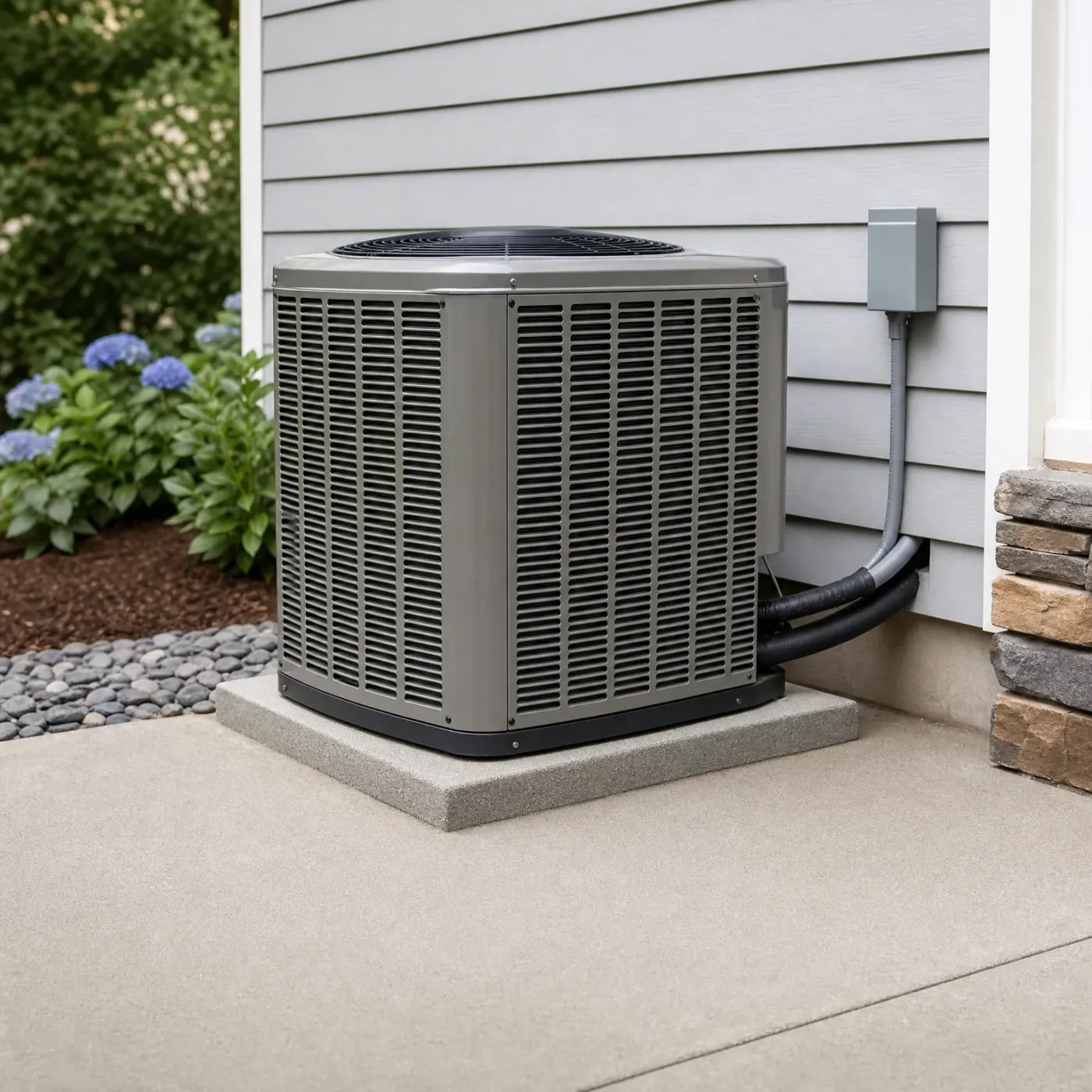
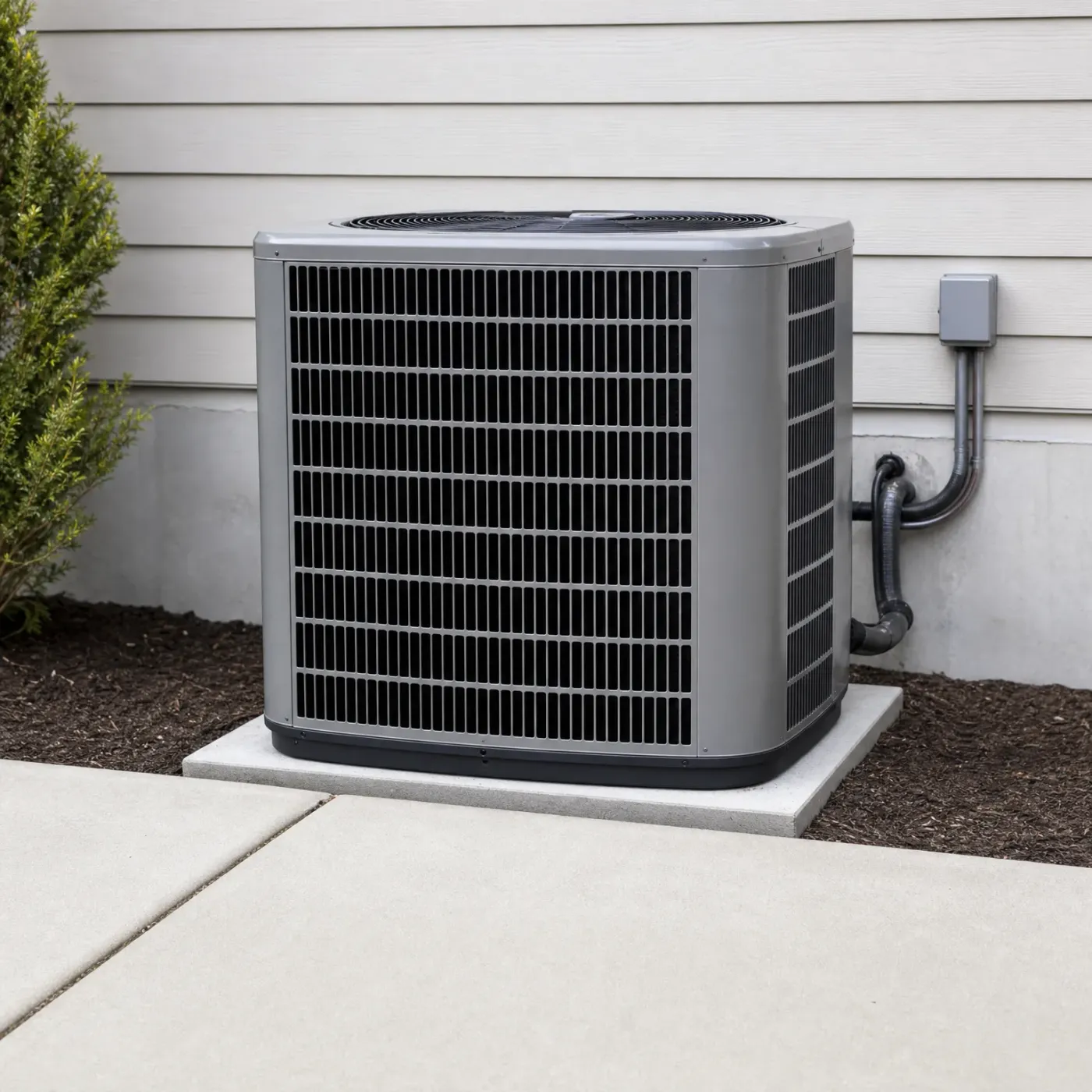
This condenser sits clean on its pad, lines running straight into the wall, disconnect box clear and accessible. Nothing blocks the fins. Air moves through the coil the way it's supposed to, so the system isn't working harder than it has to on a 90 degree day.
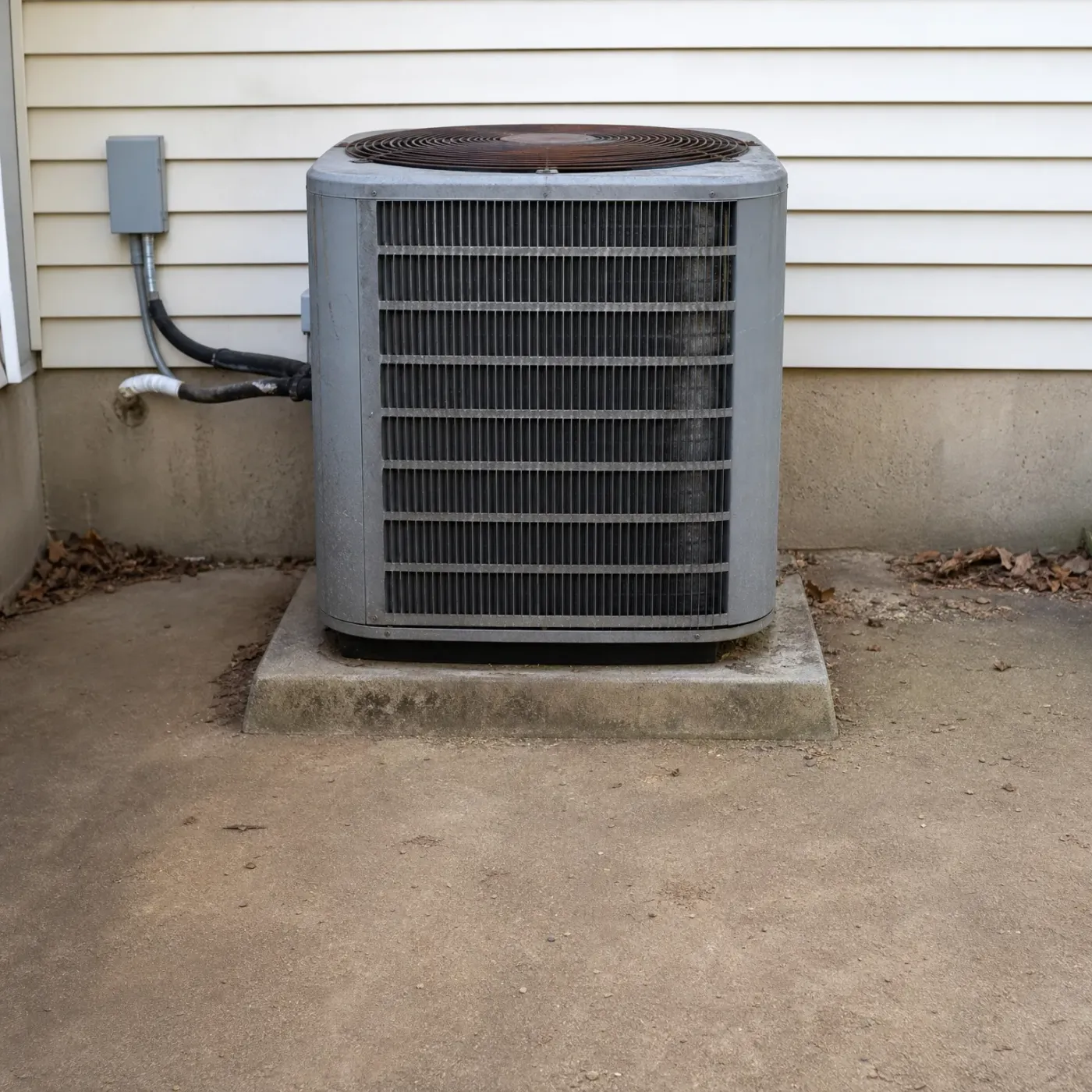
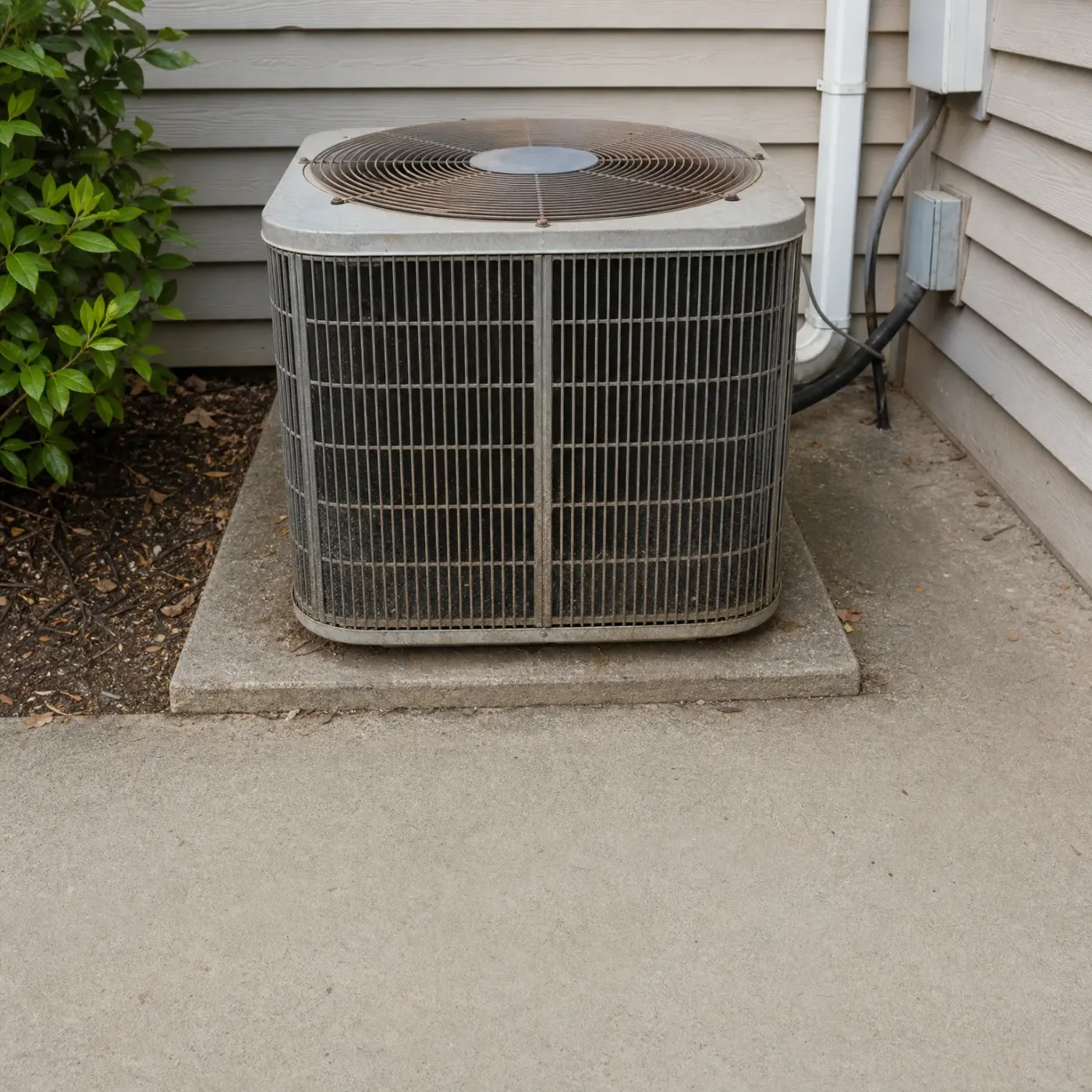
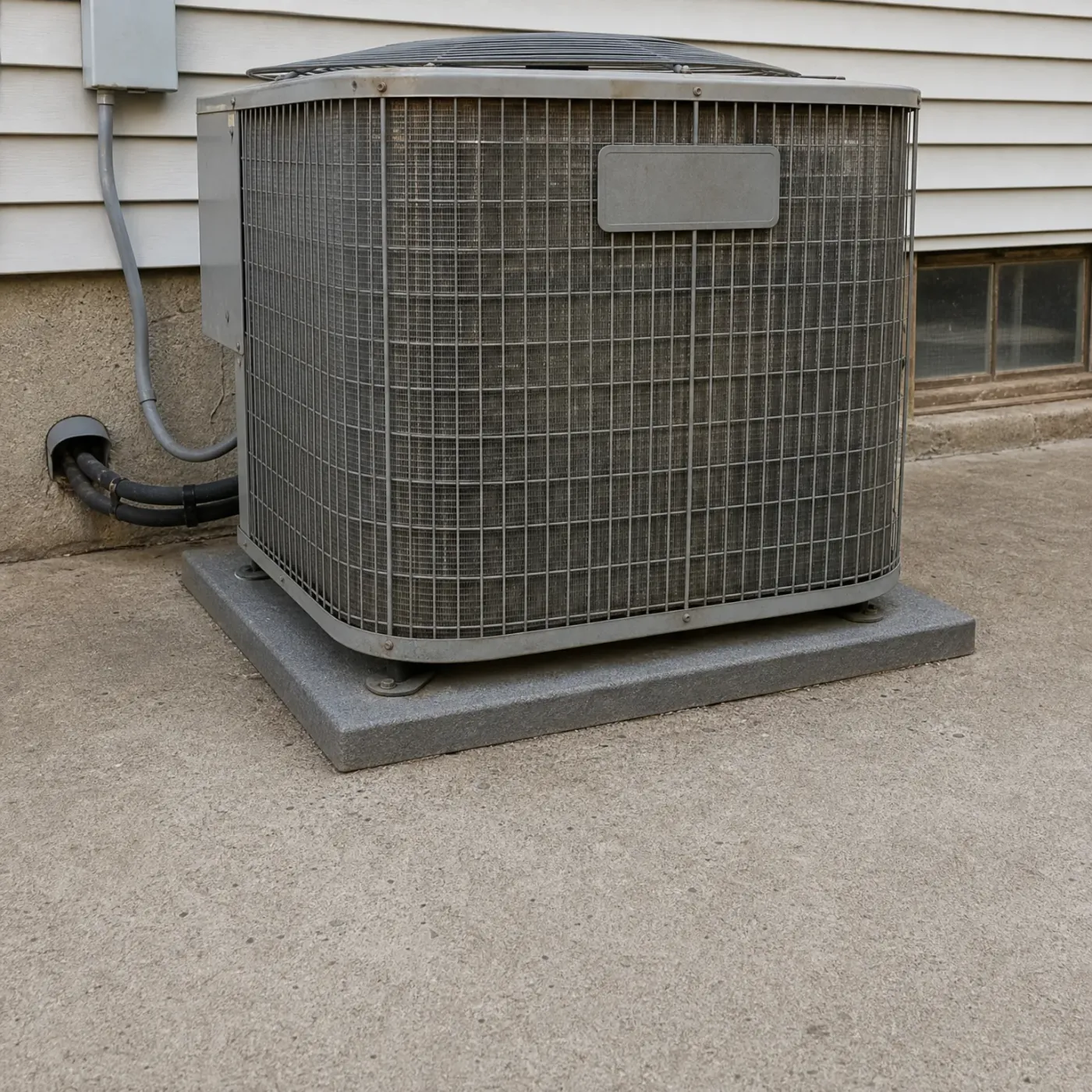
Rust has set into the fan shroud and the fins are caked with dirt and debris. A unit in this shape has been pulling air through a clogged coil for seasons. That strain shows up as a higher bill, a shorter lifespan, or a compressor that gives out mid-summer.
Get the tune-up done before the first hot stretch and you've answered the question that started this search. The refrigerant gets checked against the rating plate, the coil gets washed clean, the capacitor gets tested, and you know before June what June would otherwise tell you the hard way. A contractor who works Queens condensers all season has already seen what cottonwood seed does to a coil and what a weak capacitor sounds like before it fails, so there's no guessing at the diagnosis and no explaining the same symptoms twice. One licensed contractor, local to this county, handles it start to finish. The unit out back either gets looked at now, on your schedule, or it gets looked at in July, on no one's schedule at all.
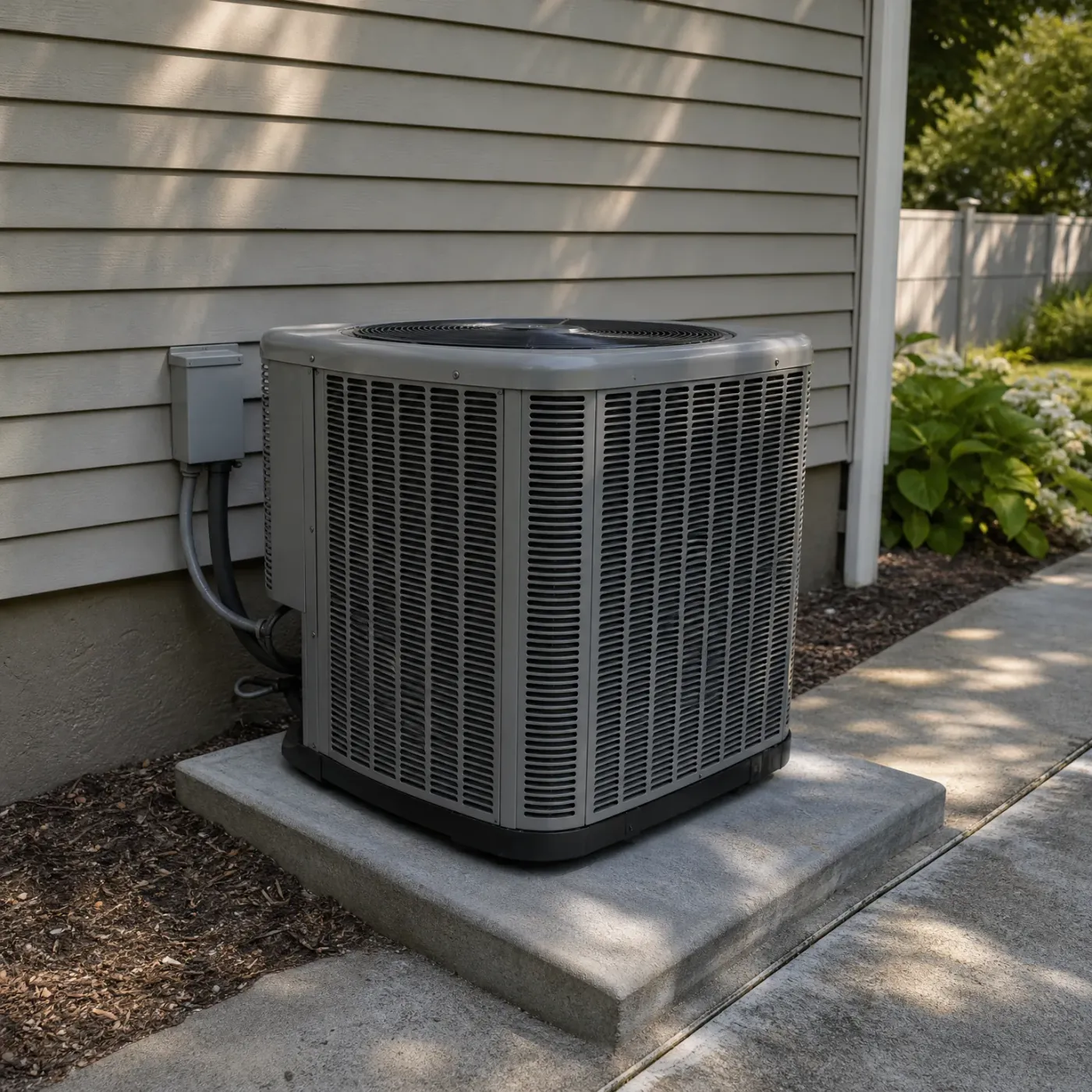
A licensed local pro takes the request for your air conditioner tune-up.
It costs nothing to send, and you don't have to hire anyone.