A local pro who services air conditioners gets in touch about the tune-up.
New York summers turn muggy fast, and your air conditioner has to run hard through it. A unit that limped through last August without a tune-up is the one that quits on the first 90 degree day this year. Getting it checked now, before the heat sets in, is what keeps that from happening.
Power here costs more than almost anywhere else in the country. A dirty coil or a low refrigerant charge makes your system work longer to cool the same rooms, and that shows up on the bill every month it runs. Maintenance is what catches that early, while it's still a small fix.
Most homes here heat with gas, so the AC is its own system, separate from the furnace, with its own filter, its own coil, its own refrigerant line. It needs its own attention. Nobody's walking you through your specific setup unless you already know who to call.
That's the part that usually eats the time. Finding a contractor who's free this week, calling two or three more to compare, explaining the same thing about your unit each time, waiting on quotes that come back on different days with different numbers. None of that gets your AC any closer to being ready.
This page matches you with a contractor who takes on jobs like yours, one who works in your part of New York and knows what the summers here do to a system that isn't maintained. You tell them what you're dealing with once. They reach out to you directly.
No promises about what they'll find or what it takes to fix. Only that someone who knows this work will be looking at your system instead of you doing the searching and comparing yourself. Fill in what's going on with your AC, and let the next step happen on its own.
When should I get my AC serviced before summer in New York?
New York summers can turn from mild to muggy within a week or two, usually sometime in May. Once that happens, every AC in the neighborhood gets switched on at once, and anyone who waited to call a contractor is stuck in line behind everyone else who had the same idea. You want to know the right window to get ahead of that.
Get it serviced in March or April, before the first hot stretch hits
A contractor can check refrigerant charge, clean the condenser coil, and test the electrical components while the weather is still mild and schedules are open. Once New York hits its first run of 80 degree days, usually by late May or June, service calls back up and a unit with a problem sits broken for longer than it would have in March. A system that gets checked in spring also runs more efficiently through the muggy months ahead, which matters with what electricity costs here. Waiting until the unit is already running hard means any weak part gets found under load, often on the worst week to be without cooling.
1
Coils get checked for dirt and buildup that block heat transfer
2
Refrigerant level gets measured against what the system was made to hold
3
Electrical connections get tightened so the compressor isn't straining to start
4
Condensate drain gets cleared so it won't back up in July
The right pro for this job
Skip calling around to set up an air conditioner tune-up.
Say what's going on with your air conditioner, and a pro who works on them reaches out.
Turn it on and pay attention. Air that comes out warm or barely moving means the system is already struggling before the real heat arrives. A hum when the compressor should be running, or a unit that clicks on and off every few minutes, points to the same thing. So does a musty smell through the vents, or water pooled near the indoor unit. None of these mean the AC is finished. They mean it's working harder than it should to do less. Keep running it that way through a New York summer and the strain adds up, both on the parts inside it and on the electric bill that comes with running a struggling system for months.
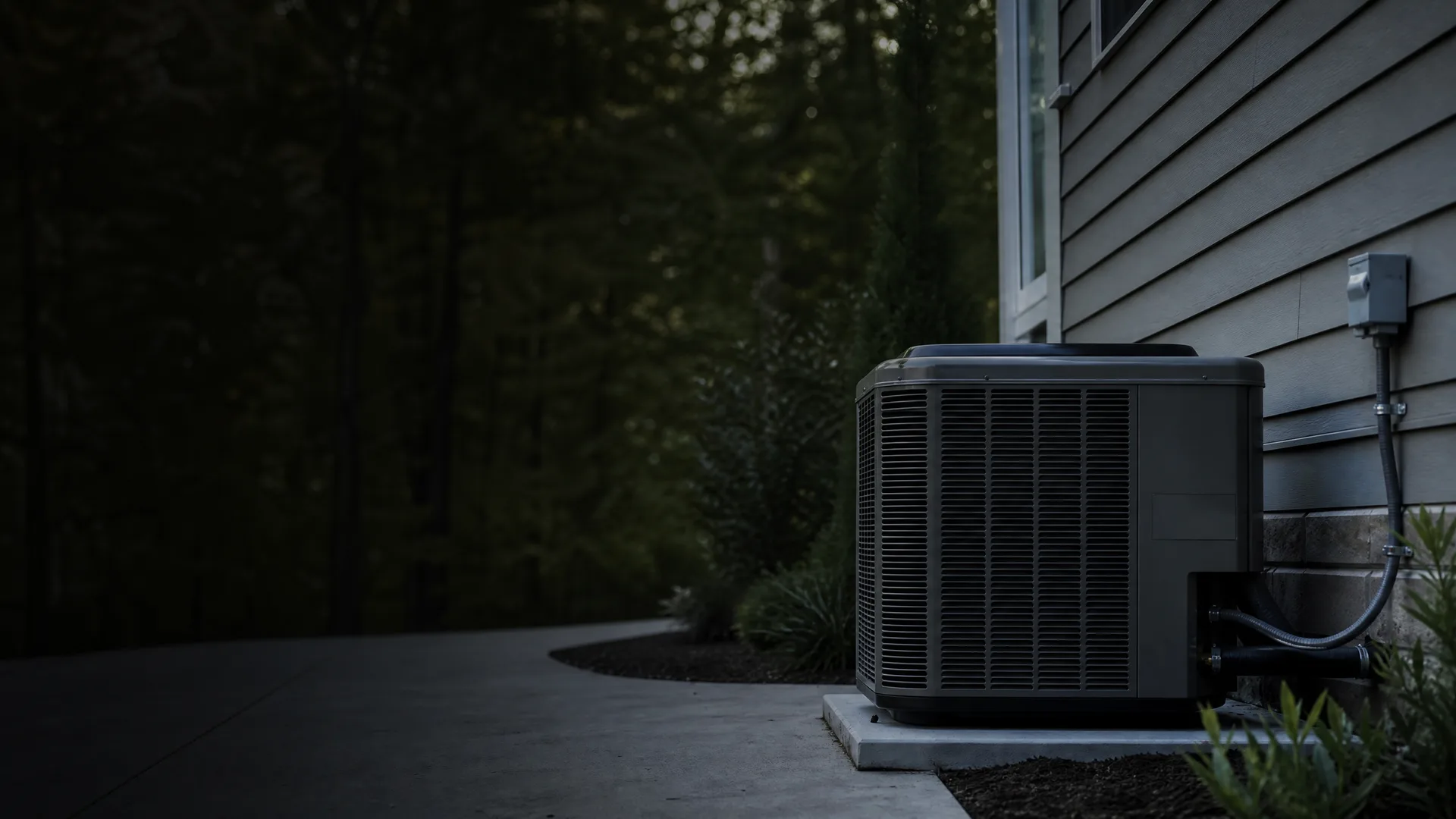
Running clean
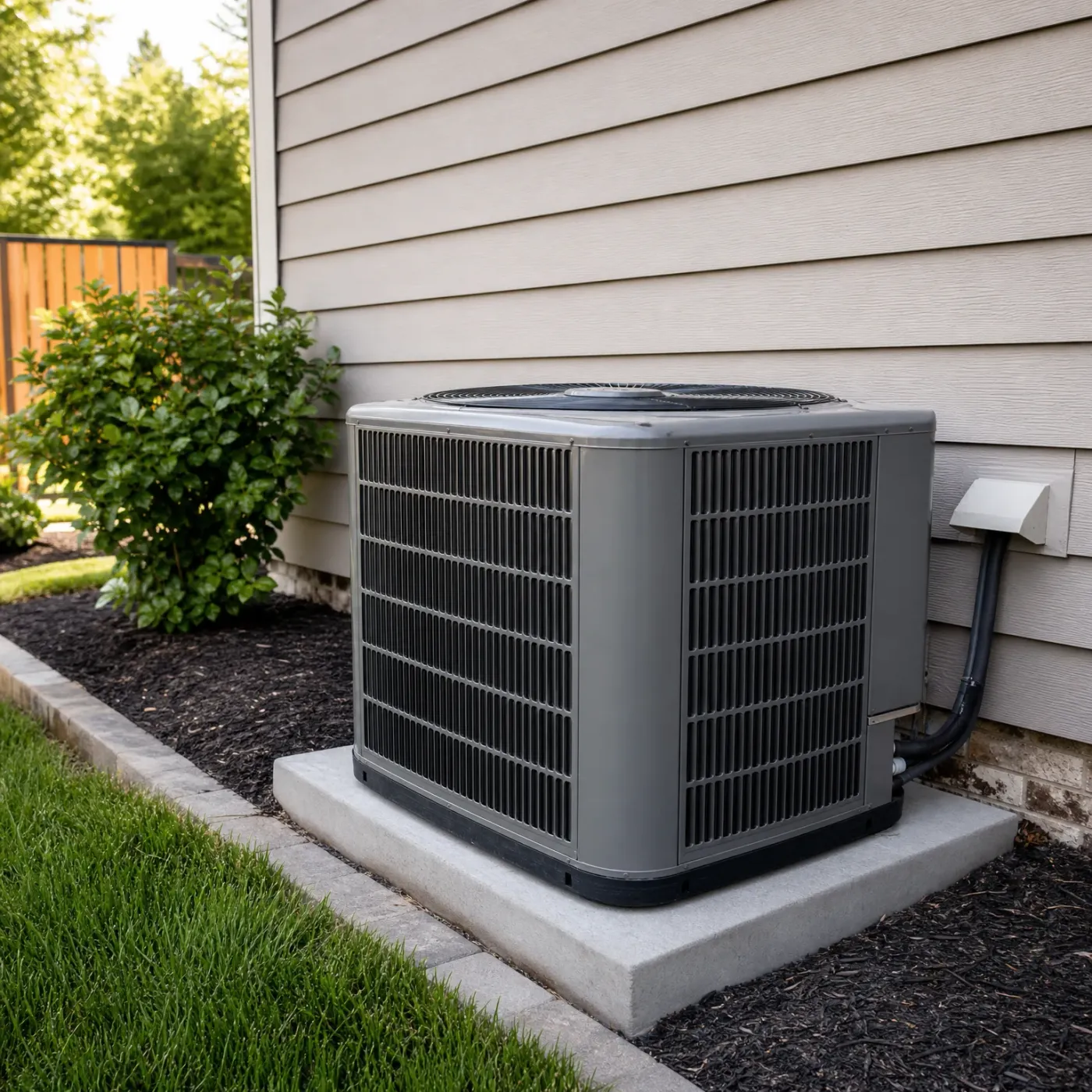
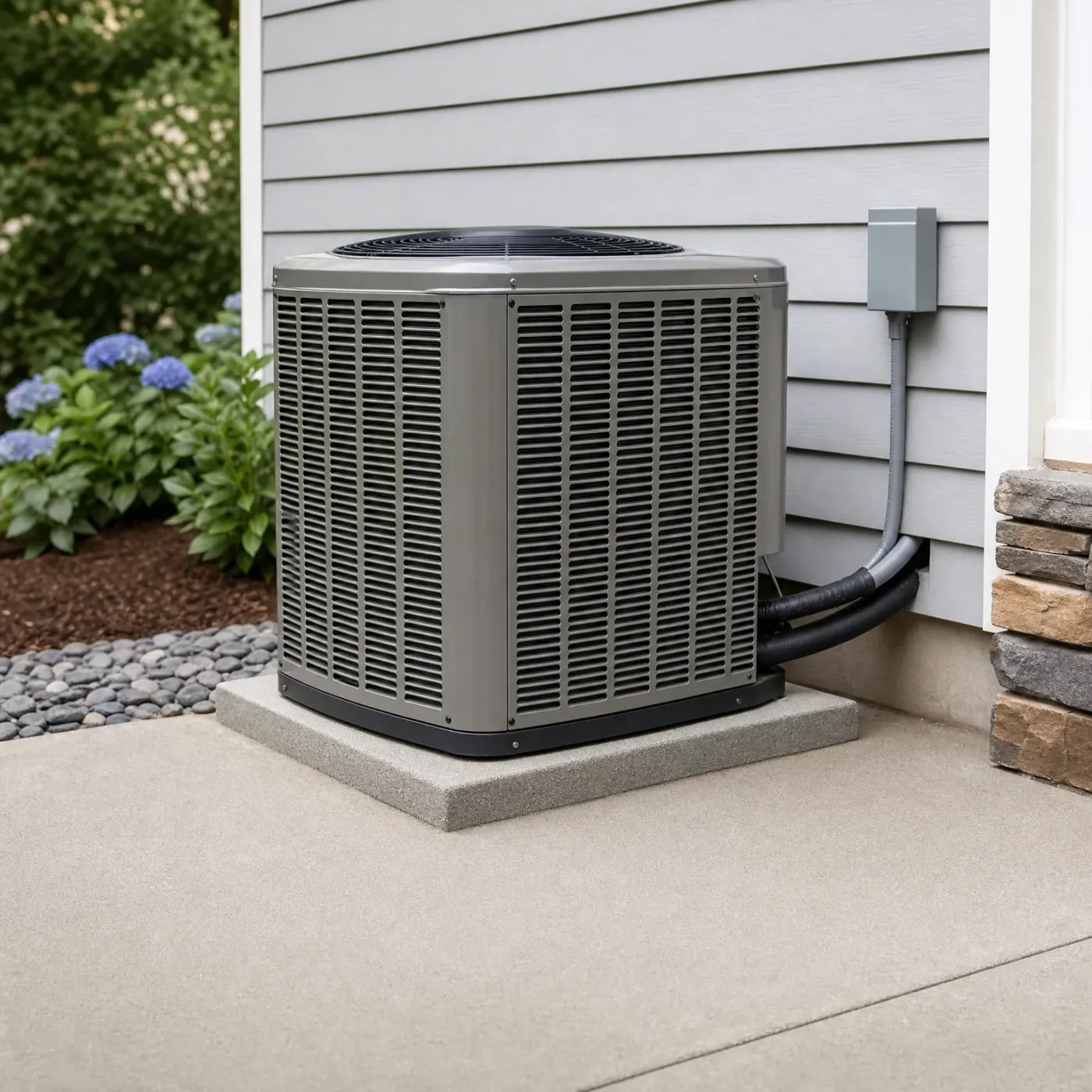
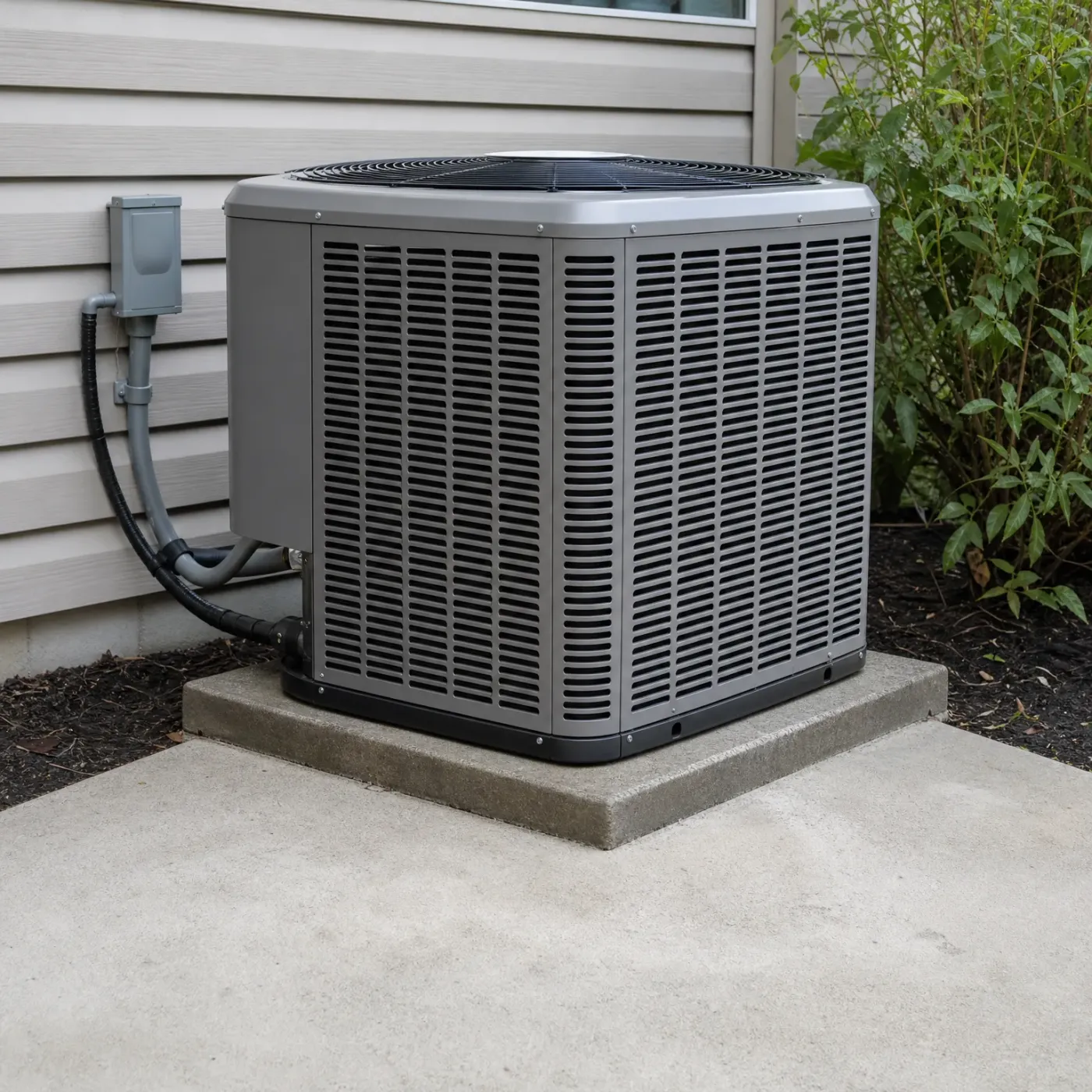
This condenser sits on its pad with clear lines running into the wall and a disconnect box mounted close by. The fins are open, the fan shroud is clean, and nothing blocks the airflow it needs to push heat out of the house. A unit kept like this has an easier time holding up through a New York summer.
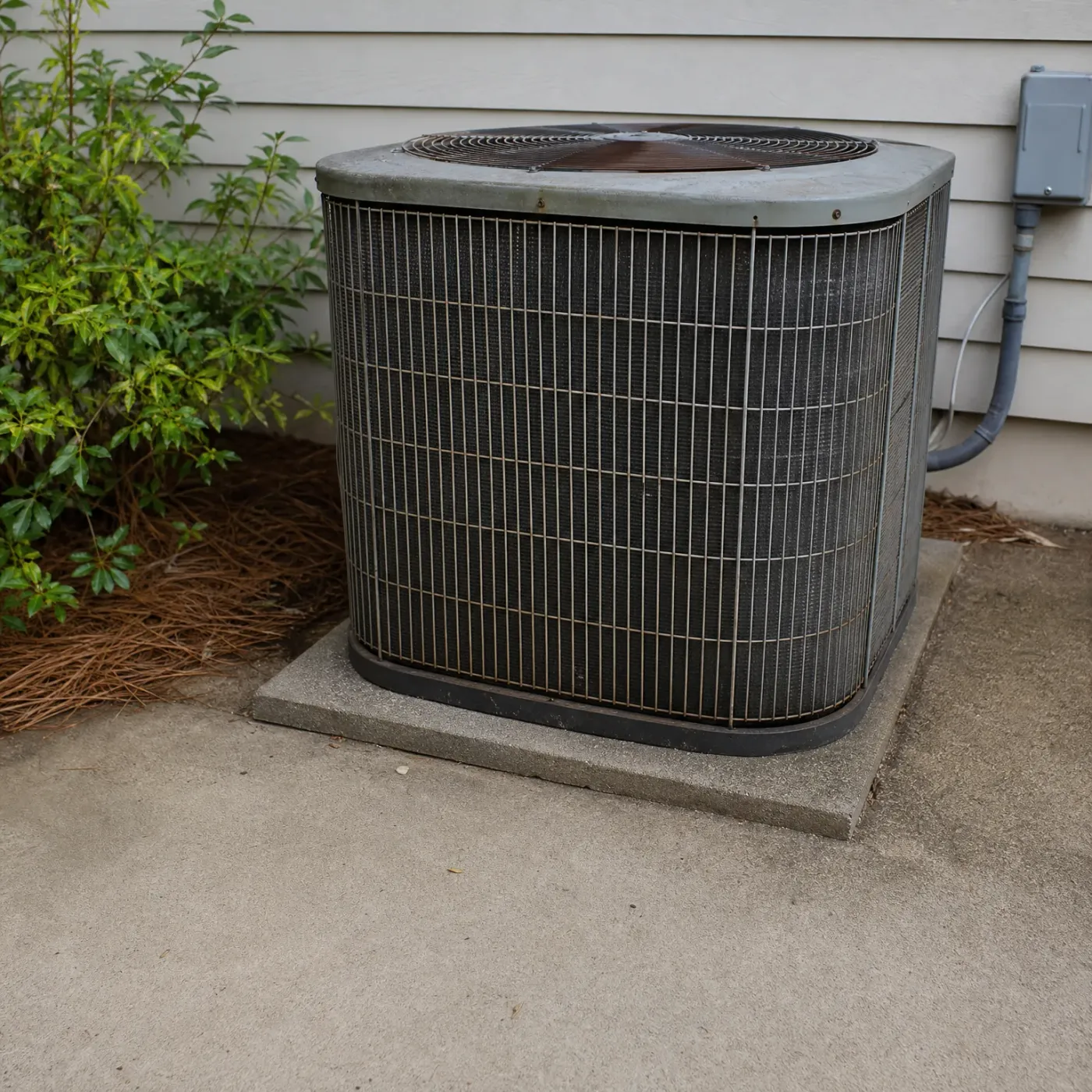
Running on borrowed time
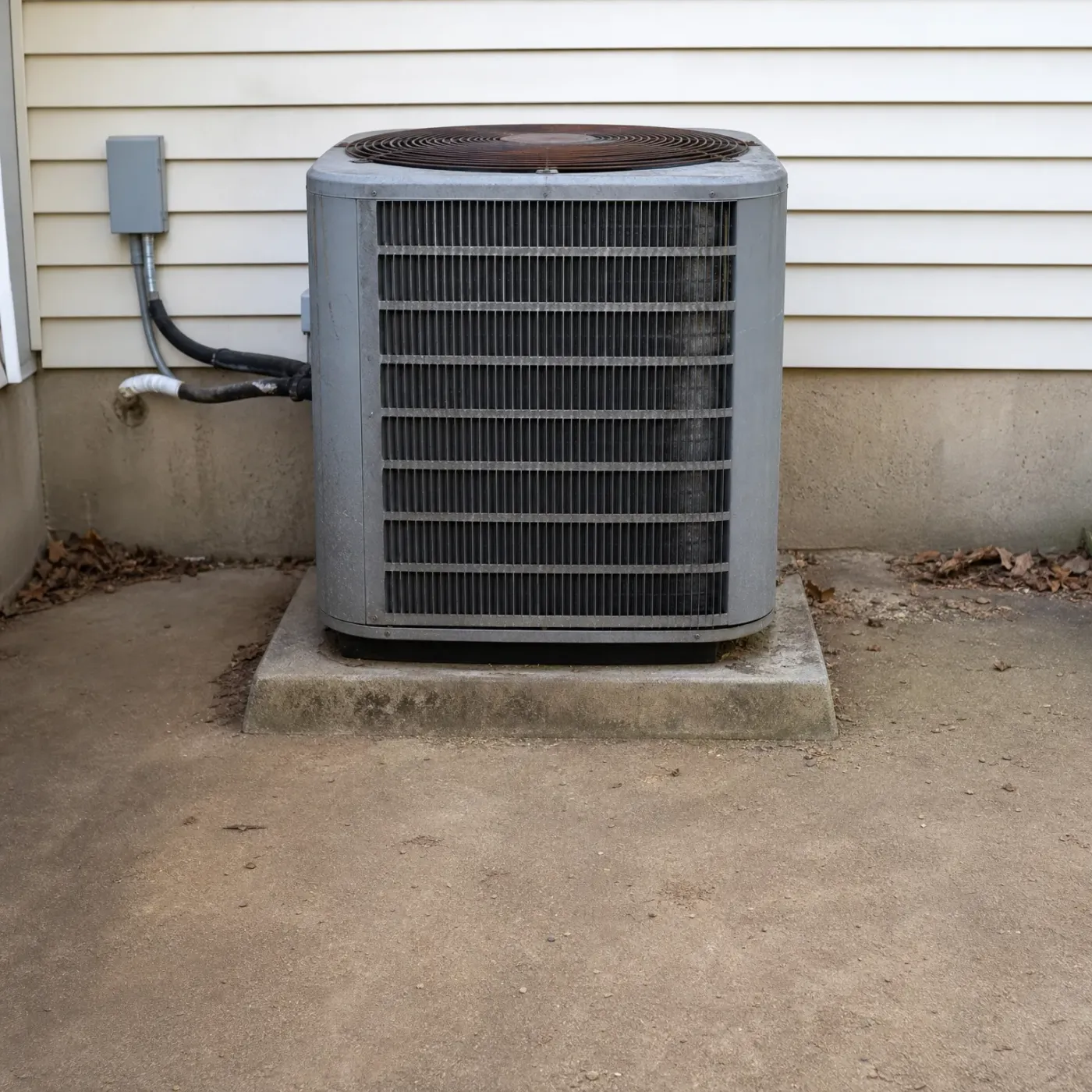
Rust has taken hold on this fan shroud, and the fins are packed with dirt the fan can't push air through anymore. The conduit and disconnect still look sound, but the unit underneath is working harder for less cooling. This is what gets left behind when service keeps getting put off.
Tune-Up Now or Fix It Later
Spring tune-up
A contractor checks the system in April or early May, before the first string of 90 degree days hits New York.
If the capacitor is weak or the coil is dirty, it gets found on a technician's schedule, not during a heat wave.
Scheduling is easier because every other house on the block hasn't called yet.
The unit runs the way it was set up to run from the first hot day through the last one in September.
Any part on order has time to arrive before you actually need the system to work.
Waiting for a breakdown
The system usually fails on the day it's working hardest, which in New York means a stretch of muggy 90 degree weather.
Every AC in the neighborhood gets switched on at once, so contractors booked solid can't fit you in right away.
A refrigerant leak or failing capacitor that goes unnoticed all spring turns into a no-cool emergency in July.
You're explaining the problem to whichever contractor finally has an opening, instead of one who already knows the unit.
Power in New York is already expensive, and a system straining on a bad part pushes that bill higher before it quits.
Clear lines, clean grille
This condenser sits on its pad with the refrigerant lines running clean up to the disconnect box. The grille is open and unobstructed, so the fan can pull air through the coil without fighting anything. A unit that looks like this is moving the heat out of your house the way it's supposed to.
Dirty and weathered
This one's grille is caked with grime and weather, sitting in pine needle mulch that drifts against the fins over time. When the grille is this clogged, the coil behind it isn't shedding heat the way it needs to, and the compressor works harder to do the same job. Left alone through a New York summer, that strain is what turns into a breakdown on the hottest day.
Power costs 26.39 cents per kilowatt-hour statewide
At that rate, an air conditioner that's lost some of its charge or has a dirty coil doesn't just cool worse, it costs more to run every single day it's ignored. A unit tuned up before summer uses only what it needs to.
EIA-861 2025 statewide residential average
A New York summer gives your AC about five straight months of hard running, and a unit that goes into June already weak doesn't get a break to recover. Getting it looked at before the heat sets in is the whole answer. What that takes is someone who checks the coil, the charge, the electrical connections and the drain line before the system is asked to carry the season. Finding that someone is the part you don't have to do alone. Instead of calling around to different contractors, explaining the same thing about your unit each time, and sitting with quotes you can't really compare, you can be matched with a contractor who takes on exactly this kind of job and let them reach out to you. The AC itself still has the summer ahead of it. But the search for who's going to service it, the part that eats your evenings, is the part that's already done.
Matched to your air conditioner job
One form instead of hunting for a pro who does air conditioner tune-ups.