One request ends the search for an air conditioner installer.
A variable-speed air conditioner runs its compressor at whatever level the heat actually calls for, instead of switching between full blast and off. In a New York summer, where the sticky stretches can sit on you for days at a time, that matters. The system holds a steadier temperature and pulls more moisture out of the air while it does it, because it's running longer at a lower output instead of short full-power bursts that cool fast but leave the humidity behind.
Power here costs more than almost anywhere else in the country, so how a system runs matters as much as whether it runs. A unit that's working at low speed most of the time draws less than one that's cycling on and off at full power to chase the same temperature. Most homes here heat with gas, so the air conditioner isn't doing double duty for winter. Its summer performance is what you're paying for, and it's what you're deciding on now.
Whether the difference is worth the cost of installing one depends on your house, your current system, and how you use it. That's a question for someone who can look at what you have.
Finding that person is usually the slow part. Calling a few contractors, explaining the same thing to each one, waiting on quotes, trying to tell which one actually knows variable-speed systems and which one is guessing. Send the form on this page and that work is off your plate. You won't be the one tracking down who's qualified or sorting through callbacks. That part gets handled, and you can get to the part that matters: finding out if this is the right move for your house.
Yes, for most houses here, because of how New York summers actually run. The heat doesn't sit at one level for a straight three months. You get a run of muggy, 90-degree days, then a cooler stretch, then it's back again. A single-speed AC only knows on and off, so it blasts cold air, shuts down, and starts over, and every one of those restarts pulls a surge of power. A variable-speed unit throttles down instead of cutting out, so it runs longer at a lower output and pulls less power doing it. With electricity priced the way it is in this state, that difference shows up on the bill. It also means steadier humidity control, since the system is running more often at a gentler pace rather than in short, hard bursts. The tradeoff is cost up front. Whether it pencils out depends on how long you plan to stay in the house and what shape your current system is in.
A single-speed unit cycles on and off all day to hold the house at one setting, working the compressor hard on every muggy afternoon.
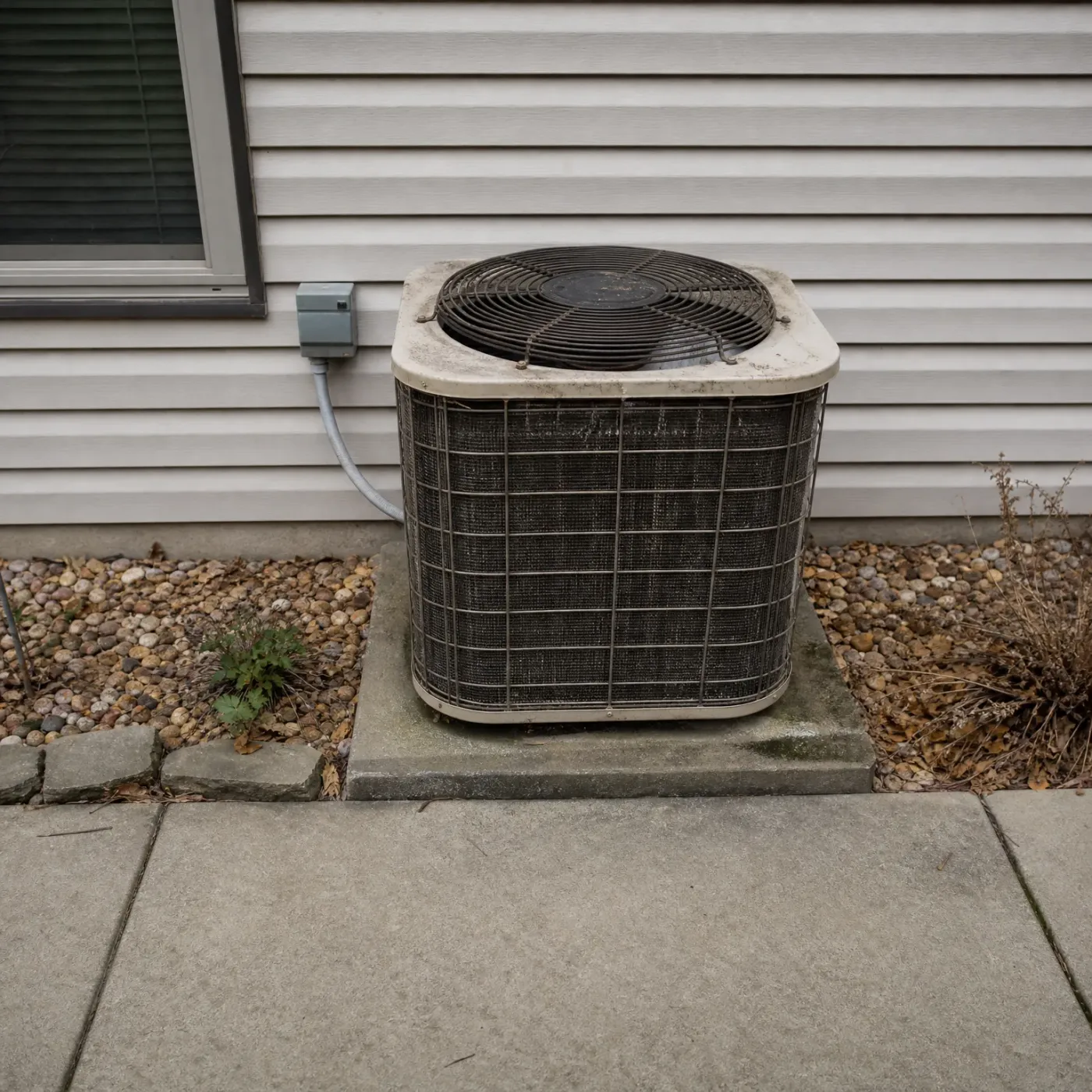
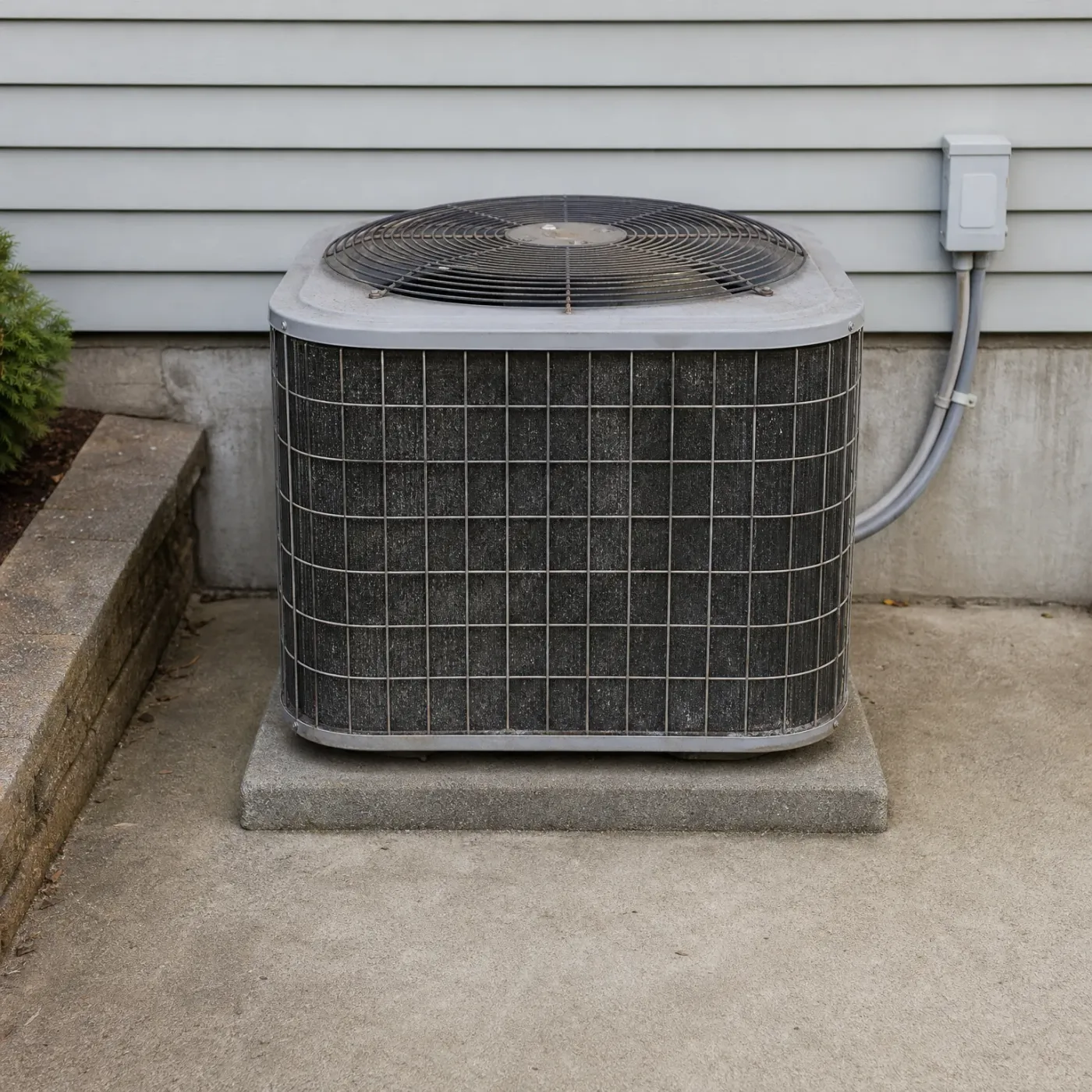
An aging single-speed unit on gravel strains through the same on-off cycle for years, with no lower gear to fall back on as parts wear.
Skip the round of in-home estimates for a new air conditioner.
Asking costs nothing, and the choice to hire stays yours.
How the variable speed actually works
A variable-speed compressor adjusts output in small steps, often running near 25 to 40 percent of full capacity on a mild day.
That low, steady output pulls moisture out of the air more thoroughly than a unit that shuts off every twenty minutes.
The indoor blower matches its speed to the compressor, so air moves through the ducts at a steady rate instead of in bursts.
A furnace paired with the same ductwork does not need its own fix for this, since the variable-speed logic sits in the AC and its control board.
Humidistat and thermostat readings pass to the control board constantly, not just at the start and end of each cycle, so the system reacts before the house feels sticky.
Because the compressor rarely runs flat out, wear on it spreads more evenly over the unit's life instead of concentrating on full-speed starts.
The compressor sits behind a control board that reads the thermostat and humidistat on a constant loop, not just at startup. Most mornings it doesn't need full output at all. It ramps up in small steps, often sitting around 25 to 40 percent capacity, and holds there as long as the house stays close to the setpoint. That low, steady run does more to wring moisture out of the air than a unit that blasts cold air for fifteen minutes and shuts off, because the coil stays cold and wet long enough to actually catch the humidity instead of just dropping the temperature. The indoor blower isn't a separate decision. It tracks whatever speed the compressor is running, so air moves through the ducts at a steady rate instead of the usual surge-then-nothing. If the same ductwork carries a gas furnace in winter, nothing about that furnace needs to change. The variable-speed logic lives entirely in the AC's control board, and the furnace just uses the blower and ducts as it always did. Over the life of the unit, this also means the compressor spends most of its hours working at a fraction of its capacity rather than slamming to full speed on every cycle, which is where a single-speed compressor takes its hardest wear. None of this requires the homeowner to manage anything. The board handles the stepping on its own, all day, every muggy stretch New York throws at it.
Before you get your air conditioner installationAfter you get your air conditioner installation
Running steady
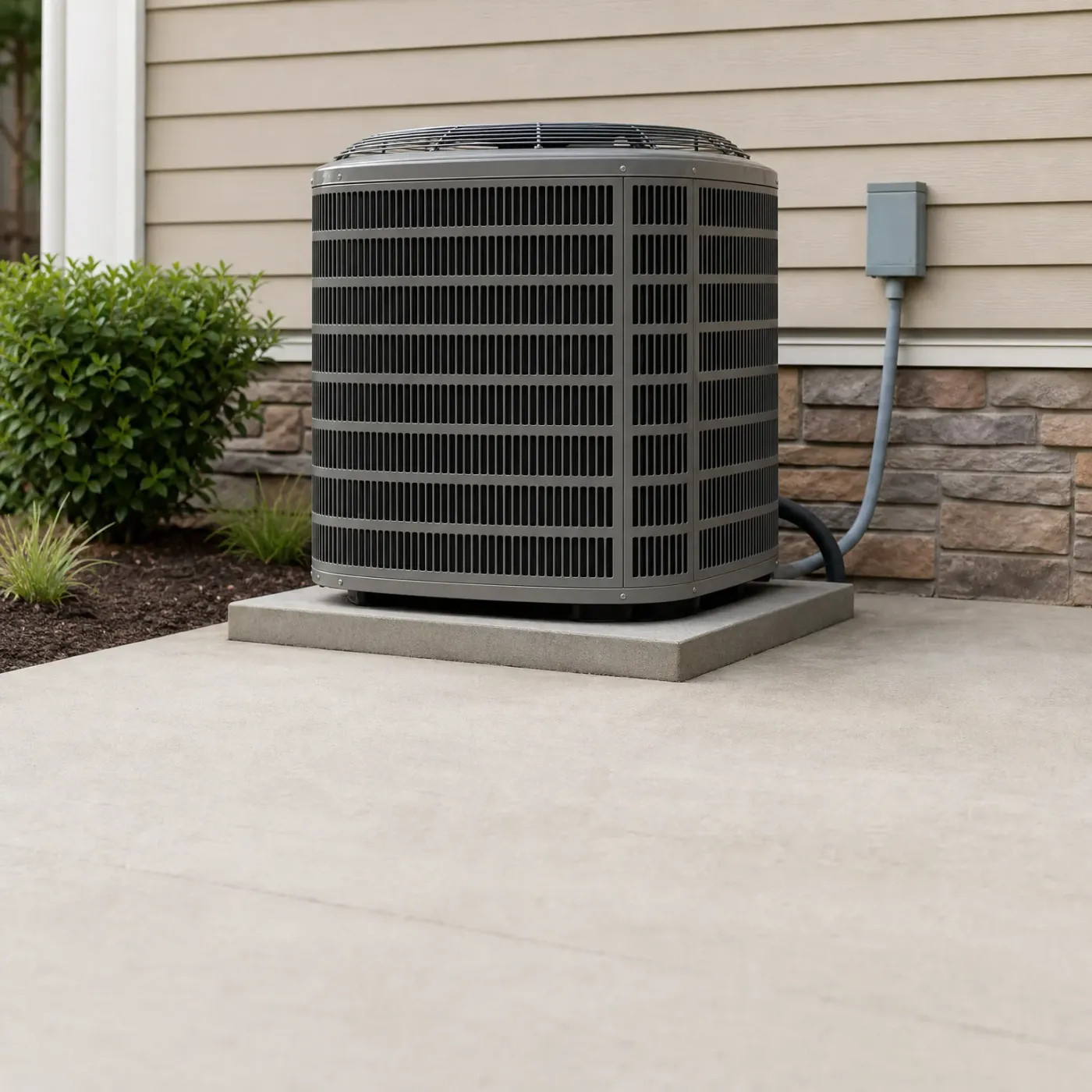
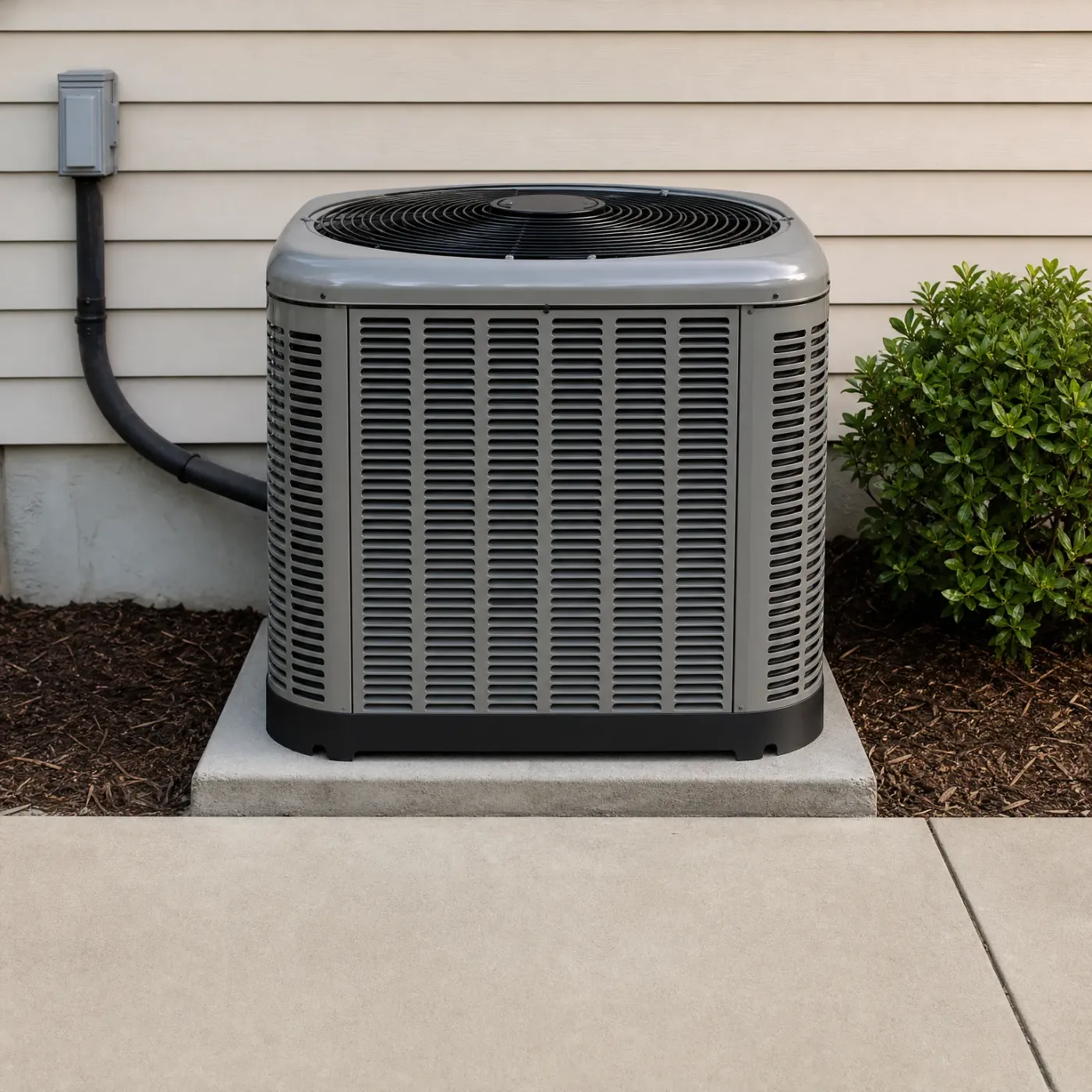
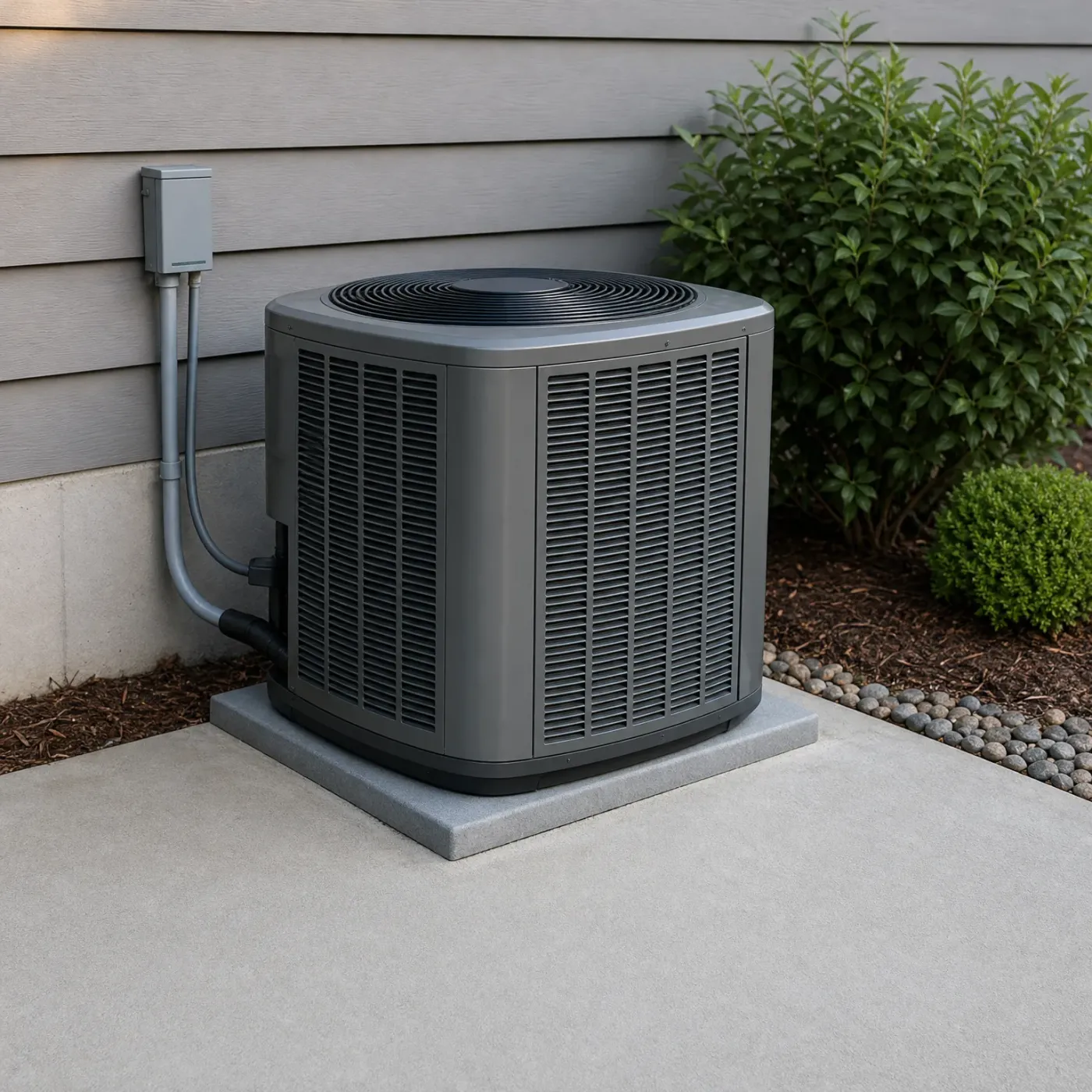
This is what a variable-speed unit looks like doing its job. The compressor sits at a low output on a mild day and climbs only when the heat actually calls for it, so it holds the house at temperature instead of chasing it. Nothing about the outside unit looks different. The work is happening inside the compressor itself.
Running hard
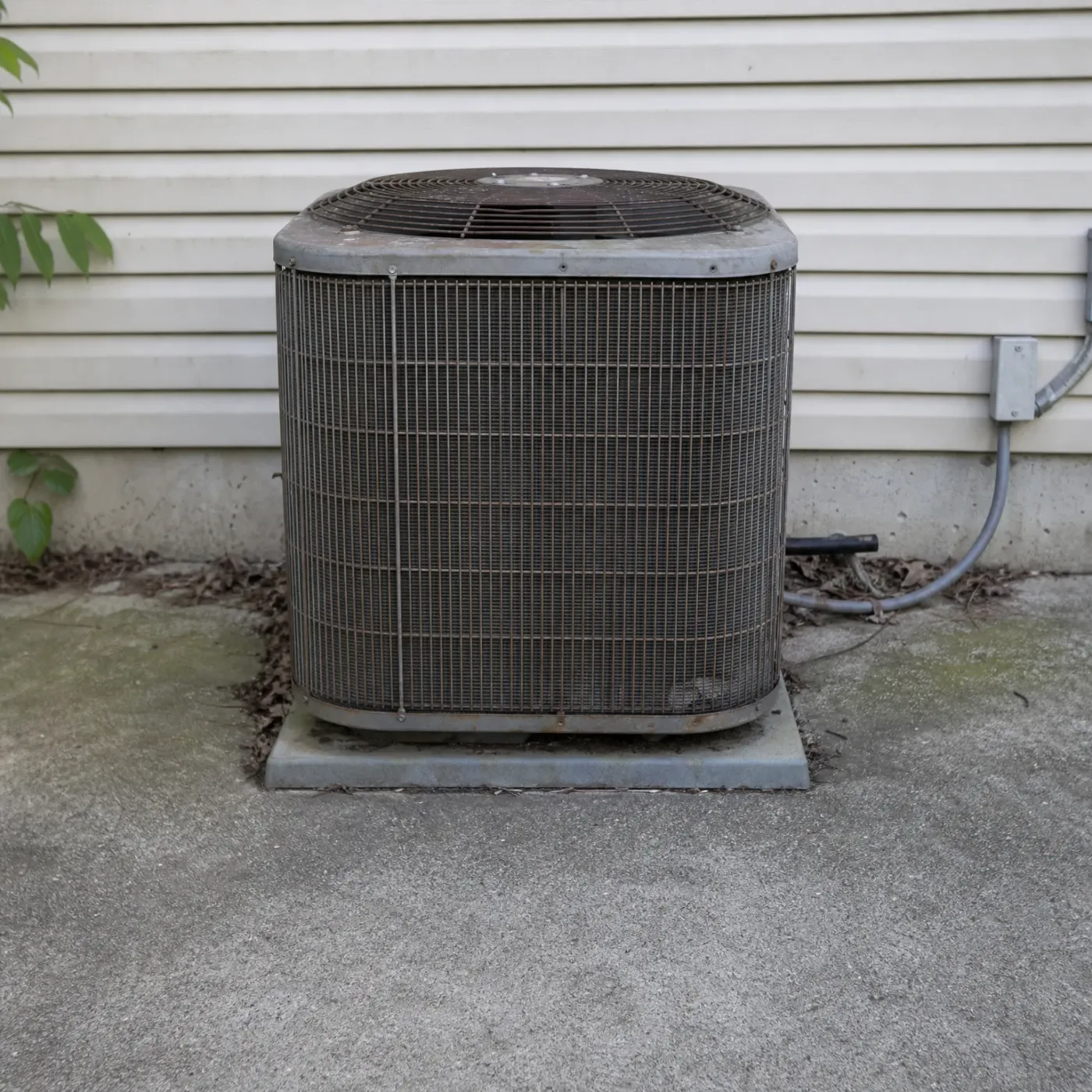
A single-speed unit on the same pad has one setting: full on or off. On a sticky New York afternoon it kicks on, runs flat out, shuts off, then starts again twenty minutes later. Years of that cycling wear on the compressor faster than steady, lower output ever would.
Power costs 26.39 cents per kilowatt-hour statewide
At 26.39 cents per kilowatt-hour, every hour your compressor spends running full blast instead of easing off shows up on the bill. A variable-speed system spends most of its time at that lower output, so the same muggy summer costs you less to get through.
EIA-861 2025 statewide residential average
A variable-speed AC earns its keep in a New York summer
For most houses here, the answer is yes. New York summers swing between stretches of sticky heat and days you barely need the AC at all, and a system that can scale down instead of just shutting off handles both better than one that only knows on and off. That's the whole case, and the facts above are what back it up.
What's left is the part you shouldn't have to do yourself: finding a contractor who installs these systems properly, calling a few to compare, explaining your house and your current unit over and over, then sitting with quotes trying to figure out who actually knows what they're doing. Send the form and that work is off your plate. Someone qualified takes it from there.
One request and it's handed off
Describe the project once instead of to every installer.