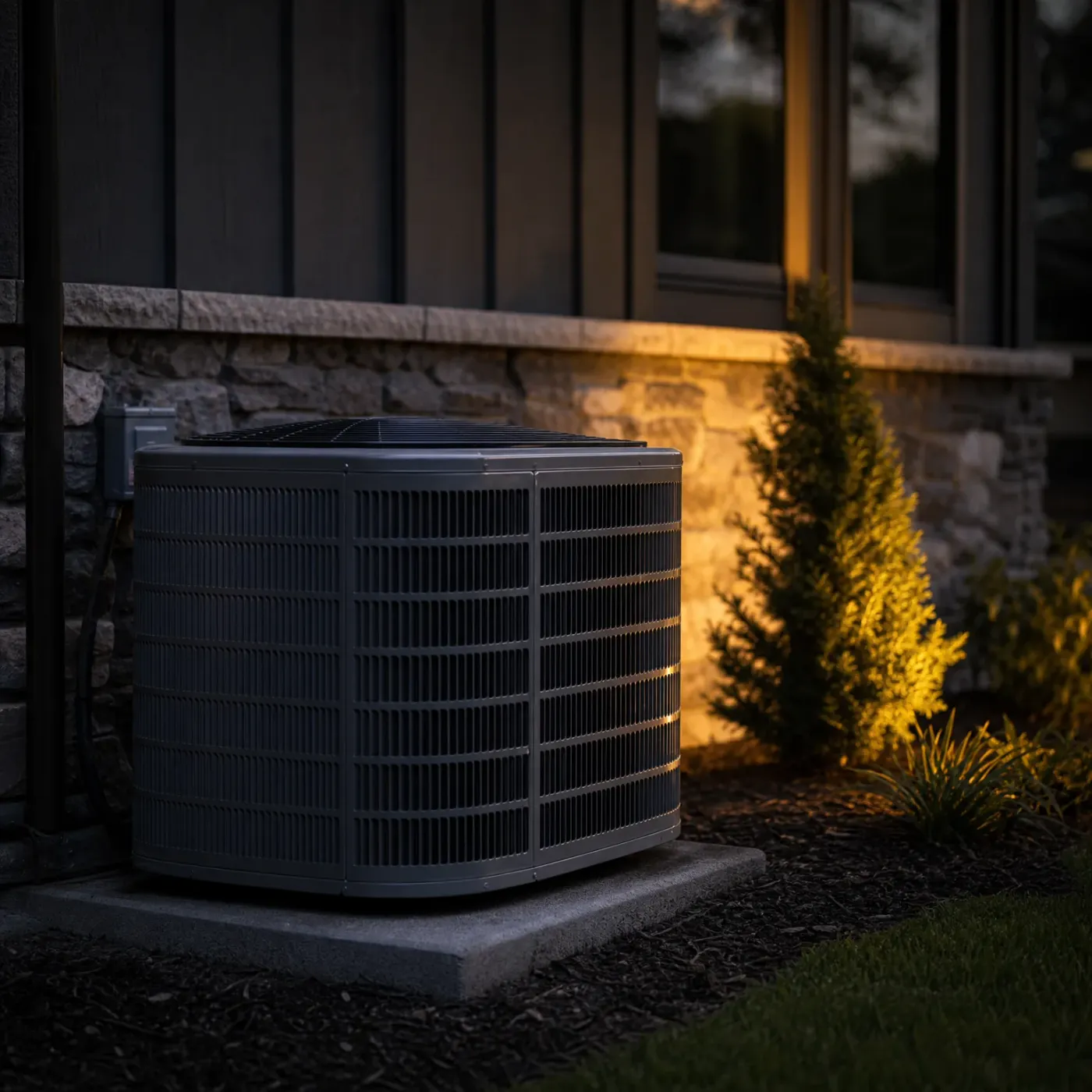
An outdoor air conditioning condenser unit on a concrete pad beside a house with stone veneer and vertical board siding, with a small shrub and mulch bed lit by a ground light at dusk.

Stop chasing an air conditioner pro

The R-410A phase-out and new AC units in New York

R-410A is being phased out, and you're wondering what that means for your air conditioner and what it'll cost to replace it with something that still works on a sticky New York summer. This page gets into which units are affected, what's changing, and what to ask about before you install anything new. Skip the search and get matched with someone who can walk you through it.

Hand it off

R-410A is being phased out under federal rules that took effect in 2025. New AC units can no longer be manufactured with it, so anything installed now runs on a new refrigerant instead, usually R-454B. This doesn't mean your current air conditioner is illegal or has to come out. If it runs on R-410A, it can keep running, and that refrigerant can still be used to service it. The change applies to new equipment, not what's already in your home. Where it matters is the day your system needs replacing, whether that's from a breakdown or just age catching up with it. At that point you won't have the option of installing another R-410A unit. The replacement will be a new-refrigerant system, and in a New York summer, that's the equipment a contractor will be working with.

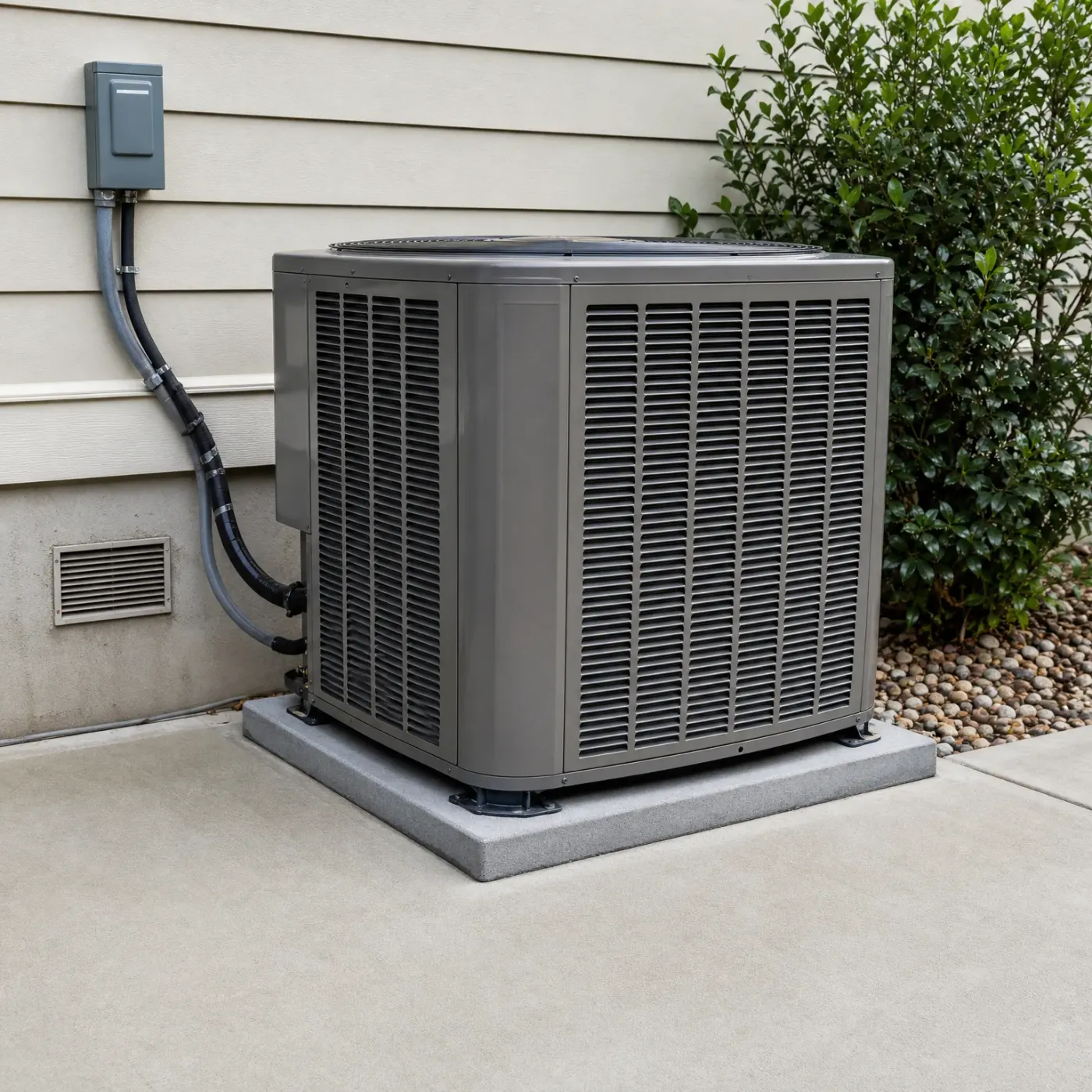
A gray outdoor air conditioning condenser unit sits on a concrete pad beside a house with horizontal siding, connected by insulated lines to a wall-mounted disconnect box, with a shrub and gravel bed to the right.

If your AC still runs on R-410A

If the unit next to your house is running fine, nothing about this changes today. R-410A is still legal to use and service in equipment already installed. You can keep topping off refrigerant and running the system you have for as long as it holds up.
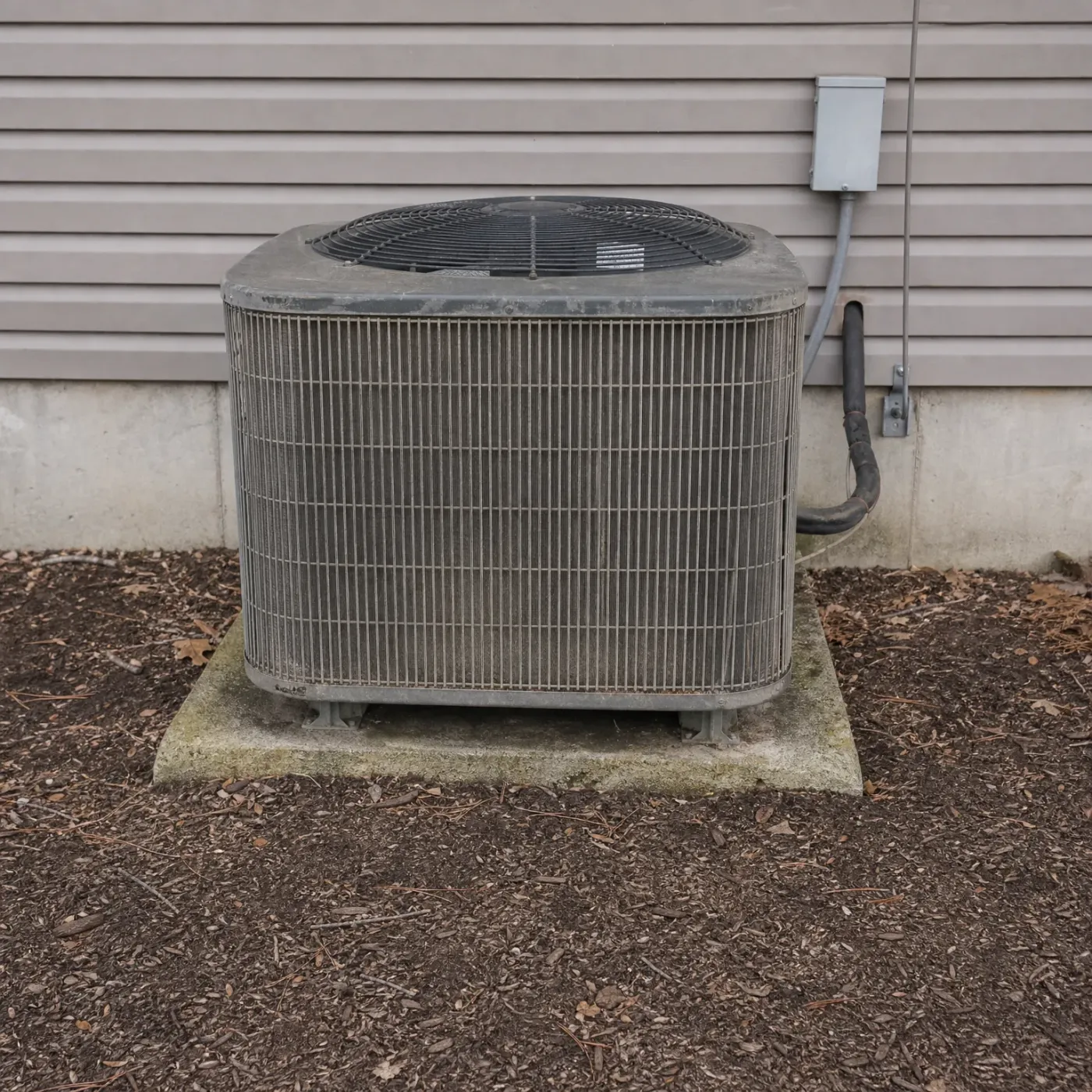
An outdoor air conditioning condenser unit sits on a concrete pad beside a house with horizontal vinyl siding, with a gray electrical disconnect box and insulated refrigerant line on the wall above, surrounded by bare mulched ground.

If your AC is old and struggling

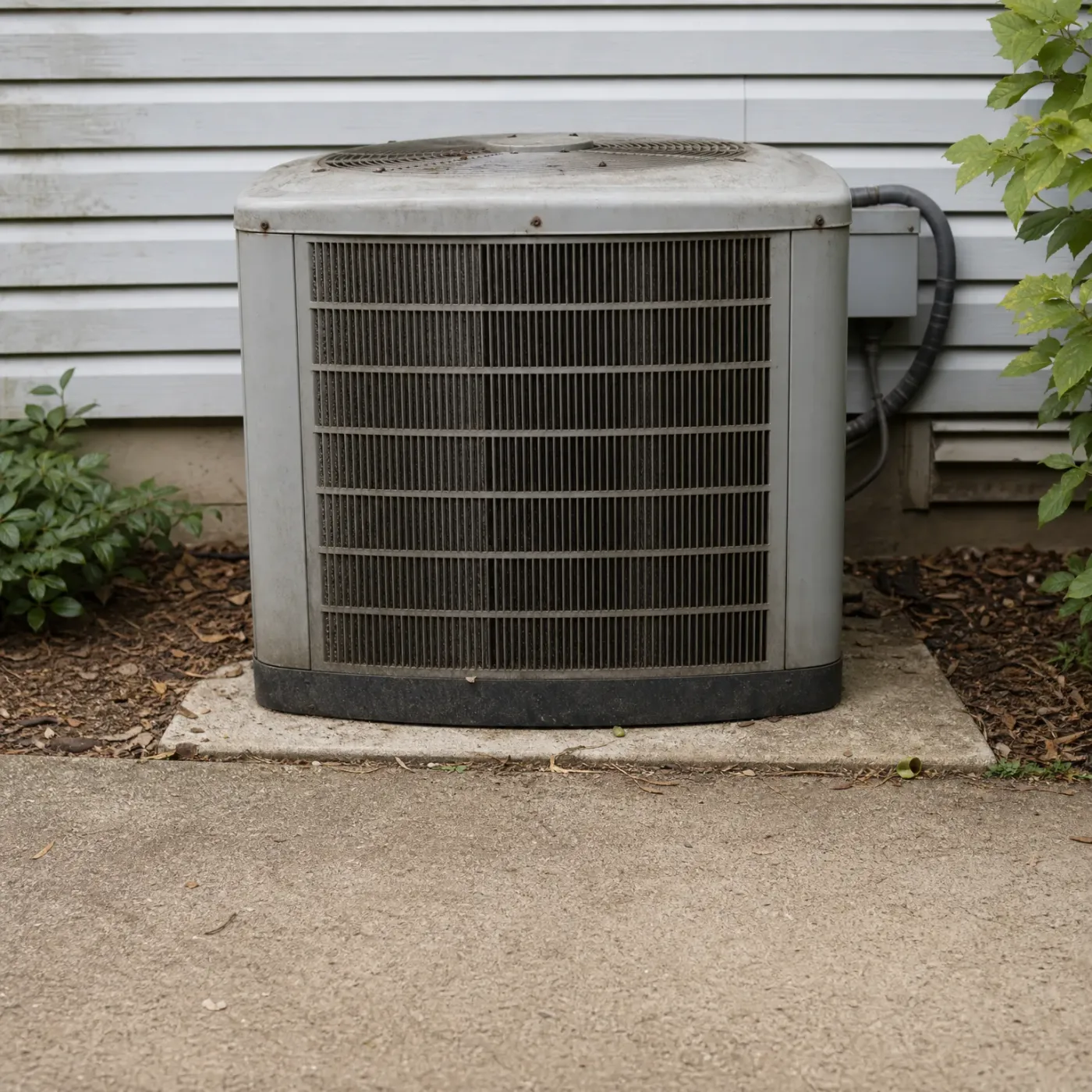
An older condenser like this one, caked with grime and showing its age, is the one worth planning for. Once a unit like this fails for good, its replacement will run on R-454B, since R-410A systems aren't being made anymore. Deciding now beats scrambling in July.

Why did they switch refrigerants, what's wrong with R-410A?

It sounds strange that a refrigerant that's worked fine for twenty years is suddenly getting phased out. If your current AC is running without trouble, it's fair to wonder what the actual problem is, and whether it's something that matters to you or just a rule change on paper.

R-410A has a high global warming potential, so federal rules are phasing it out

R-410A doesn't harm the ozone layer the way older refrigerants did, but it has a high global warming potential. If it leaks out of a system, it does more damage in the atmosphere than the refrigerants replacing it, like R-454B. That's the whole reason for the switch. It isn't that R-410A stopped working or became unsafe to run. The EPA set a timeline under the American Innovation and Manufacturing Act to move manufacturers toward lower-impact refrigerants, and 2025 is the cutoff for new equipment. Nothing about this reflects a flaw in your air conditioner or how it's performed through New York summers. It's a manufacturing rule, not a recall.

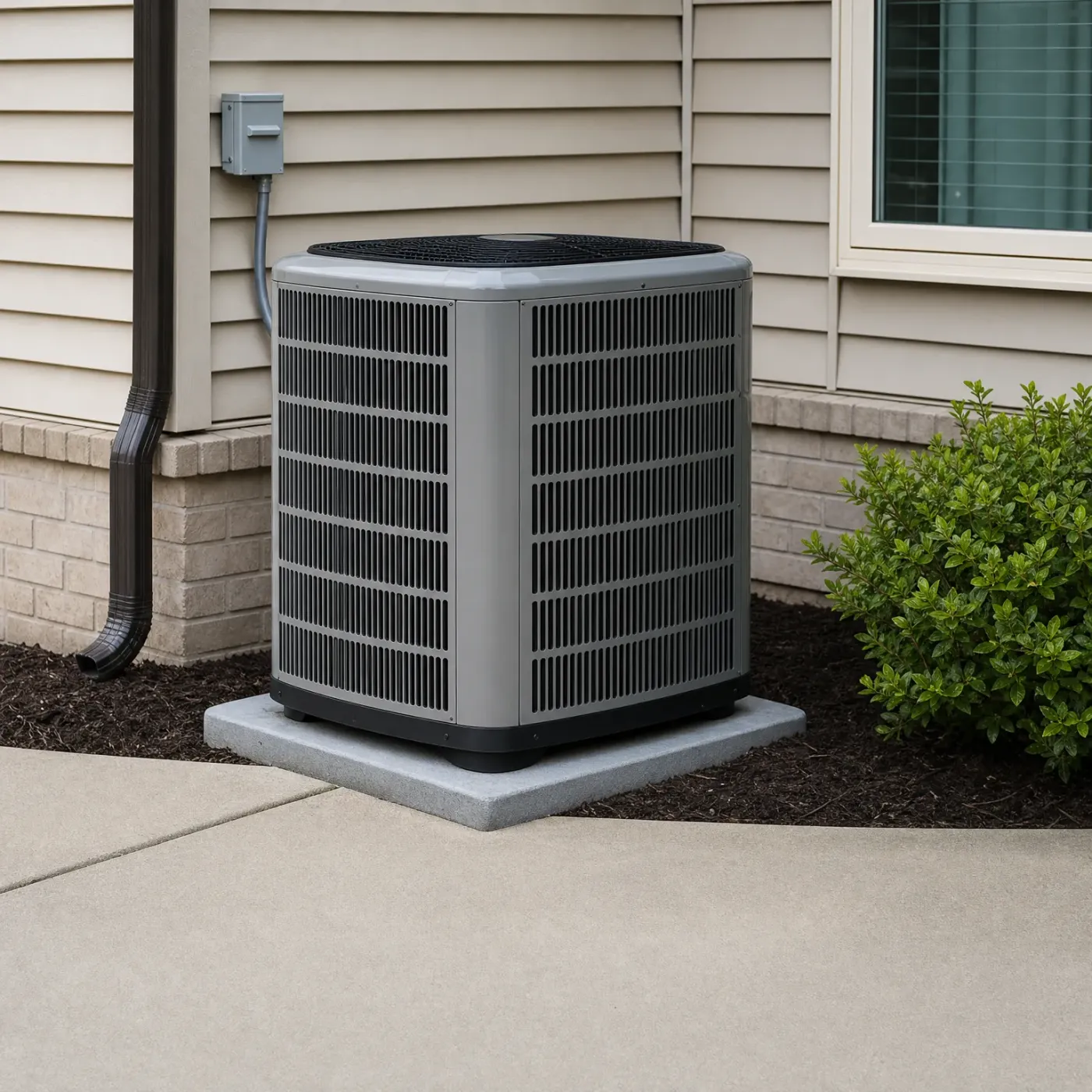
A gray outdoor air conditioning condenser unit on a concrete pad beside a house with horizontal vinyl siding, a brick foundation, downspout, electrical disconnect box, mulch bed and a green shrub.

A system still working

An R-410A condenser running fine beside the house doesn't need to come out because of a refrigerant rule. It's still legal to service and recharge. If yours looks like this and keeps up on the hot days, there's no deadline pushing you toward a new unit.

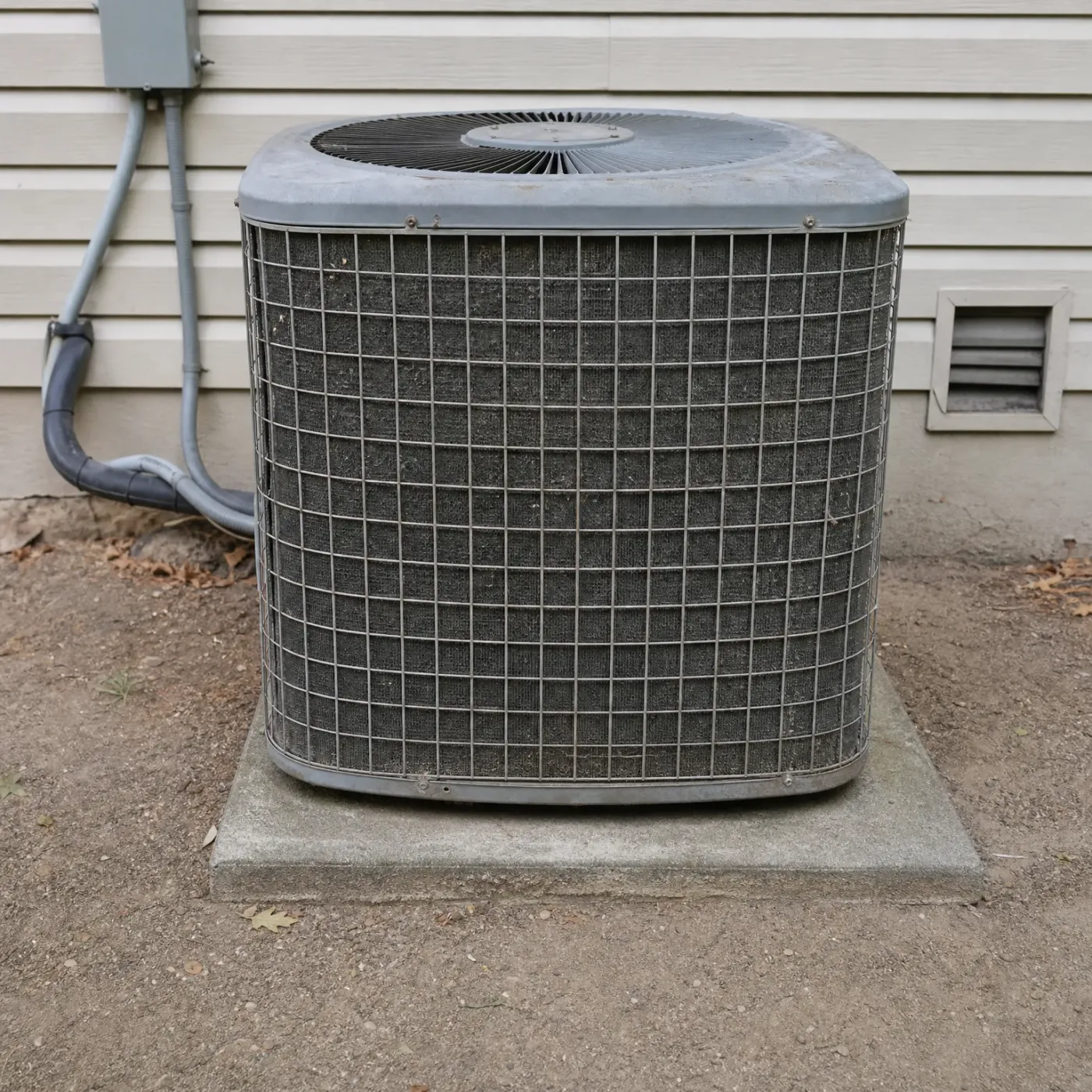
An outdoor air conditioning condenser unit with a dirty mesh coil guard sits on a concrete pad beside a house with horizontal lap siding, a wall vent, and conduit running to an electrical disconnect box.

A system on its way out

A condenser this dirty, with fins packed and the grille caked over, is usually also old enough that R-410A parts and refrigerant are getting harder to source at a fair price. When a unit in this shape finally fails, replacing it means moving to R-454B instead of repairing what's there.

What does this actually mean when your AC is out front?

Walk outside and your condenser looks the same as it always has. Nothing about the phase-out changes what you see or hear from it today. The signal comes later, usually when something breaks. A low charge means a technician checking what refrigerant it takes before any work starts. If it's R-410A and the unit is old enough that parts are getting hard to find, a repair can turn into a conversation about replacement instead, especially with a New York summer on the way and no time to be without cooling while that gets sorted. The unit itself doesn't tell you any of this by sitting there. It only comes up once something needs fixing.

  1. Your old R-410A system leaks or fails and needs a recharge

  2. A tech finds R-410A supply short or priced high that year

  3. A full system swap gets priced out against a risky recharge

  4. A new condenser and coil go in matched for R-454B

Keep It Running or Replace It Now

Keep running on R-410A

  • Refrigerant and parts for R-410A systems stay available for repairs, since the phase-out stops new manufacturing, not servicing of what's already installed.
  • A capacitor, contactor or fan motor on an R-410A unit gets replaced like any other repair, with no rule forcing a bigger job.
  • If the compressor itself fails or the system needs a full recharge from a leak, that repair gets priced against what a full replacement would run.
  • Through another New York summer the unit either keeps pace with the heat and humidity or it doesn't, and that's what decides the next step, not the refrigerant rule.
  • Waiting means living with whatever that system's current output is, good or marginal, until it gives out on its own schedule.

Install a new R-454B system

  • Every new air conditioner sold now runs on R-454B, so installation means a condenser and coil matched to that refrigerant from the start.
  • Sizing and installing the new system is one job handled start to finish, instead of a diagnosis now and a bigger decision later when something fails in August.
  • A new system goes in on your schedule, not during a breakdown week when the old unit quits in the middle of a heat stretch.
  • With power costs in New York among the highest in the country, a new condenser's efficiency rating affects the electric bill from the first month it runs.
  • Once it's in, there's no refrigerant question hanging over the system for years, since R-454B is the rule going forward, not a transition fuel.
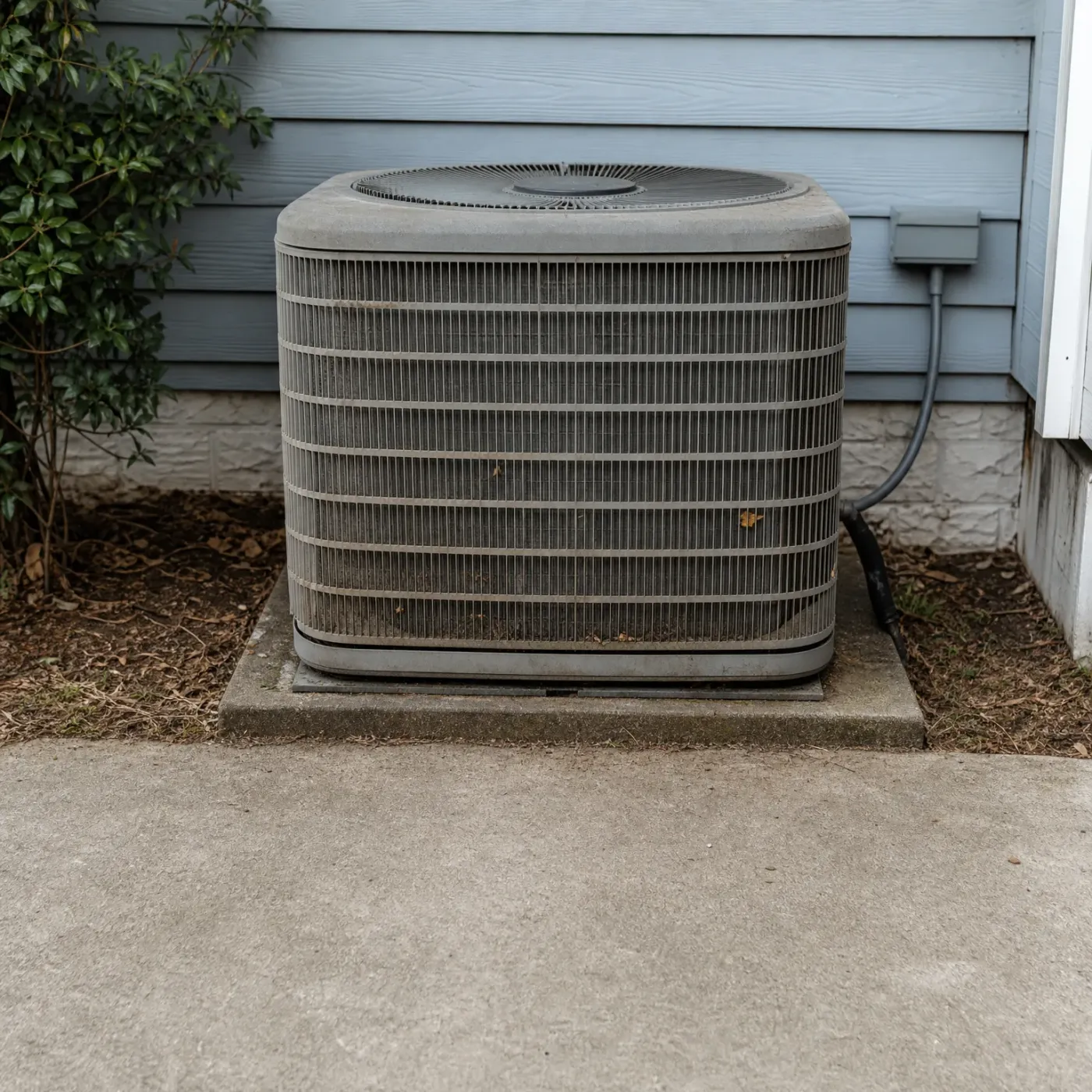
An outdoor air conditioning condenser unit on a concrete pad beside a house with light blue horizontal siding, with a shrub to the left and a conduit and disconnect box on the wall to the right.
Before you get your air conditioner installation
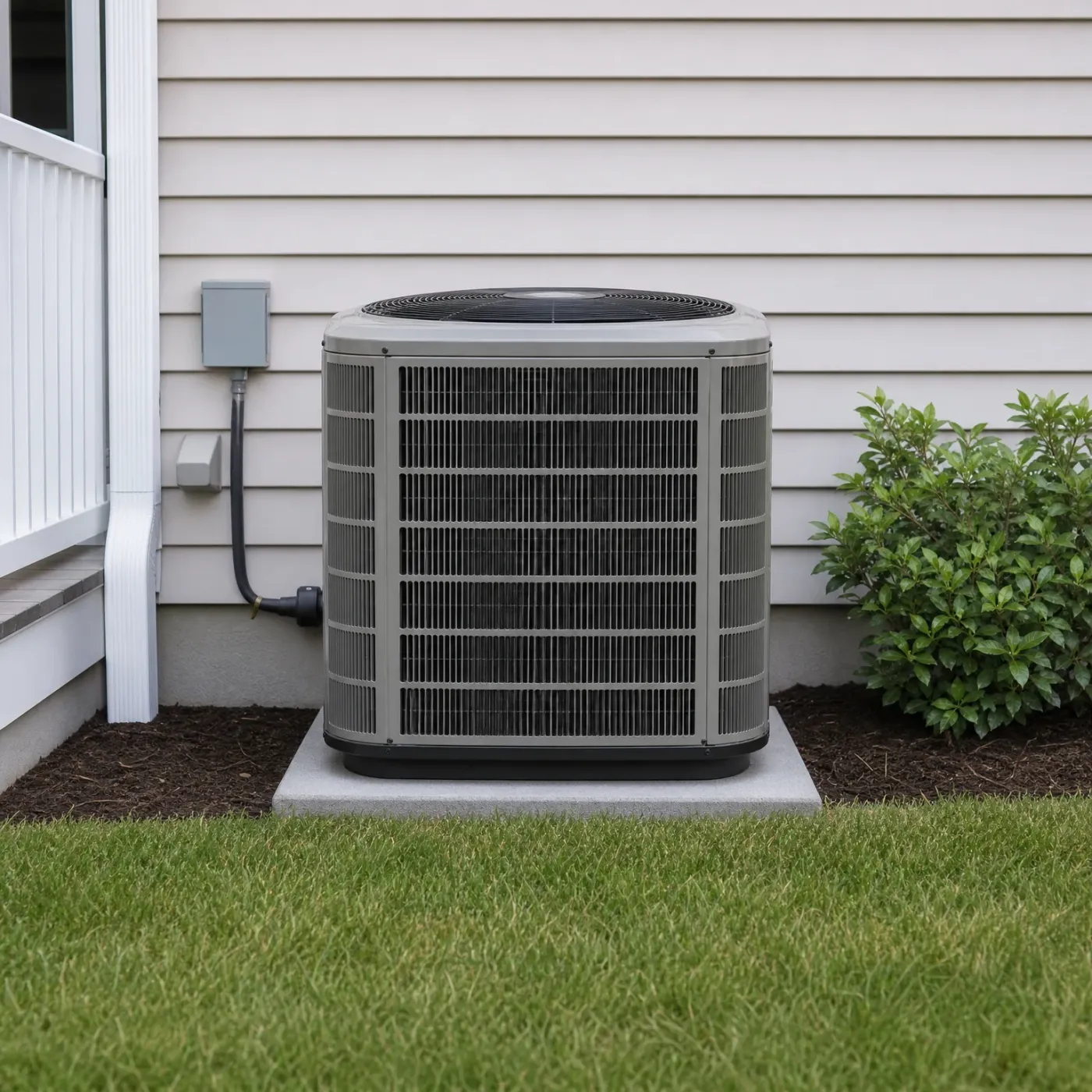
An outdoor air conditioning condenser unit on a concrete pad beside a house with horizontal lap siding, with a gray electrical disconnect box and conduit on the wall, mulch bed and shrub to the right, and mown grass in the foreground.
After you get your air conditioner installation

Send one request and you're done looking

Skip collecting and comparing quotes for the new air conditioner.

No fee to send it, and nothing to sign.

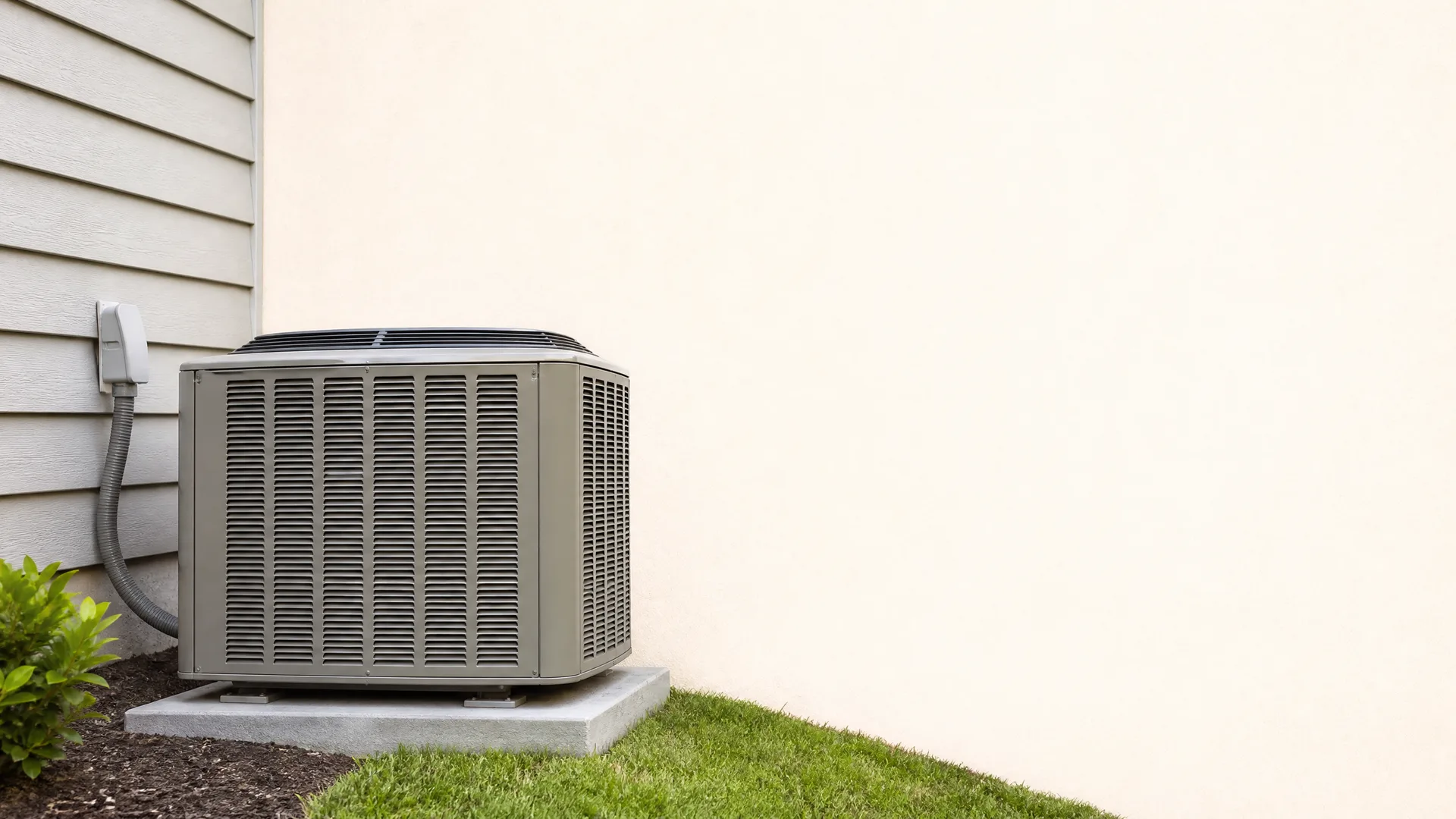
An outdoor air conditioning condenser unit on a concrete pad at the corner of a house, next to vinyl siding and a plain light-colored wall, with grass and a mulch bed in the foreground.

Matched parts, not swapped in

An R-454B condenser and coil get sized and charged together at the factory for that refrigerant. A contractor can't just drop a new condenser next to your old coil and call it done. The coil has to handle the pressure and oil mix R-454B runs at, so installation means replacing both pieces as a set, not patching one half of the system.

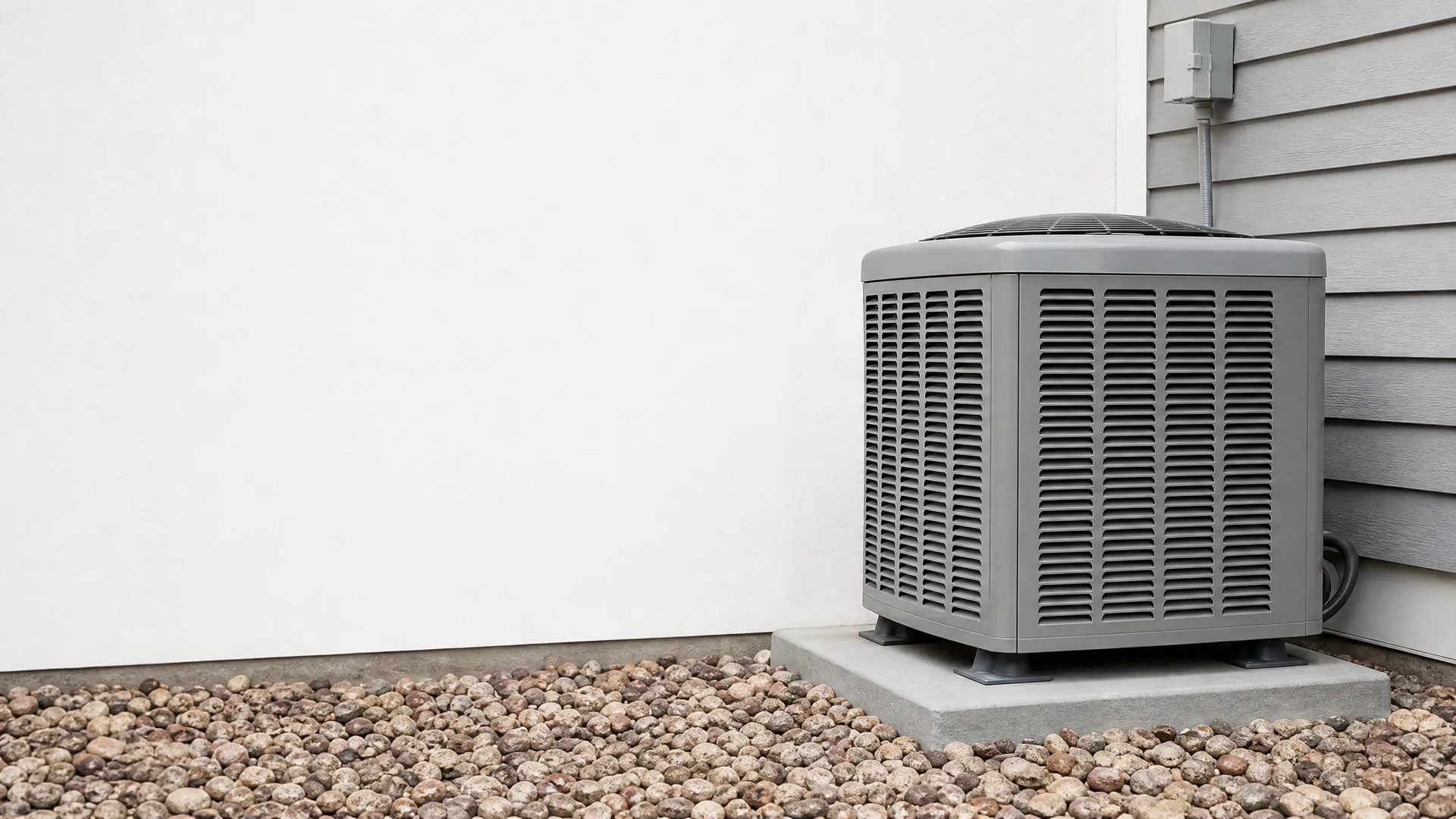
A gray outdoor air conditioning condenser unit sits on a concrete pad beside a white stucco wall and gray horizontal siding, surrounded by rounded landscaping gravel, with an electrical disconnect box mounted on the siding above.

R-454B carries a flammability rating

R-410A doesn't burn. R-454B is classified as mildly flammable, which is part of why it took new equipment design and installation rules to bring it to market. It still cools the same way any refrigerant does, moving heat out of your house and into the outside air, but a contractor installing it follows handling and charging steps that didn't apply to the refrigerant your system may be running now.

Power costs 26.39 cents per kilowatt-hour statewide

At 26.39 cents per kilowatt-hour, every hour your AC runs costs more here than in most of the country. A new system that runs on R-454B and holds its charge without leaking matters more in New York than somewhere power is cheap, since a few extra years of lost efficiency show up fast on the bill.

EIA-861 2025 statewide residential average

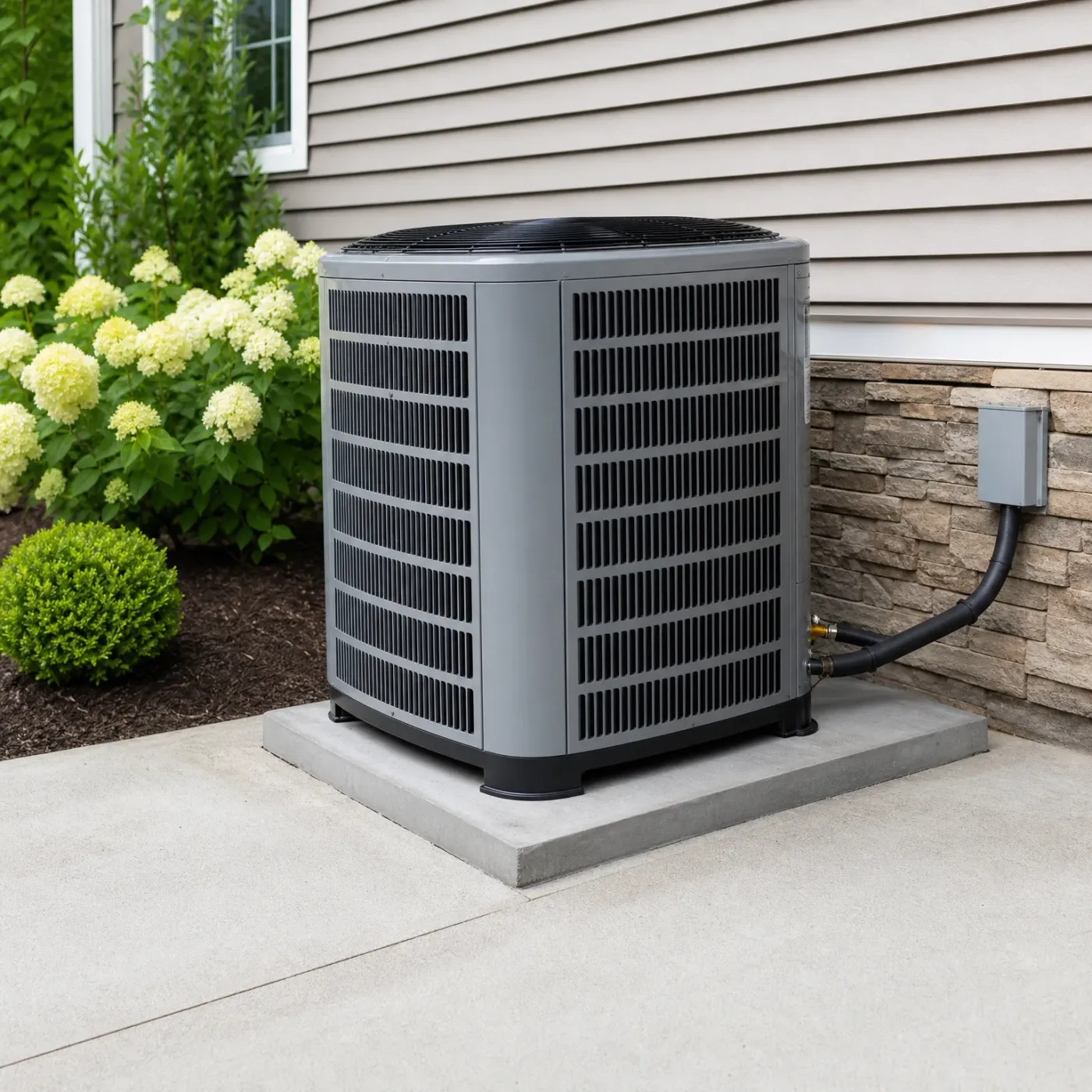
A gray outdoor air conditioning condenser unit on a concrete pad beside a house with horizontal siding and a stone veneer base, with refrigerant line and electrical disconnect box on the wall and flowering shrubs to the left.
Running fine, nothing to change yet. This condenser sits clean and current, doing its job on a muggy day without any rule forcing a decision.
An outdoor air conditioner condenser unit on a concrete pad beside a house with light gray horizontal siding, with mulch and green shrubs on either side and a concrete walkway in the foreground.
Years of grime and weather catching up. A unit this worn is closer to a repair call than this one, and that's when R-454B enters the picture.
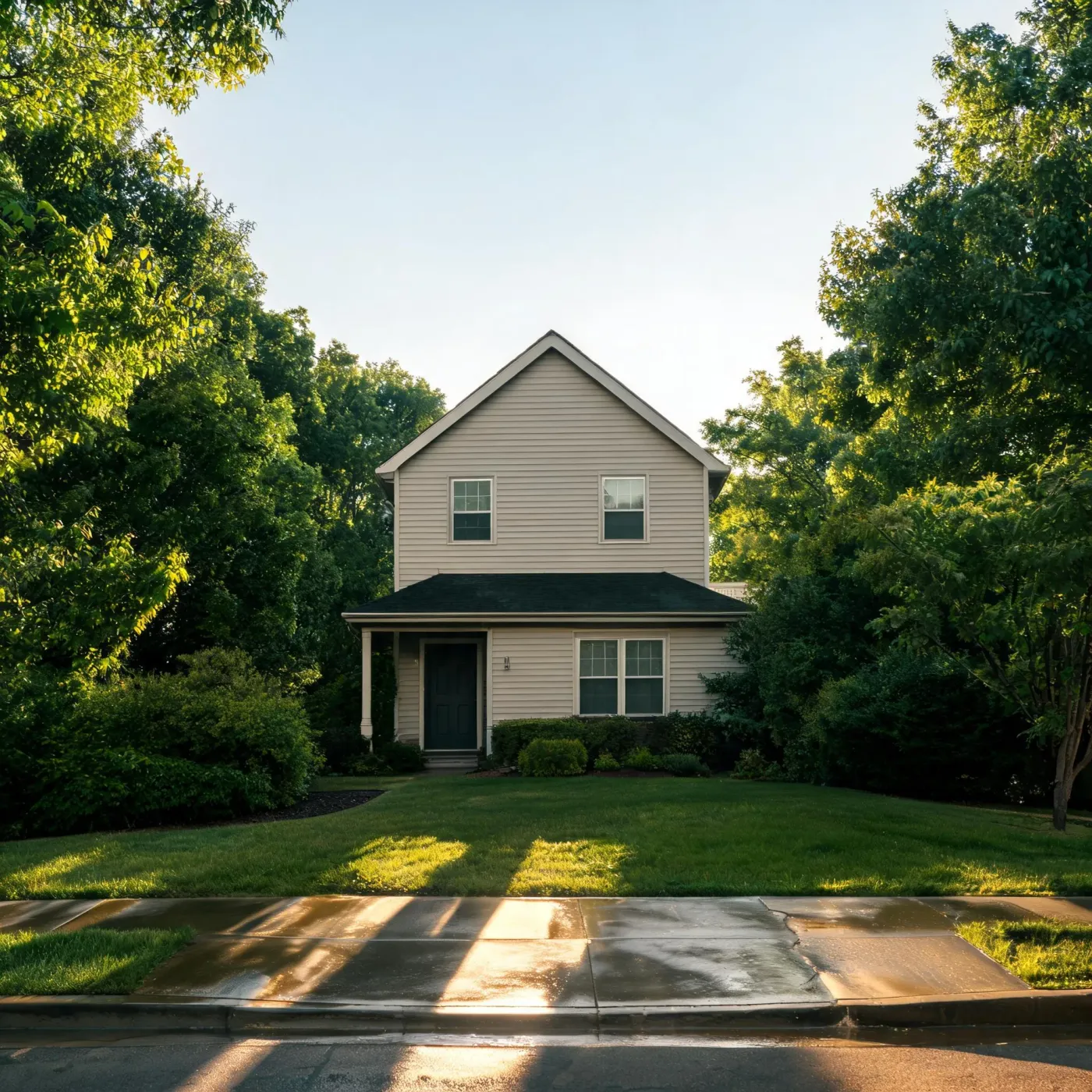
A two-story house with light beige horizontal siding, a gabled roof, a small covered front porch with dark door, and shrubs along the foundation, set behind a mown lawn and wet sidewalk with large leafy trees on both sides.

New York summers average a 62°F dew point across June, July and August, per NOAA climate data. That's the kind of air that sits on you instead of just being warm. Your air conditioner isn't only pulling heat out of the house on days like that, it's wringing water out of the air too, and that second job is what runs the compressor longer than the thermostat number alone would suggest. A sticky stretch in July works the system harder than a hot but dry day would, even at the same temperature. If your AC is getting older, that's the load it's been carrying every summer, and it's the same load whatever refrigerant the next one runs on.

NASA POWER T2MDEW county cells weighted by homes

A man in a gray sweater reclines in a brown leather armchair with his eyes closed, beside a wooden side table holding a mug, a folded newspaper and a potted plant, with a bookshelf and sunlit window behind him.
A man with greying hair and a dark sweater leans back on an armchair with his eyes closed and a slight smile, in a living room with a bookshelf, plant, folded newspaper and mug on a wooden table.
A man in a gray fleece jacket sits reclined in a leather chair with his eyes closed, in a room with bookshelves, a table lamp, a window, and a desk holding a folded newspaper and a dark mug.
A bearded man in a gray fleece pullover sits with eyes closed in a brown leather armchair in a living room, with a floor lamp, bookshelf, potted plants, a side table holding newspapers and a dark mug, and a bright window behind him.

Riding it out on repairs

Staying on R-410A for now means fewer decisions this year. A tech can still find the refrigerant, recharge the system, and send you a bill you've seen before. No new coil, no new condenser, no matching parts to worry about. If the unit's been reliable and the repairs so far have been small, there's a real case for leaving it alone through another New York summer and letting the phase-out stay someone else's problem a while longer.

Switching to R-454B now

Installing a new system built for R-454B means the condenser and coil come matched from the factory, so there's nothing to piece together later. You're not waiting to see what R-410A costs or whether it's still easy to find in a few summers. With power priced the way it is here, a system that holds its charge and runs the way it's rated to matters more than it would somewhere electricity is cheap.

A gray-haired man with a beard in a blue button-placket shirt reclines on a couch with his eyes closed, beside a sunlit window with a green plant.
A woman in a cream knit sweater sits in an armchair with her eyes closed near a window showing yellow autumn foliage, with a mug on a round wooden side table beside her.
A closed dark laptop and a ceramic mug of coffee on a wooden dining table, with wooden chairs, a dark kitchen cabinet with cutting boards and a potted plant, and a leafy plant by a window in the background.

Where that leaves your air conditioner

R-410A isn't illegal and it isn't disappearing from the unit you have. If your system is running fine, nothing about this phase-out forces your hand. The decision only shows up when something breaks and a tech is standing in front of your condenser telling you what a repair costs against a full swap to R-454B.

When that day comes, the search itself is the part you can skip. Instead of calling around New York for a contractor who can quote both a recharge and a matched R-454B system, checking who's licensed, and explaining the same leaking condenser story three times over, you send one form. You decide when you see the numbers in front of you, not before.

A living room corner with a beige sofa and cushion, a round wooden coffee table holding a pale ceramic vase of eucalyptus stems and a wooden bowl, and a curtained window with a potted plant above a latticed radiator cover in the background.
A single-story stucco house at dusk with a lit paver walkway lined by low path lights, desert plants and boulders in front, and distant mountains under an orange and blue sky.

Air Conditioner Installation

Finding a pro stops being your job

Step 1 of 3: Equipment
  • A multi-pane white window looking out on snow-covered evergreen and bare trees, with a ceramic mug, pine cones, a book, a knit blanket and a burlap cushion in the foreground.
    • Get in touch with a local installer about a new air conditioner.
    • A local installer who puts in air conditioners gets your project.
  • A cream knit throw and striped pillow on a light upholstered sofa beside a window, with a woven basket of split firewood in the foreground.
    • Send it once and finding someone is no longer on you.
    • Send the form and stop researching installers for the new air conditioner.
  • A weathered wooden bench with a beige cushion and a fringed brown throw sits on a wood-plank porch beside a large planter with a thin-branched shrub, against a light-colored house wall with a dark-framed window.
    • Explain the job once and skip repeating it on every call.
    • Skip searching for an air conditioner pro and answer a few questions instead.
  • Exterior of a dark shingle-sided house with a white-trimmed divided-light window, a yellow-leaved tree, trimmed shrubs, and two small pumpkins on a stone pillar cap.
    • One installer gets your project, so there's no bidding war over it.
    • Your request stays with one local pro.