






Empire State Cooling

Why your AC can't keep up on hot New York days

Step 1 of 3: Equipment

On a sticky New York afternoon, your AC runs the whole time and the house still doesn't feel cool. That usually means the system is losing a fight it was never sized to win on a day like this, or it's lost some of the capacity it used to have. When the air outside is heavy with moisture, the unit has to pull that moisture out before the house feels cool at all, and it has to run longer to do it. A dirty filter, a low refrigerant charge, a coil caked with dust, or a condenser fan struggling outside all cut into the capacity you need most on the hottest days. A system that keeps up fine in June can fall behind once July and August push both the heat and the humidity higher. If yours is running nonstop and the house still isn't comfortable, something is making it work harder than it should have to.

A woman with long wavy brown hair in a grey ribbed sweater sits on a couch indoors, looking toward a window, with a potted palm-like plant and fireplace behind her.
A woman with long brown hair wearing a green V-neck top and beige cardigan sits on a light sofa, looking off to the side, with a dining table, lamp and framed picture in the background.
A woman with long dark hair in a cream knit sweater sits on a beige sofa indoors, looking toward a bright window with a houseplant and framed picture in the background.
A woman with long dark hair in a green knit sweater sits on a couch indoors, smiling and looking toward a window with a blurred room behind her.
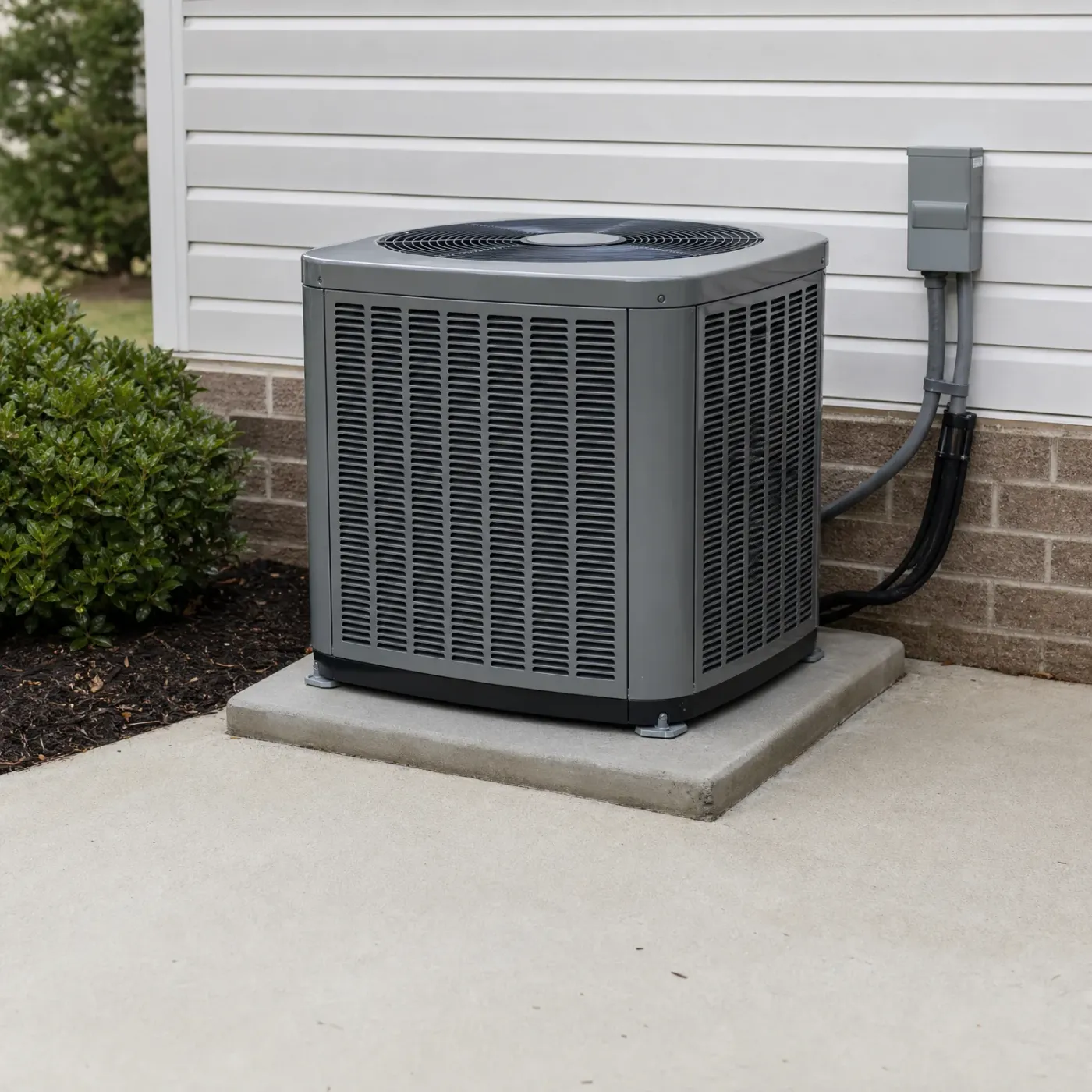
A gray outdoor air conditioner condenser unit on a concrete pad beside a house with white horizontal siding and a brick foundation, with a wall-mounted disconnect box and conduit, and a green shrub with mulch at left.
A clean unit with clear airflow on all sides can still move enough heat on a 95 degree day to keep up with the house.
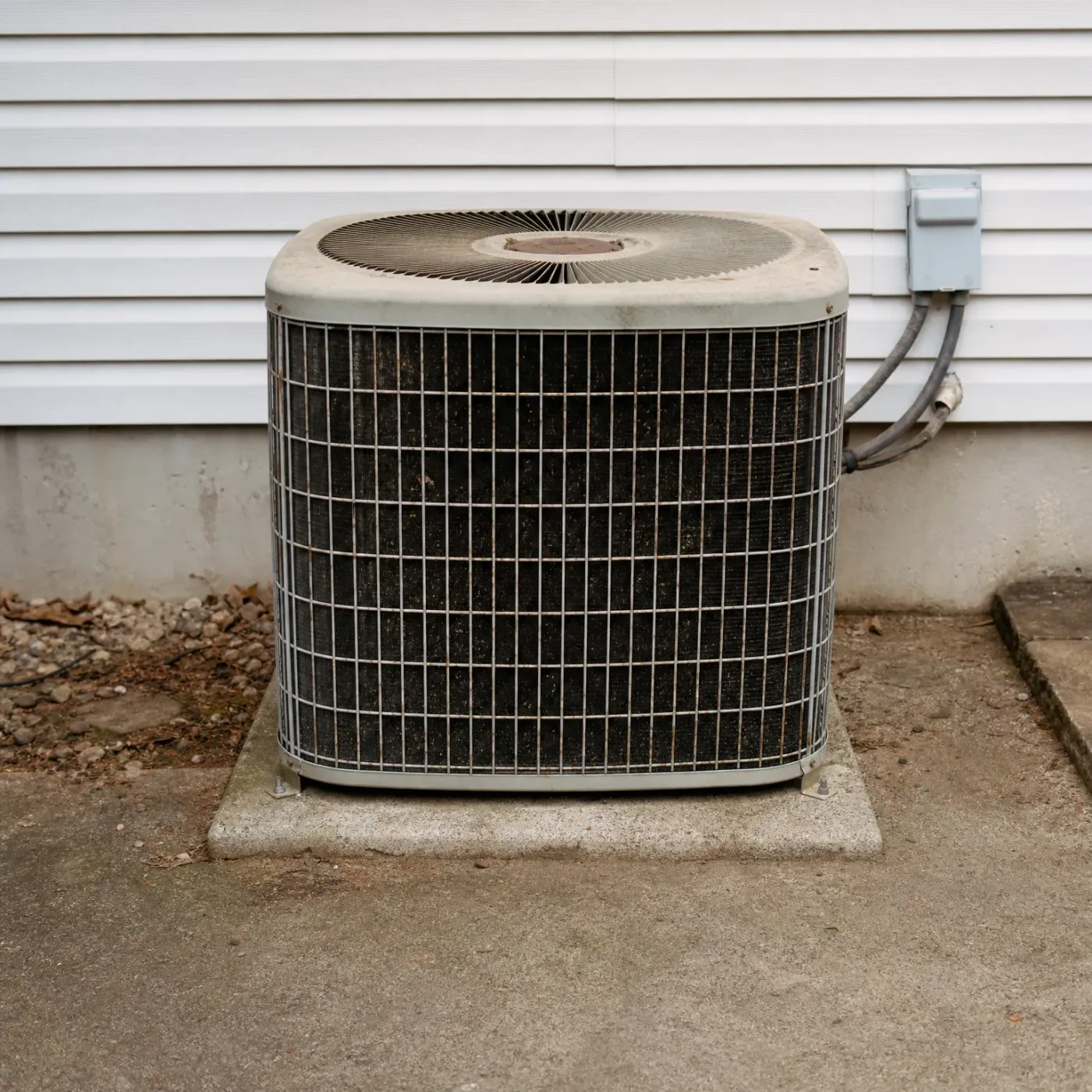
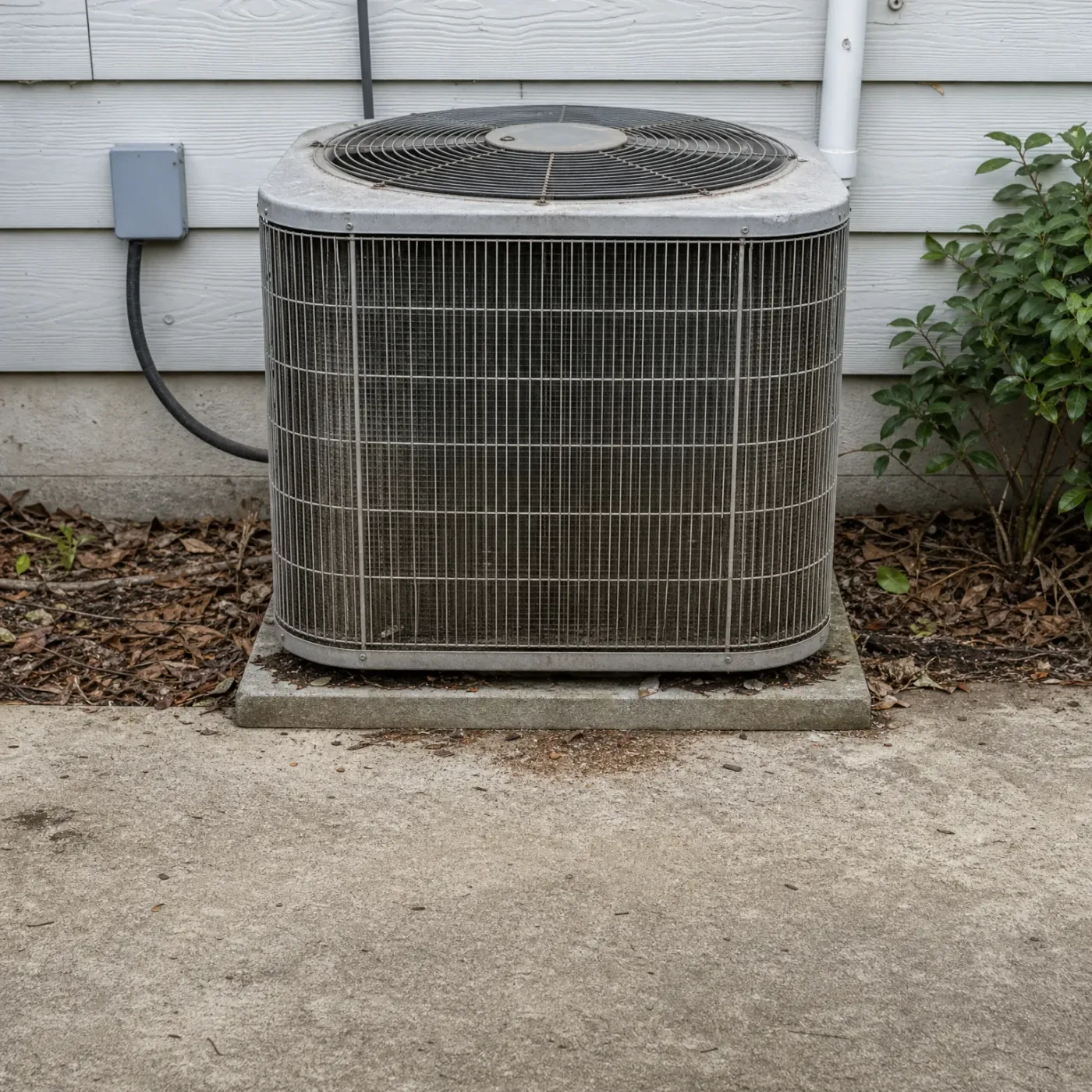
An outdoor air conditioning condenser unit on a concrete pad beside a house with white horizontal vinyl siding, with a gray electrical disconnect box and refrigerant lines on the wall behind it.
A coil caked with grime like this can't shed heat fast enough, so the system runs longer and still loses ground.

Your AC doesn't make cold air so much as move heat out of the house and into the air outside. On a mild day that's an easy trade. On a 95 degree day, the outdoor unit is trying to push heat into air that's already hot, and the refrigerant line has to carry more pressure to do it. The compressor works harder for the same result, and it gets less back for the effort, since capacity drops a bit for every degree past the point the system was rated for. If the charge is low, each cycle moves less heat than it should, so the compressor runs longer just to break even. A coil caked with dirt or a fan that's partly blocked makes it worse, because the unit can't shed heat fast even if the compressor is healthy. Once the house falls a few degrees behind on an afternoon like this, the system isn't just cooling anymore. It's trying to close a gap that keeps growing while the sun's still up.

Why hot days beat your AC

  • The condenser outside has to dump heat into the air around it, so on a 95 degree day it's pushing heat into air that's already hot.
  • As the outdoor temperature climbs, the pressure in the refrigerant line climbs with it, and the compressor has to work harder to keep moving it.
  • A system loses roughly a percent or two of its cooling capacity for every degree the outdoor temperature rises past its rated point.
  • Low refrigerant charge means less heat gets carried out of the house per cycle, so the compressor runs longer to do the same job.
  • A dirty condenser coil or a blocked fan cuts how much heat the outdoor unit can release, even if everything else is working.
  • Once the house gets a few degrees behind on a day like this, the system is cooling against a bigger gap than it was built to close.
A gray-haired woman in a cream knit sweater stands in a dimly lit kitchen at night, looking to her right, with a round loaf of bread in the foreground and a dark window and potted plant behind her.
A woman with her hair in a bun holds a sleeping young child against her chest, both wrapped in a textured beige knit blanket on a sofa in a dimly lit room with a lamp, framed picture, and bookshelf behind them.

A pro who works on air conditioners

A system that struggled on a 95 degree day doesn't fix itself before the next one. If the coil is dirty or the charge is low, it'll run long again tomorrow, and the compressor working that hard, that often, is how a repair turns into a replacement. Worth having someone look at it before the next stretch of heat, not during it. A local contractor who works on New York systems all summer has seen what a dirty coil does to a unit's airflow and what a low charge does to its pressure, and knows which one is more likely given how your system has been running. You'd be matched with one contractor, someone local to call about your house and your AC, not a handful of companies competing for the job. With power costs what they are here, a unit running longer than it should to hold the same temperature is worth catching now.

What a weak system still owes you

Even an AC that's lost some capacity should pull the house down to somewhere near its setting, just slower. If the thermostat says 72 and the house is sitting at 80 with the system running nonstop, that's not a hot day problem. That's a system that can't make the temperature drop at all, which points to low refrigerant or a compressor that isn't pulling its weight. A contractor checking pressures and amp draw on the unit will usually find which one it is within the first part of the visit.
How humidity changes the math

New York summers aren't just hot, they're wet, and your AC spends part of its runtime pulling moisture out of the air before the house even starts to feel cooler. A system low on refrigerant or short on airflow does that part poorly, so the air inside stays damp even while the temperature creeps down. That's why a house can read 74 on the thermostat and still feel sticky. If rooms feel clammy no matter how long the system runs, that's worth mentioning when a contractor looks at it.

Power costs 26.39 cents per kilowatt-hour statewide

At 26.39 cents per kilowatt-hour, every extra hour your AC runs on a struggling afternoon shows up on the bill fast. A system fighting a dirty coil or a low charge draws power the whole time it runs and still falls behind, so you're paying more to end up less comfortable.

EIA-861 2025 statewide residential average

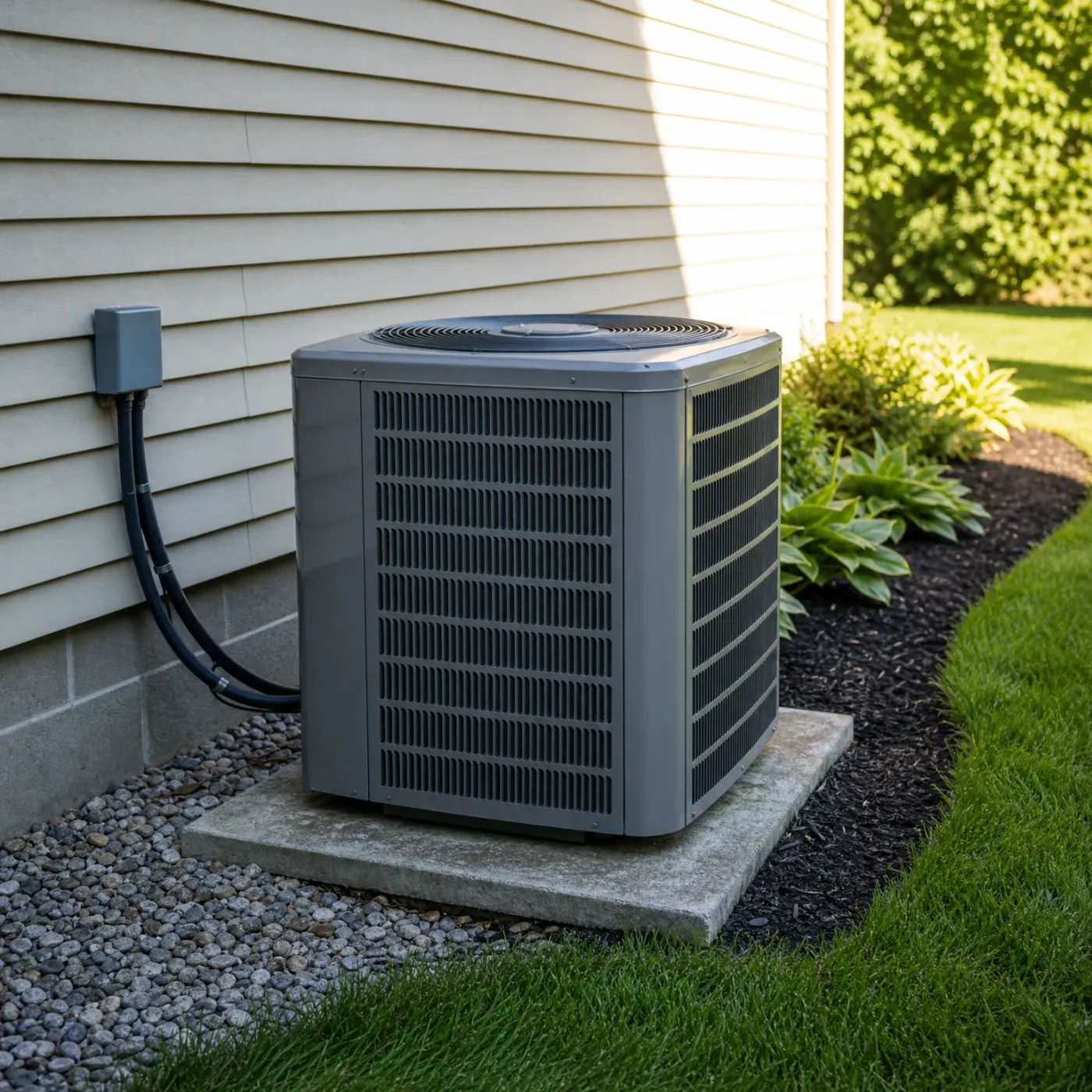
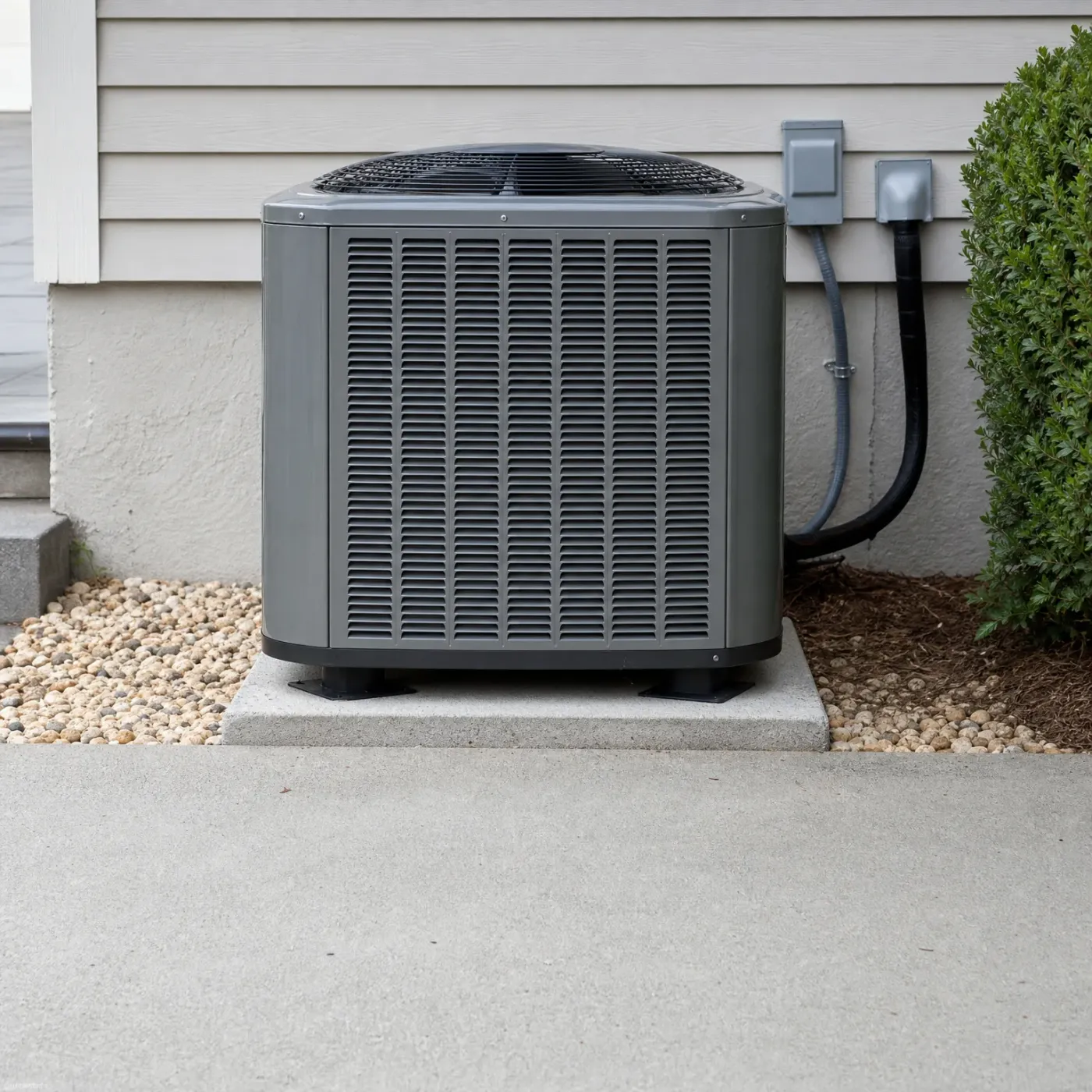
A gray outdoor air conditioner condenser unit on a concrete pad beside a house with horizontal siding and a stucco foundation, with a disconnect box and conduit on the wall, decorative gravel, mulch, and a shrub nearby.

Running the way it should

A condenser with open space around it and a clean coil can push heat out as fast as the house makes it. Air moves through the grilles with nothing slowing it down. On a 95 degree day it cycles, catches up, and shuts off.

An outdoor air conditioning condenser unit on a concrete pad beside a house with horizontal lap siding, with an electrical disconnect box and conduit on the wall, mulch and a green shrub to the right, and a concrete walkway in the foreground.

Fighting its own coil

Dirt and debris packed into the grilles here block the airflow the coil depends on. Heat that should be leaving the house stays trapped at the coil instead. The unit runs longer, the compressor works harder, and the house still doesn't cool down.

A woman in a cream cardigan and jeans stands with one hand raised facing an open front door of a gray horizontal-siding house, with a black lantern wall light, a potted shrub with yellow flowers, and a stone-faced porch column.

So the AC isn't really keeping up

A 95 degree day in New York asks more of your AC than it was built to give once it's lost a step, and running longer doesn't fix that. A dirty coil stays dirty and a low charge stays low until someone deals with it directly. Nothing about tomorrow's heat makes that easier on the system.

Finding the one thing that's actually wrong, the coil, the charge, the airflow, takes someone who works on this equipment all summer and knows what usually gives out first in a New York house. That's what you'd be matched with: one licensed local contractor who's seen this exact problem before, reaching out to look at your system and tell you what's really going on, not a handful of companies competing for your number.

A living room corner with a light beige sofa holding a textured taupe cushion, a large ceramic vase of olive branches by a window, a framed neutral artwork on the wall, and a dark bowl with stacked books in the foreground.
A gray outdoor air conditioning condenser unit on a concrete pad beside a house with light horizontal siding, with gravel, dark mulch, shrubs and lawn nearby and a conduit box on the wall.

Get your air conditioner to the right pro

Get an air conditioner pro

Only one pro gets your request, so you hear from one company.

It costs nothing to send, and you don't have to hire anyone.