
Why your AC compressor won't kick on in New York
A compressor that won't start is usually one of a few things: a tripped breaker, a bad capacitor, a failed contactor relay, or a safety switch keeping the system shut down on purpose. The capacitor gives the compressor its initial jolt to start running, and after a few summers of New York heat and humidity, that part weakens and eventually stops sending enough charge. A contactor relay can get pitted from switching on and off all season and stop closing the circuit. Sometimes the compressor is fine and a dirty condenser coil or a low refrigerant charge is tripping a pressure switch that won't let it run until the real problem is fixed. None of these are safe to force past on your own. The compressor is the most expensive part of the whole system, and running it with bad electrical parts or the wrong pressure can burn it out for good.
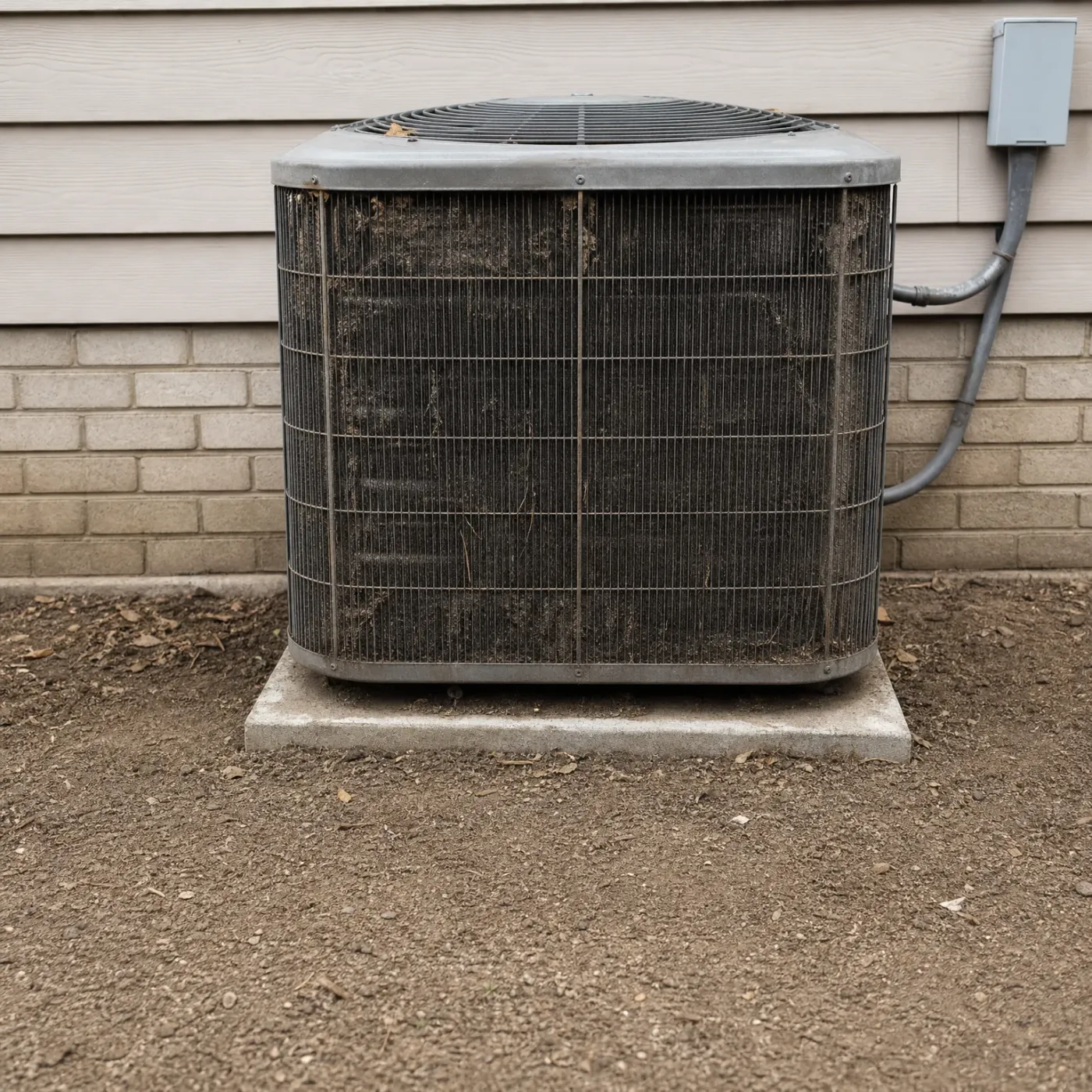
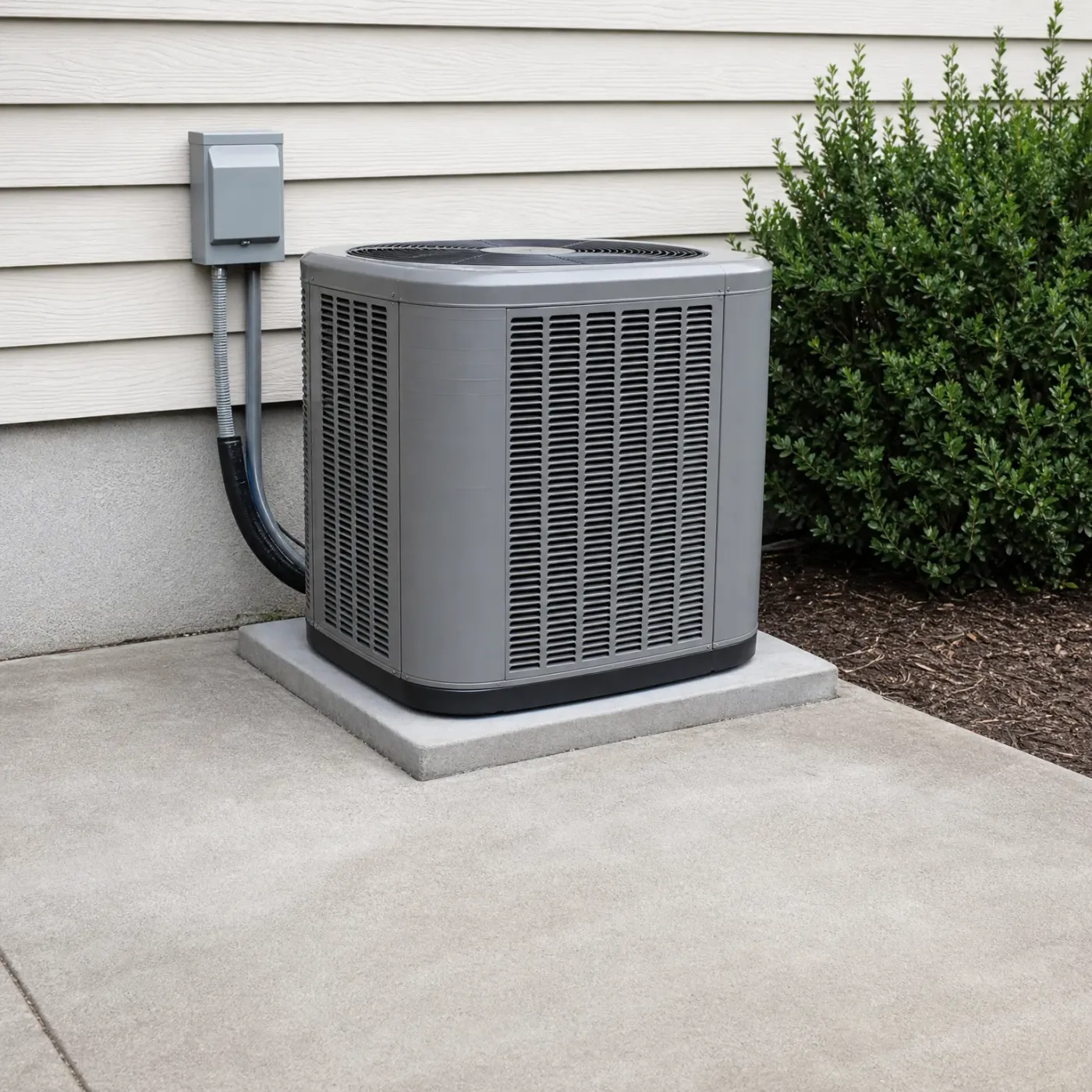
Why the compressor stays silent
- The outdoor unit holds a run capacitor and often a start capacitor, and either one can fail from heat and age.
- A bad contactor relay can stick open or burn at the contacts, so the 24-volt signal from the thermostat never reaches the compressor.
- High-pressure and low-pressure safety switches shut the compressor off on purpose if the refrigerant charge or airflow isn't right.
- A low refrigerant charge drops the suction pressure low enough that the low-pressure switch trips before the compressor ever starts.
- A dirty condenser coil or blocked outdoor fan can push head pressure high enough to trip the high-pressure switch.
- The thermostat sends a low-voltage signal, not power, so a wiring fault between the thermostat and the contactor can stop the compressor without tripping a breaker.
The compressor is the heart of the outdoor unit, and it only runs when several things agree it should. The thermostat sends a 24-volt signal down to the contactor, a small relay that closes to let full power reach the compressor. If that relay is stuck or burned at the contacts, the signal arrives but nothing happens, and the breaker never trips because no power is actually flowing. The run capacitor is what gives the compressor the jolt it needs to get spinning, and some systems also use a separate start capacitor for that first second. Heat is hard on both, and a New York summer puts the outdoor unit through long stretches of exactly that. Even when the electrical side checks out, the system can refuse to start on purpose. A high-pressure switch and a low-pressure switch sit in the refrigerant lines watching for trouble. If the charge is low, suction pressure drops and the low-pressure switch cuts the compressor off before it can run dry. If the condenser coil is caked with dirt or the outdoor fan isn't moving air, head pressure climbs and the high-pressure switch does the opposite, shutting things down before damage sets in. None of this shows up by looking at the unit from across the yard. A contractor checks voltage at the contactor, tests the capacitor's actual output against its rating, and reads the pressures before touching anything else.




No phone calls to make
A hot July with a dead compressor is not something to sit on. Every muggy day it stays off is a day your blower just moves warm air around, and with power costs in New York what they are, running the system hard once it's fixed doesn't make up for days lost waiting. Finding someone qualified usually means searching around, calling a few shops, explaining the same symptoms more than once, then sitting with quotes trying to guess who actually knows these units. That work goes away here. Your request goes to one local contractor, someone who works on central air systems all over New York every summer and has likely seen this exact failure, whether it's a capacitor, a contactor, or a safety switch doing its job. You're not fielding calls from five different companies trying to win the work. One contractor gets it, looks at your system, and tells you what's actually wrong.
Why the breaker trips again
A single tripped breaker is worth a reset, but a breaker that trips again within a day points to the compressor drawing more current than it should, often from a failing start capacitor or a motor winding that's breaking down. Resetting it a second and third time doesn't fix anything and can stress a compressor that's already struggling. Each restart pulls a hard surge of current through a motor that may already be weak, and that surge is what burns out windings for good. A breaker doing its job by tripping is better than one that doesn't, but it's telling you to stop flipping it and have someone look at what's actually drawing that load.
What a safety switch is protecting
Central air systems have a high-pressure switch and sometimes a low-pressure switch wired into the control circuit, and either one will hold the compressor off rather than let it run into a condition that damages it. High pressure usually means the outdoor coil can't shed heat, often because it's caked with a summer's worth of dirt and cut grass, or because airflow through it is blocked. Low pressure points toward a refrigerant leak or an airflow problem on the indoor side. Either way, the switch isn't the problem. It's doing exactly what it's supposed to do, and forcing the compressor to run past it risks a much more expensive repair than whatever tripped the switch in the first place.
Power costs 26.39 cents per kilowatt-hour statewide
At 26.39 cents per kilowatt-hour, a compressor that short-cycles or struggles to start is pulling hard every time it tries. That strain shows up fast on your bill, which is one more reason to get the actual cause fixed instead of just resetting the breaker.
EIA-861 2025 statewide residential average

Thermostat calls for cooling and sends a 24-volt signal
Signal reaches the contactor relay in the outdoor unit
Contactor closes and sends power to the compressor
Capacitor delivers the jolt that starts the compressor motor

A dead compressor has a reason, and a licensed tech can find it
A tripped breaker, a failed capacitor, a stuck contactor, or a safety switch doing its job. One of those is why your compressor won't start, and a licensed contractor can tell you which within one visit instead of leaving you to guess by resetting the breaker again and hoping.
You don't have to spend a sticky afternoon searching for someone qualified, calling a few companies, explaining the same symptoms to each one, then sitting with quotes trying to work out who actually knows your equipment. This connects you with one licensed New York contractor who works on compressors like yours all summer and knows what tends to fail first. No second call, no repeating yourself, no pile of bids to sort through.



One form, no calling around
A compressor that won't start comes down to a short list of causes, and a licensed New York contractor who works on this equipment all summer can narrow it down fast instead of leaving you to guess. Request the repair here and you skip calling around, repeating the problem to company after company, and sorting through quotes. One local contractor gets matched to you, so you're not fielding calls from five companies at once, just the one who's actually going to look at your unit.
Your request goes to one pro, not a list of companies.
There's no charge for the request.