Why your AC outdoor fan isn't spinning in New York

Step 1 of 3: Equipment

Why isn't my AC outdoor fan spinning?

You go out to the outdoor unit on a sticky New York afternoon and the fan on top isn't turning, even though the system inside is running or trying to. The house is getting warmer and you want to know if this is something simple or if the unit is done for the day.

Usually a bad capacitor, a seized motor, or a tripped breaker

Most of the time the fan motor itself is fine but it isn't getting what it needs to start. A capacitor gives the motor its initial push, and once it weakens the motor hums but won't turn, or doesn't start at all. Heat speeds that wear along, and a New York summer puts a lot of hours on that part. The other common cause is the motor bearings seizing up after years of running, which stops the blade outright even with power reaching it. Less often it's a tripped breaker or a safety switch inside the unit cutting power to protect the compressor. Any of these needs a contractor to open the unit and test it, since running the system with the fan not spinning can overheat the compressor fast.

A woman in a knitted shawl sits in a living room with a fireplace, shelves, a sofa with cushions, and a lamp by a bright window, looking off to the side.
A woman with long brown wavy hair in a green shirt over a white top stands in a living room with built-in white shelves, a ceiling fan, a potted plant and a sliding glass door.
A woman with shoulder-length gray-streaked hair in a light gray knit sweater stands smiling and looking off to the side in a living room with a sofa, houseplant, framed picture, and sunlit sliding glass door.
A woman with shoulder-length curly gray hair wearing a gray knit sweater stands near a window with a sheer curtain, looking to the side, with a blurred interior room behind her.

What you're probably noticing right now

The indoor blower is running, you can feel air moving through the vents, but it's warm air, not cold. Outside, the unit is humming or clicking but that fan blade isn't moving at all. Sometimes you'll hear a faint buzz from the compressor still trying to work. The longer it runs like this, the warmer the house gets, and on a sticky day that shows up fast. A compressor working without its fan running can overheat and shut itself down, and running it that way for very long can damage it. If you've noticed this, shutting the system off at the thermostat until someone looks at it is the safer move than letting it keep trying.

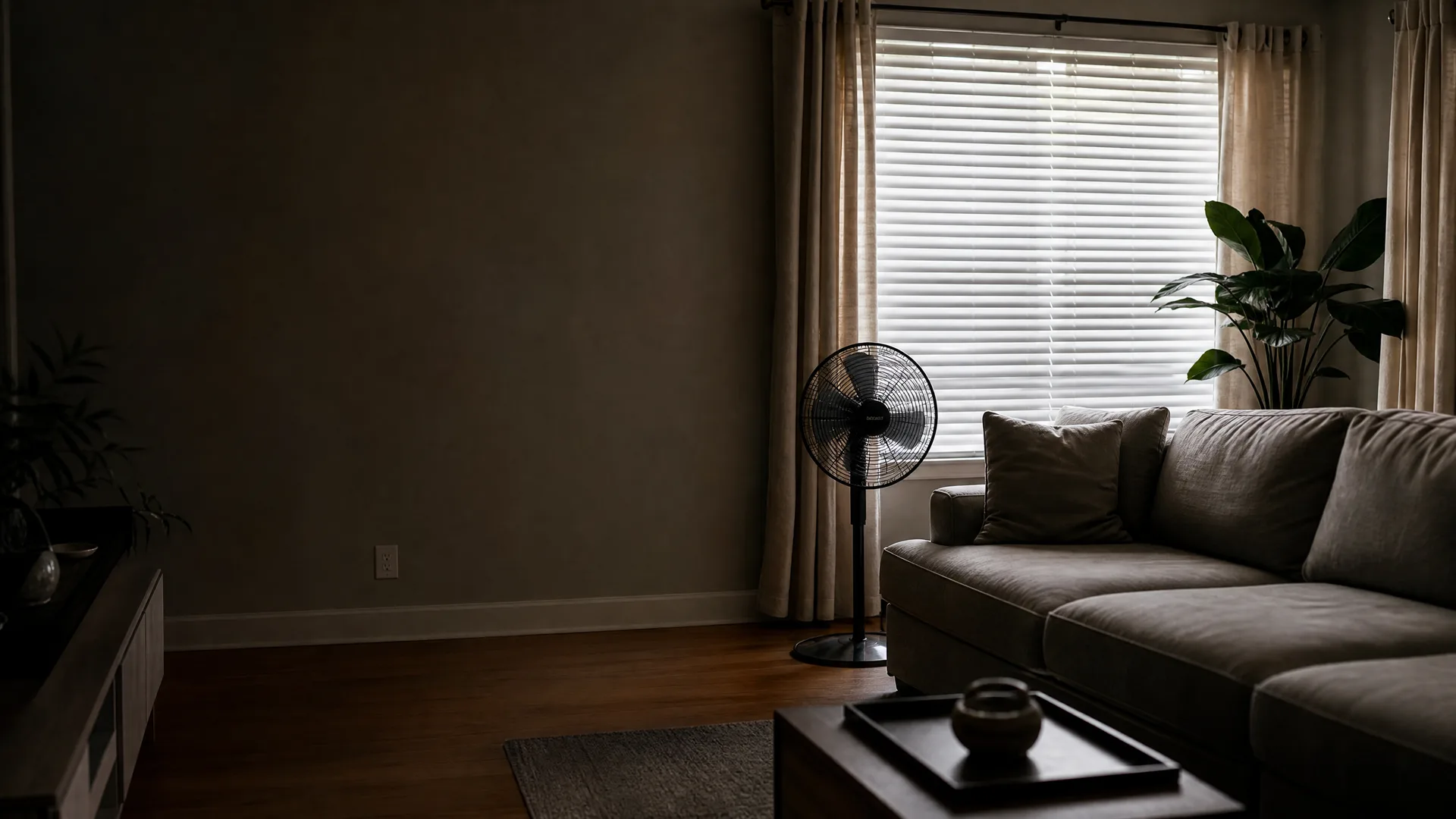
A dimly lit living room with a gray sectional sofa, a standing pedestal fan, a curtained window with blinds, a potted broad-leaved plant, a wooden coffee table with a tray and lidded jar, and a rug on dark wood flooring.

It's past two in the afternoon and the blinds are drawn against the sun. You've got a floor fan going next to the couch, pointed at nobody in particular, just moving the warm air around. The vents are still blowing, but it's not cold anymore, not really. You've checked twice now. Outside, that fan on top of the unit sits dead still while the rest of the system keeps trying to work. New York summers get sticky enough without this. The kids are camped in front of the one window unit upstairs, and you're doing the math on how long the living room can sit like this before it's not just uncomfortable anymore.

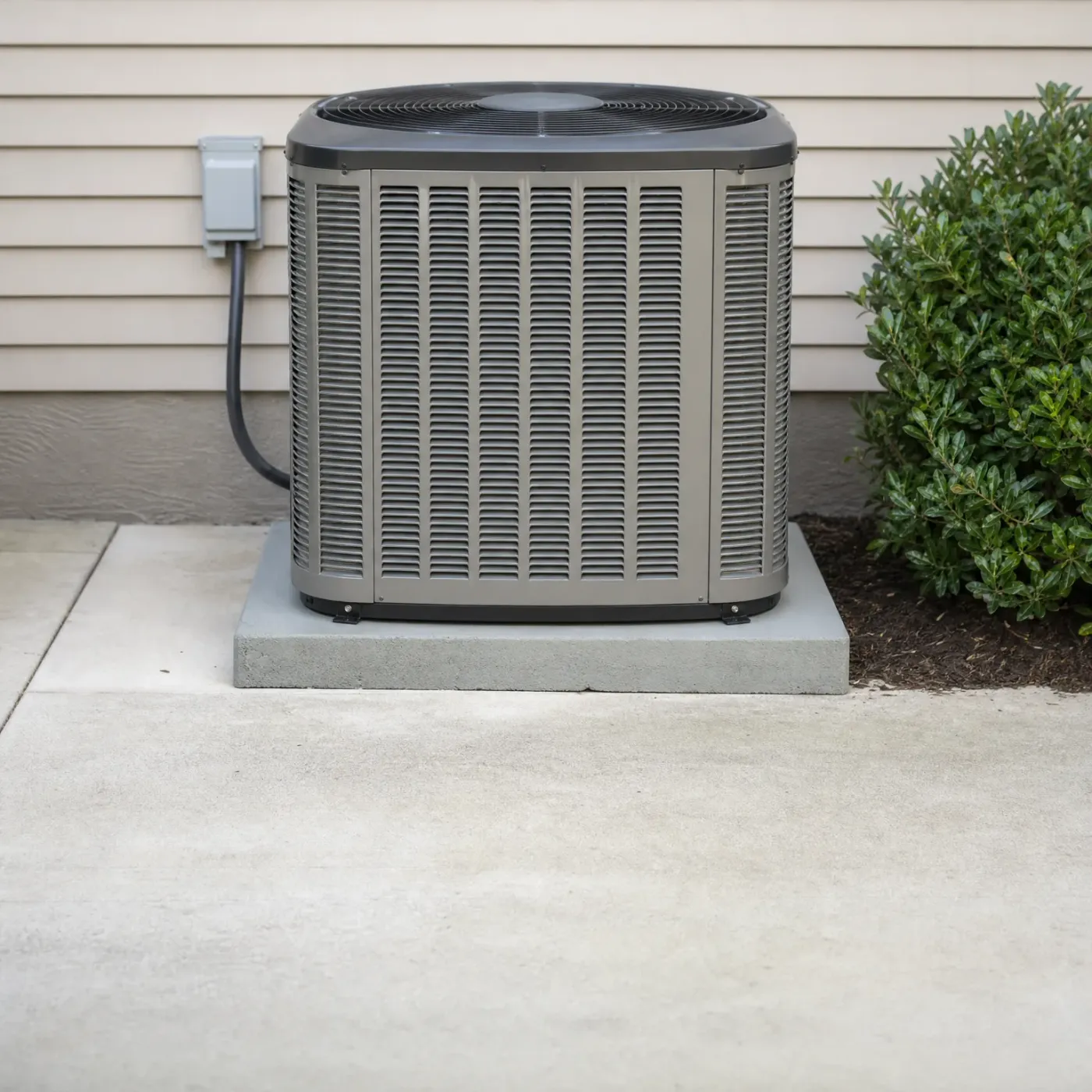
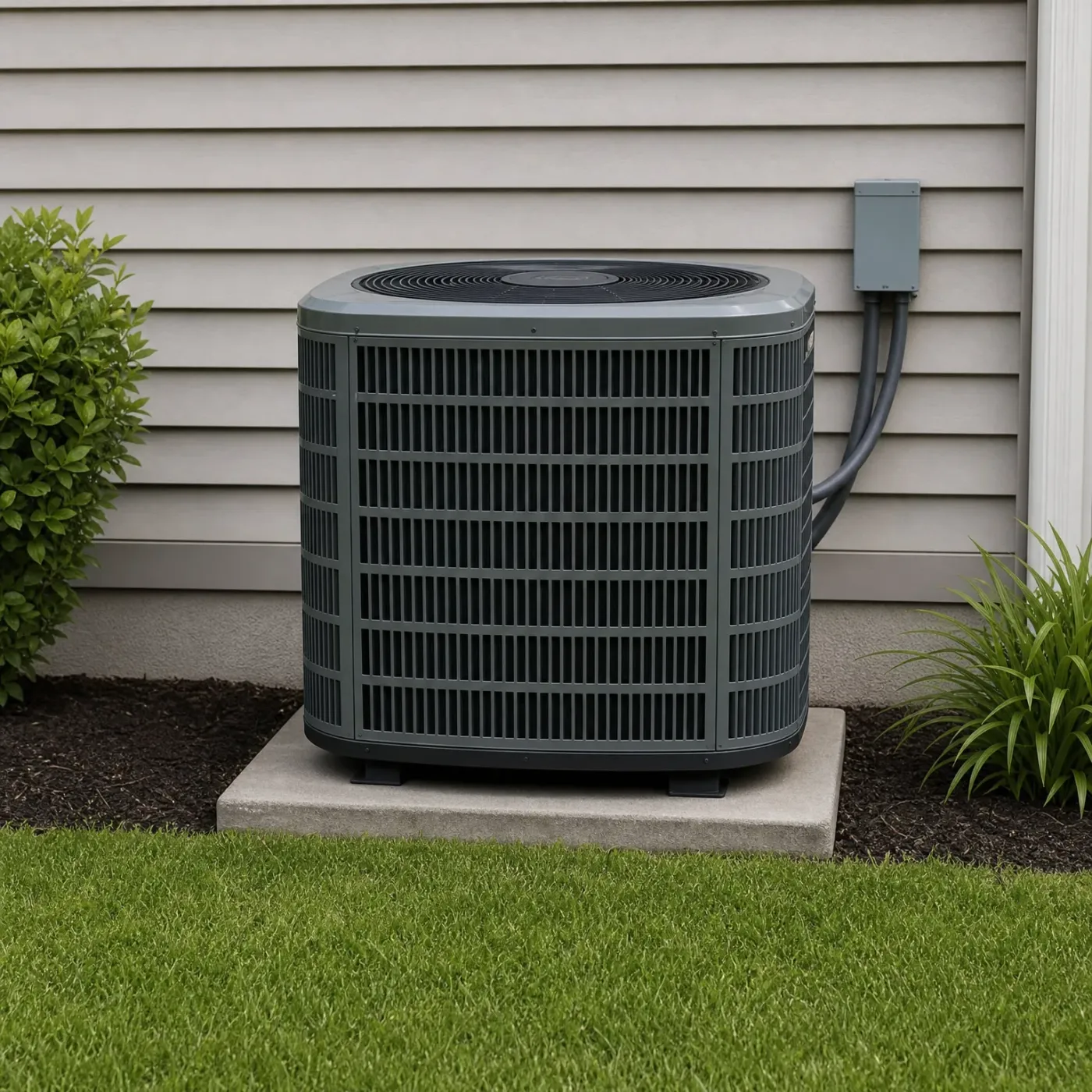
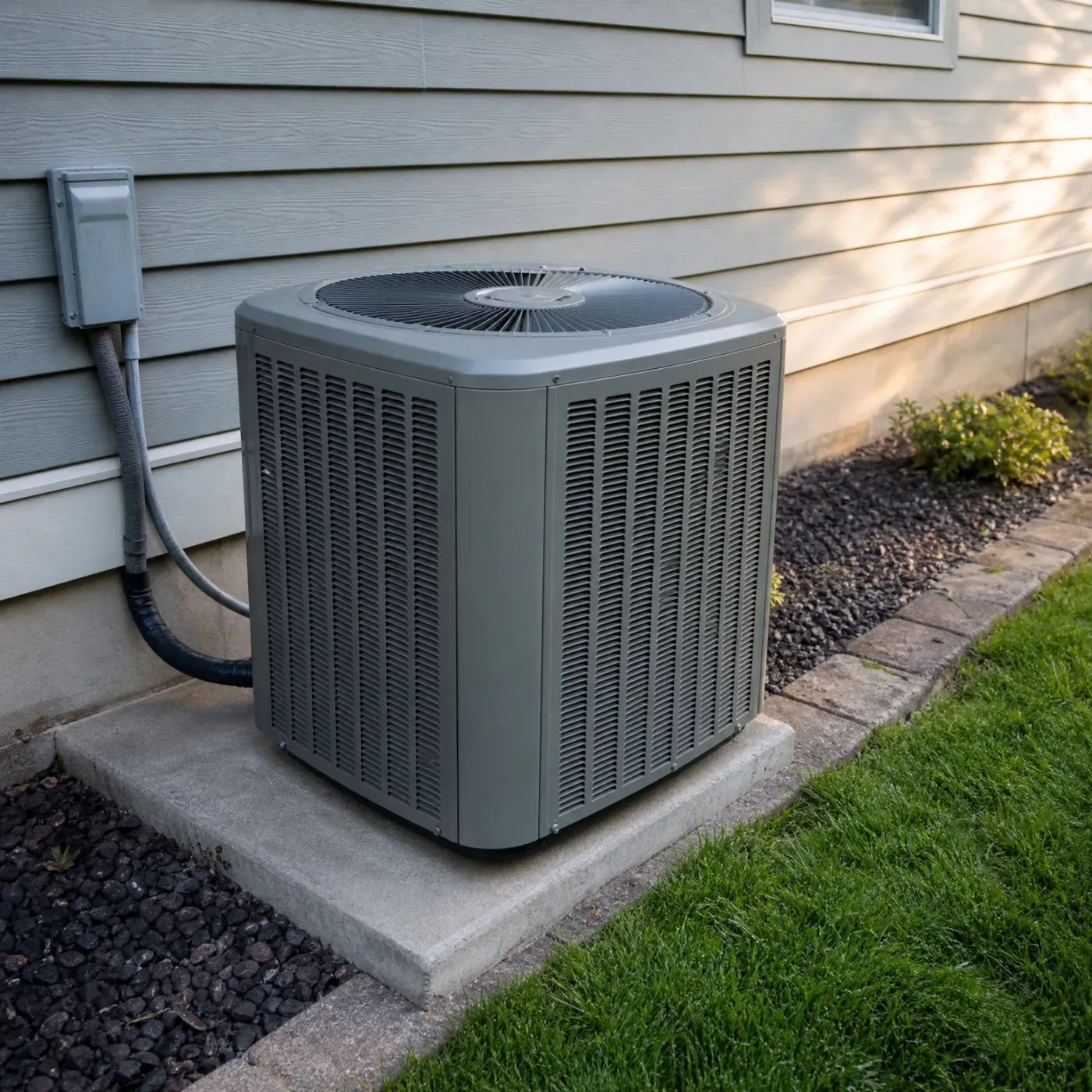
An outdoor air conditioning condenser unit on a concrete pad beside a house with horizontal lap siding, with an electrical disconnect box and conduit on the wall and a green shrub to the right.
The fan blade spins freely, the grille is clean, and air moves straight up off the coil instead of stalling at the top.
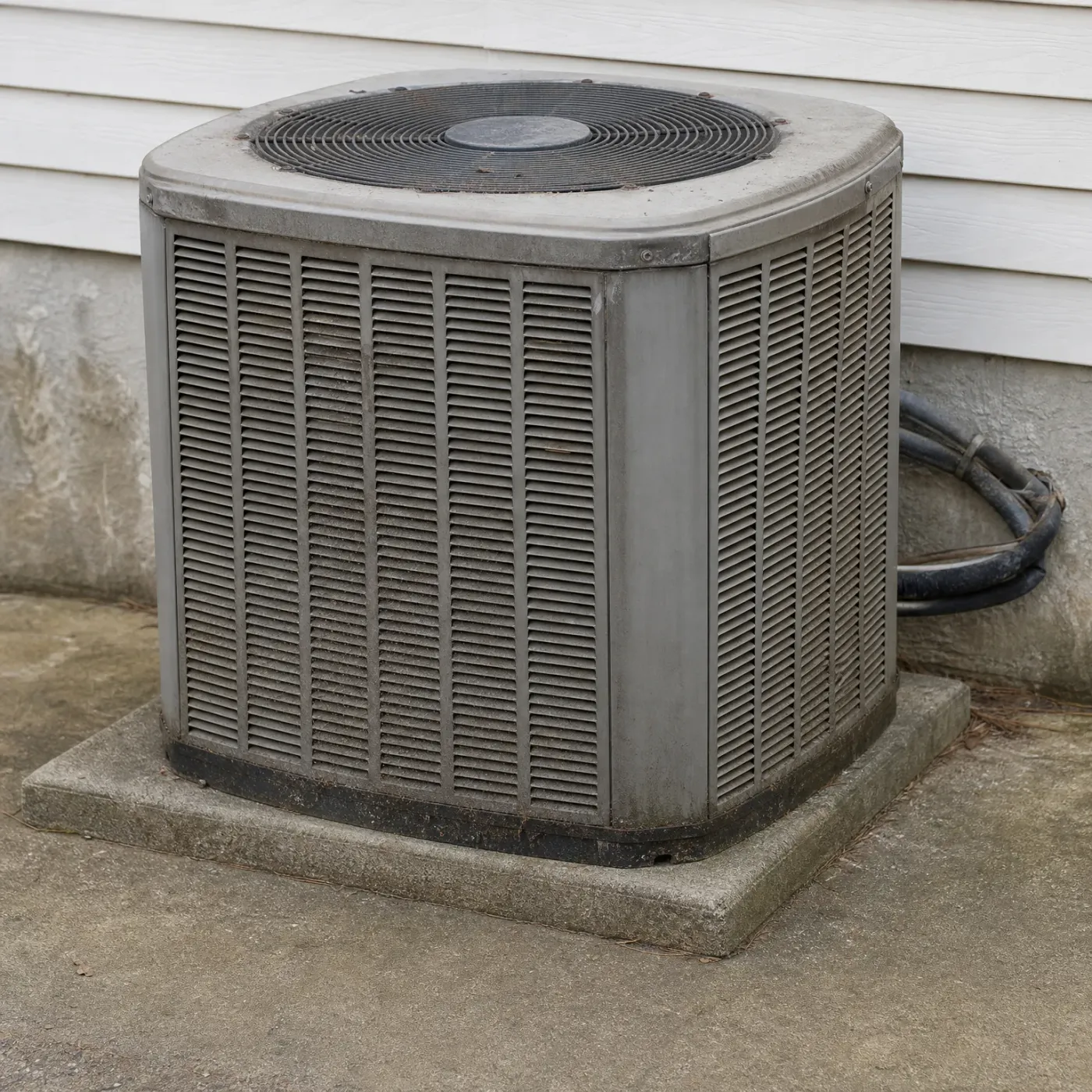
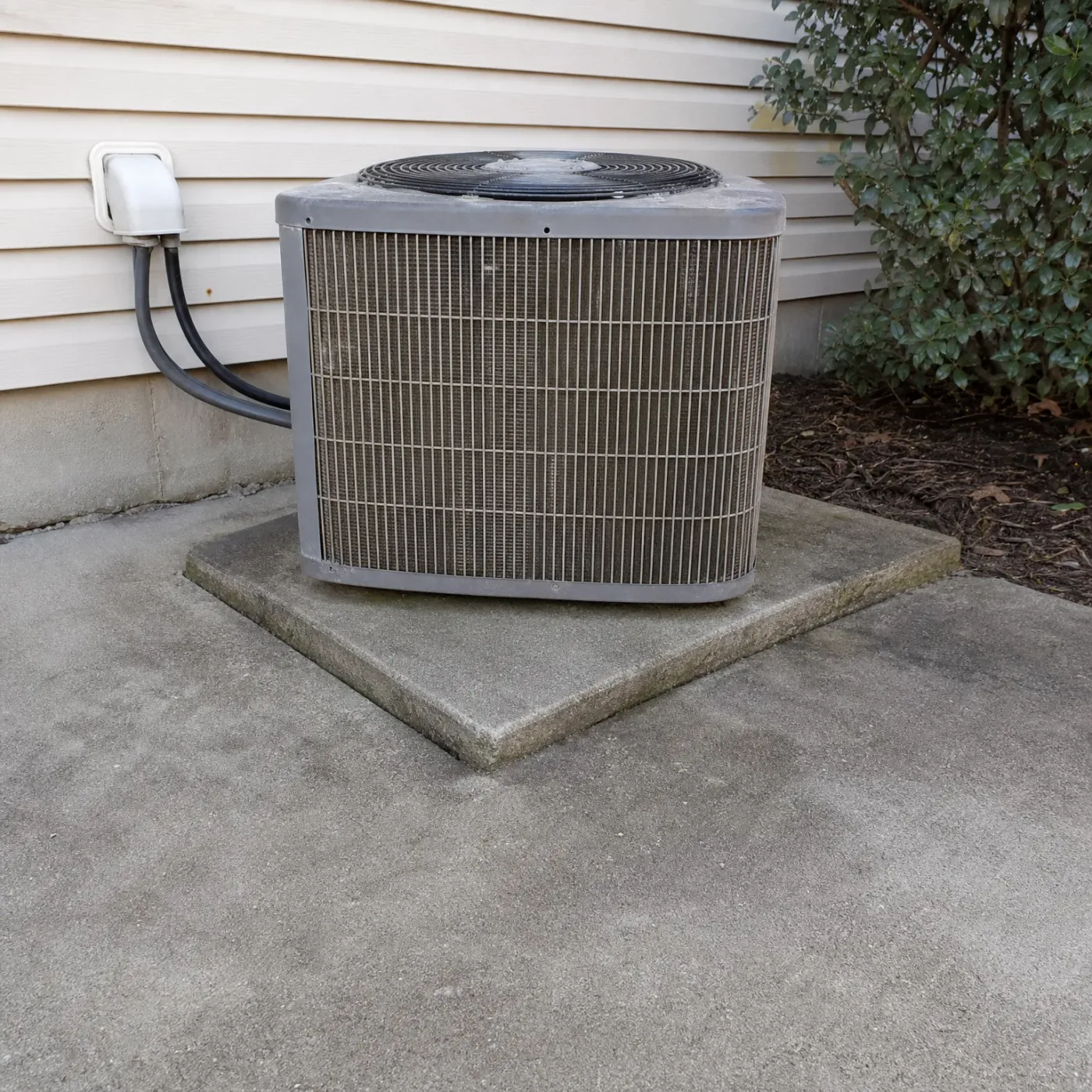
An outdoor air conditioner condenser unit on a concrete pad beside a house with horizontal siding and a lower concrete foundation wall, with coiled refrigerant lines at right.
Dirt coats the louvers and the fan grille, and with the panels caked like this the motor has to work against grime, not just the heat.

That outdoor unit has a single motor sitting right under the fan blade, and it earns its keep every summer in New York. Power reaches it and splits two ways, one line to the compressor and one to the fan motor, so the fan can fail while the compressor keeps running, which is exactly the humming you're hearing with no air moving on top. Most of these motors start with help from a capacitor, a small cylinder mounted near the motor that gives it the jolt it needs to get spinning. When that capacitor weakens, the motor gets enough current to hum but not enough to start turning, and a fan that won't start on its own but spins freely if you nudge the blade by hand almost always points there. If the motor itself has burned out, there's no hum at all from that part, just the compressor working alone. Either way, the compressor is still pushing refrigerant with nothing to carry the heat off outside, and that's the warm air coming through your vents.

Power costs 26.39 cents per kilowatt-hour statewide

At 26.39 cents per kilowatt-hour, a stalled fan costs you more than comfort. The compressor still draws power trying to cool without airflow over the coil, so your bill climbs while the house stays warm. Every hour that fan sits still is an hour you're paying for work the system can't finish.

EIA-861 2025 statewide residential average

A dead run capacitor is the most common reason that outdoor fan sits still while the compressor hums. It's a small part, and when it weakens the motor can't get the push it needs to start spinning.

A seized motor bearing or a failed control board can cause the same silence from the fan. A contractor who works this equipment all summer checks the capacitor first because it's the one most likely to be the answer.

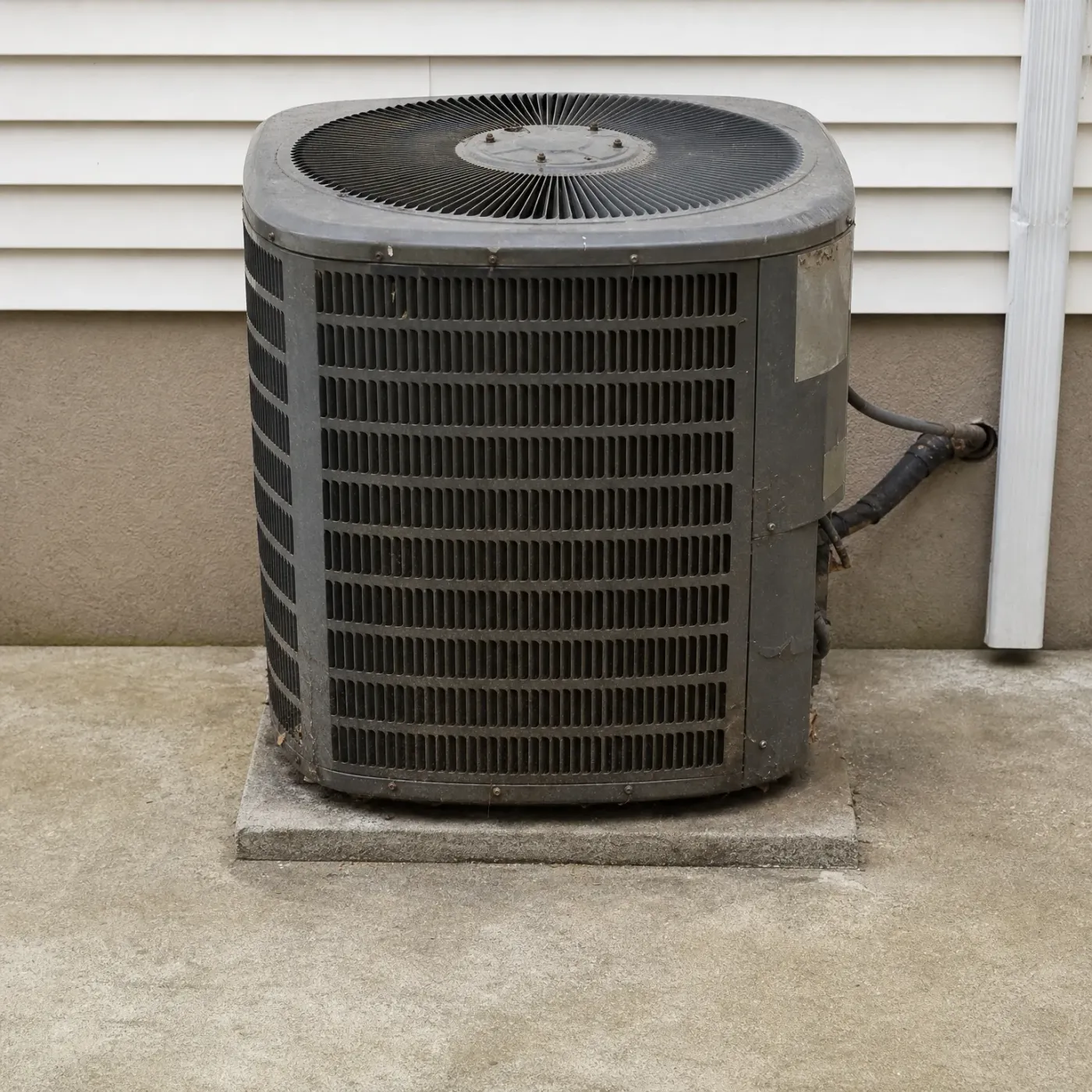
An outdoor air conditioner condenser unit on a concrete pad beside a house wall with stucco lower section, horizontal siding above, and a white downspout to the right.
Before you get your air conditioner repair
A gray outdoor air conditioning condenser unit on a concrete pad beside a house with horizontal lap siding, with a wall-mounted electrical disconnect box and refrigerant lines, shrubs, mulch and lawn around it.
After you get your air conditioner repair

Hand off the air conditioner problem

A stalled fan outside isn't something to sit with while the house keeps heating up and the compressor keeps drawing power for nothing. Someone needs to get out there, pull the capacitor, check the motor, and find which one quit. That's not a weekend project if you don't already own a capacitor tester, and guessing wrong means paying for a part you didn't need. Send the request and it goes to one licensed contractor working in New York, someone who's out at units like yours all summer and knows a dead capacitor from a seized motor before the panel's even off. You're not left sorting through a handful of callbacks trying to figure out who to trust with it. The unit sits there either way until it's looked at, so the only question is how much longer the compressor runs hot while you wait.

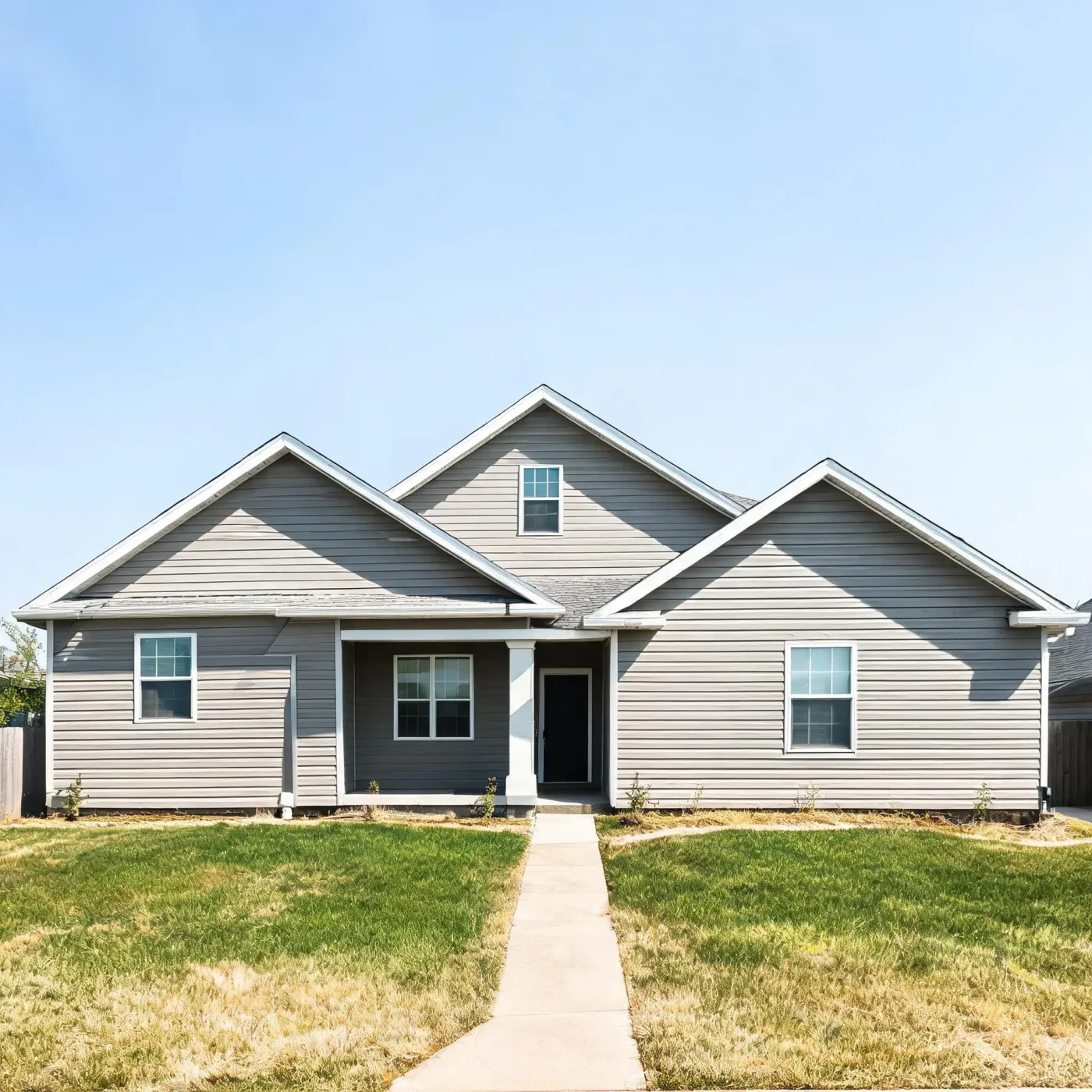
A single-story gray horizontal-siding house with multiple front-facing gables, white-trimmed windows, a dark front door, and a concrete walkway crossing a partly dry lawn under a clear blue sky.

New York summers run heavy, and the number that proves it is the dew point, averaged at 62°F across June, July and August based on NOAA climate data. That's thick air, the kind that sits on your skin even in the shade. Your air conditioner isn't just pulling heat out of the house, it's wringing moisture out of that air too, and the outdoor coil carries both jobs. When the fan above it stalls, the coil can't shed either one, so the compressor keeps grinding against air it can't cool. You'll notice the house stays warm and feels damp at the same time, not just hot. That's the dew point working against a fan that isn't spinning.

NASA POWER T2MDEW county cells weighted by homes

Call Now or Wait It Out

Call now

  • The fan stays jammed while the compressor keeps drawing power with no airflow over the coil, so the bill keeps climbing the longer it sits.
  • A seized motor bearing gets worse under load, and running the system in that state can push the compressor toward a harder failure.
  • A local contractor who works on these units every summer can usually tell a bad capacitor from a bad motor before opening the panel.
  • Sending one request means one contractor calls, not a handful of companies competing for the job.
  • Once the form is sent, tracking down who can get out there stops being something you have to manage.

Wait it out

  • The house keeps warming through the afternoon while the indoor blower blows air that never gets cold.
  • A capacitor that's failing but not yet dead can still let the compressor run alone, so the strain adds up every hour the fan doesn't turn.
  • At New York's electric rates, a compressor running without the fan is paying for cooling the house isn't getting.
  • A seized bearing or burnt motor winding doesn't fix itself, and the unit won't start spinning again on its own.
  • The longer the compressor runs without that airflow over the coil, the more likely a small part failure turns into a bigger repair.
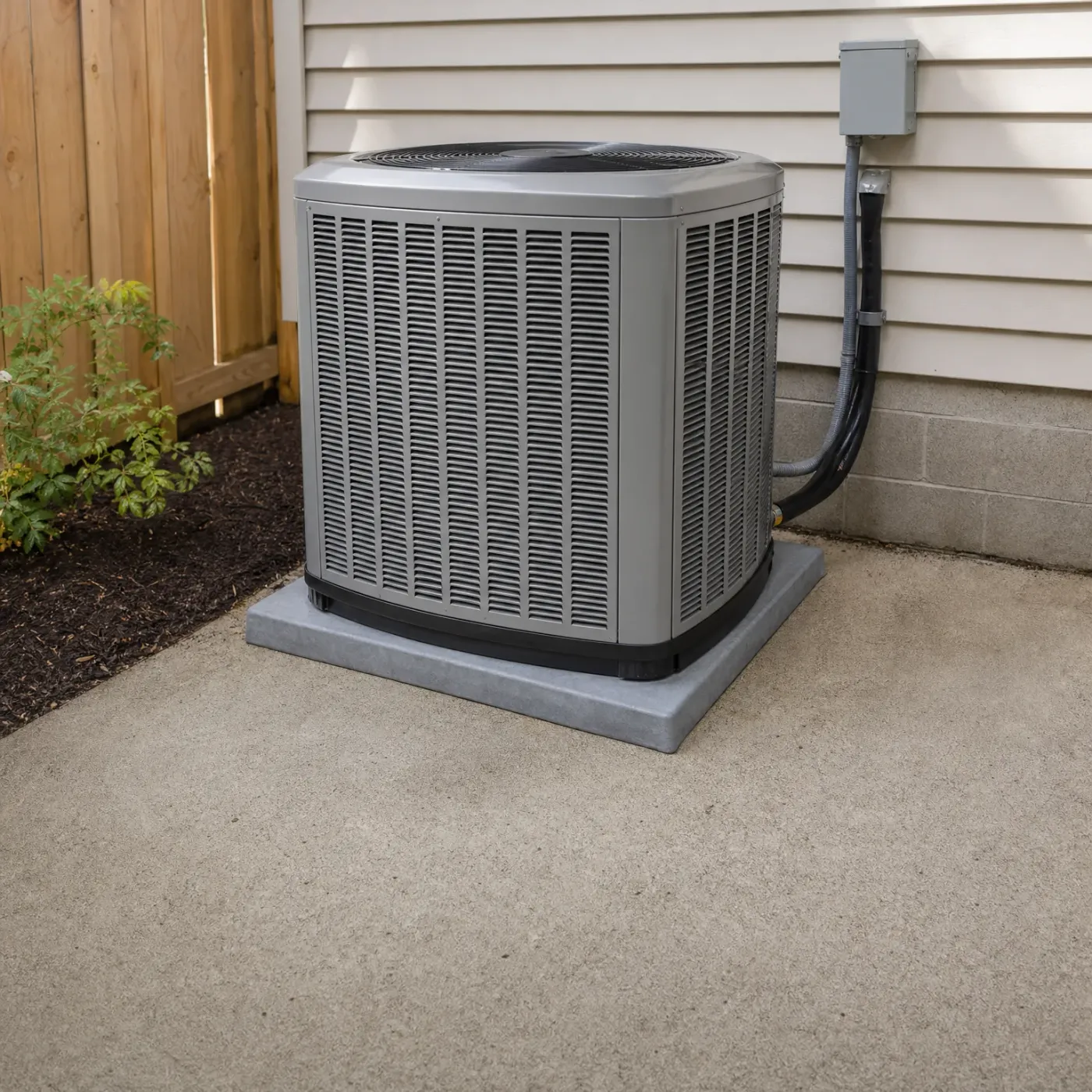
A gray outdoor air conditioning condenser unit on a composite pad beside a house with horizontal lap siding, with a wall-mounted disconnect box, refrigerant lines, and a wooden fence and shrubs to the left.

Fan spinning as it should

The blade turns the moment the system kicks on, pulling air straight up through the coil. Refrigerant lines and the conduit run clean up the wall to the disconnect. The compressor and fan draw power together, so the coil sheds heat the way it was built to.

An outdoor air conditioning condenser unit on a concrete pad beside a house with light vinyl siding, with electrical conduit running to a wall-mounted disconnect box and a shrub in mulch to the right.

Fan sitting still

The unit hums or clicks against the vinyl siding, but the blade doesn't move. Wiring still runs from the box to the unit, power is getting there, but something between the capacitor and the motor isn't passing it along to the blade. Heat has nowhere to go.

A woman and a child wrapped together in a thick knitted blanket on a sofa, both with eyes closed, with a lit table lamp and houseplant in the dim background.
An older woman with short gray hair in a cream cable-knit turtleneck sweater smiles while looking to the side in a wooden kitchen, with a round loaf of bread on a board in the foreground and a lit candle by a dark window.

What the fan not spinning means

  • A stalled outdoor fan almost always traces back to one part: a dead run capacitor, a seized motor bearing, or a failed control board.
  • The compressor can keep running even with the fan stopped, which is why the bill climbs while the house stays warm.
  • Nothing about this calls for a new system; it's a diagnosis and a part, not a guess.
  • A local contractor who services this equipment all summer in New York knows which of these three usually turns out to be the problem.
  • Sending the request connects you with one licensed contractor, not a string of companies competing for the job.
  • The fan not spinning is the fact; what's wrong with the motor or the capacitor is what gets found out.

The fan isn't turning because one part under that grille quit: the run capacitor, the motor bearing, or the control board. That's the whole list. None of those three means a new air conditioner. Each one gets tested, found, and replaced on its own.

While that fan sits still, the compressor inside the unit may keep pulling power without the airflow it needs, which is how a stalled fan turns into a bigger bill without cooling the house any faster. The sooner someone gets eyes on the capacitor and the motor, the sooner that stops.

This isn't a job for guesswork. It takes someone who knows this equipment, has pulled capacitors and tested motors on units like yours all summer, and can tell in a few minutes which of the three it is. That's the kind of contractor this request goes to: licensed, working in New York, someone who sees this exact failure on hot afternoons like this one. You're not getting a handful of calls from companies bidding against each other. You send the request once, and it goes to one contractor who already knows what a quiet fan on a running system usually means.

The fan blade itself told you something was wrong. What's actually worn out inside that housing is the other half of the answer, and that's what gets found once someone's standing in front of the unit with it open.

A gray outdoor air conditioning condenser unit on a concrete pad beside a house with horizontal lap siding, with a wall-mounted disconnect box and conduit, lava rock mulch, a shrub, and grass nearby.

It's off your list after this

Get one local pro

Only one pro gets your request, so you hear from one company.

Asking costs nothing, and the choice to hire stays yours.