Say what's going on with your air conditioner, and a pro who works on them reaches out.
A burning smell from your air conditioner is not something to wait out. In the middle of a New York summer, with the humidity thick enough that the unit is running most of the day, that smell usually means something inside is overheating. It could be a motor bearing going dry, dust burning off a coil after the unit sat idle, or wiring that has started to break down under the load. Some of these are minor. Some are the kind of thing that ends with a fried circuit board or a unit that will not start at all.
You do not need to know which one it is before you act. What matters is getting someone who can look at the unit, tell you what is actually happening inside it, and shut off anything that is putting you at risk, before the smell turns into a bigger repair or a system that quits on the hottest day of the year.
That is where this page can help. Tell it what you are smelling and what your system is doing, and it will match you with a contractor who works on air conditioners like yours, in your part of New York. That contractor will reach out to you directly.
Once you send that information, the search is no longer something you have to manage. You are not calling around, waiting on hold, or hoping someone calls you back. The matching happens on this end, and the contractor follows up with you.
Power here costs more than in most of the country, and a system that is struggling or overheating tends to run harder and cost more to operate, on top of whatever repair it needs. The sooner someone qualified looks at it, the sooner you know whether you are dealing with something simple or something that needs real attention.
Fill in what you know about the smell and the unit below. The rest is a matter of getting you to the right person.
A burning smell from your AC usually means an electrical part is overheating, not the refrigerant or the air itself. A motor bearing can seize up and heat the windings around it. A capacitor can fail and scorch its casing. Dust sitting on a hot coil or blower wheel can also singe and give off that same smell when the system has been running for hours, which it will on a sticky New York afternoon. A sharp, acrid smell points more toward wiring or a motor. A dusty, hot smell points more toward buildup on a part that just needs cleaning. Either way, running the system longer only feeds more air across whatever is overheating. Shut it off at the thermostat, and if you can do it safely, at the breaker too, and don't turn it back on until someone has looked at it.
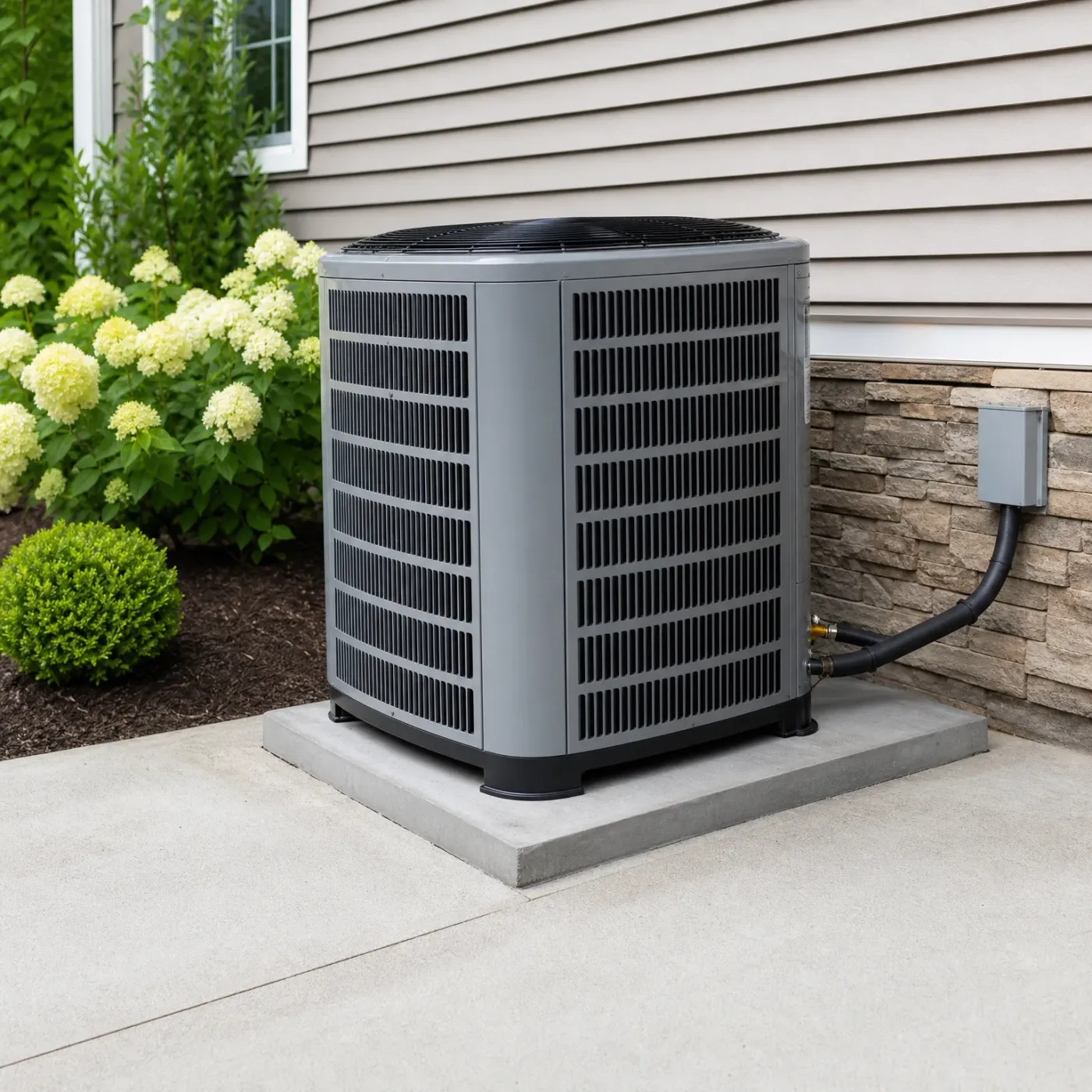
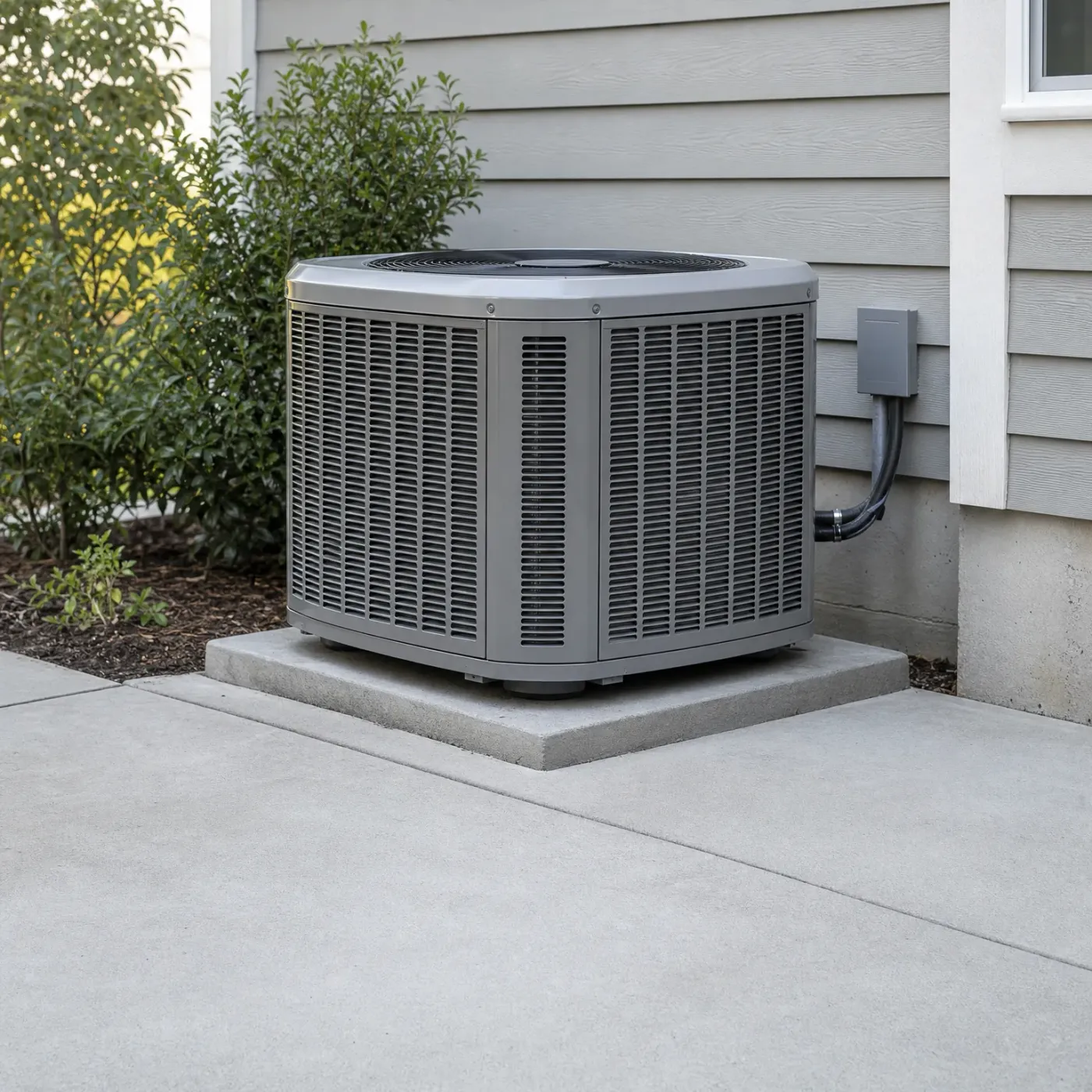
A clean condenser like this one draws air through fins that are still open, so the motor and wiring inside stay at a normal temperature.
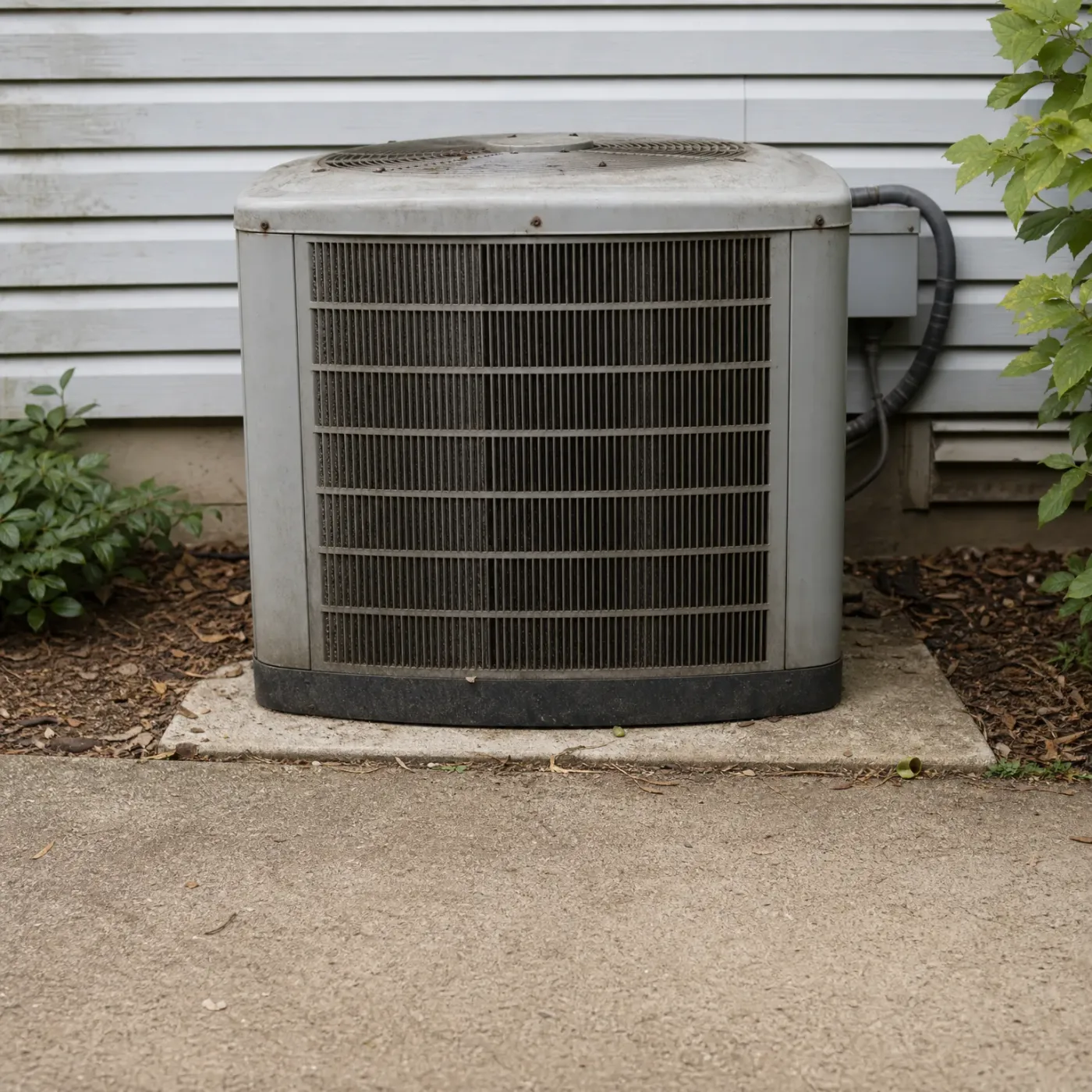
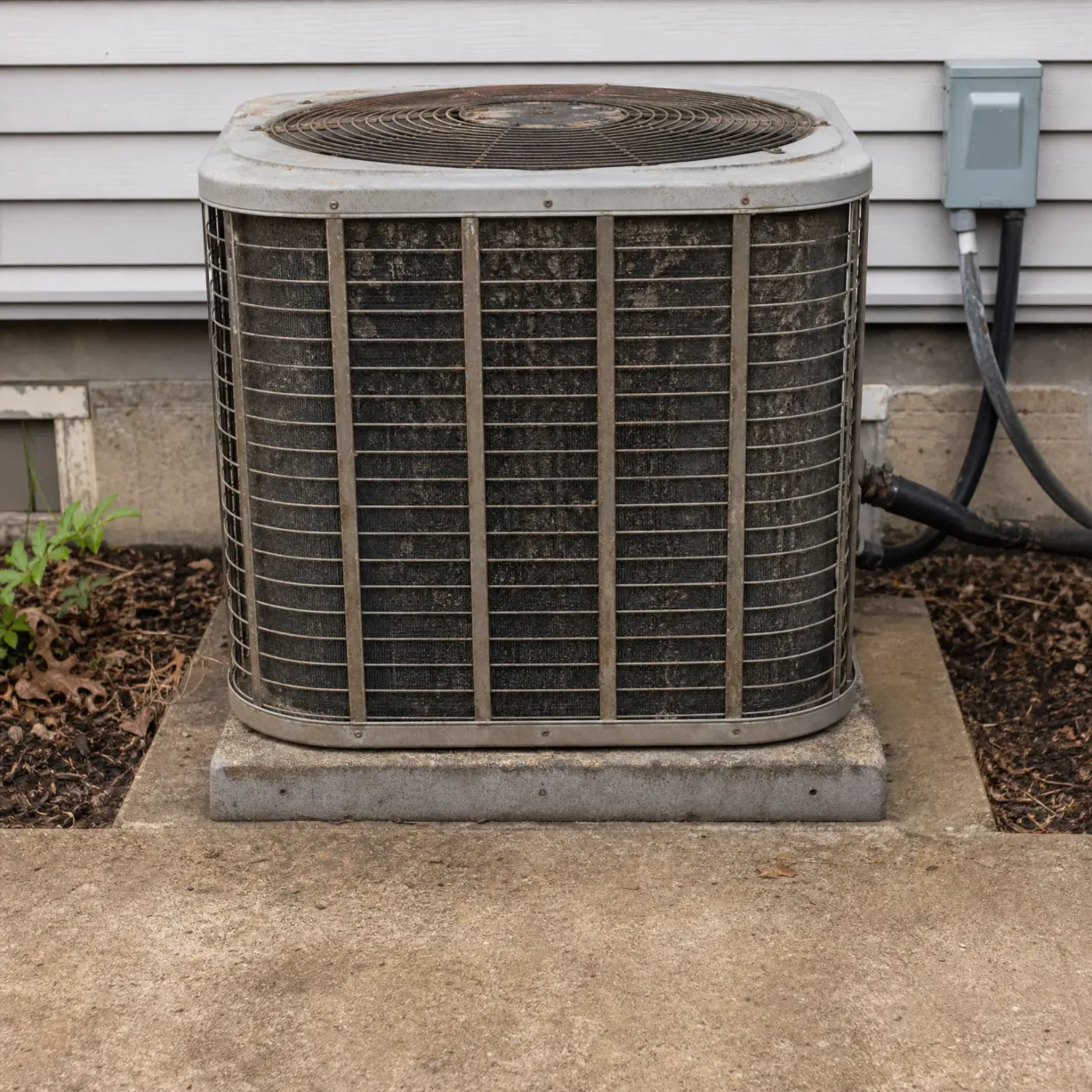
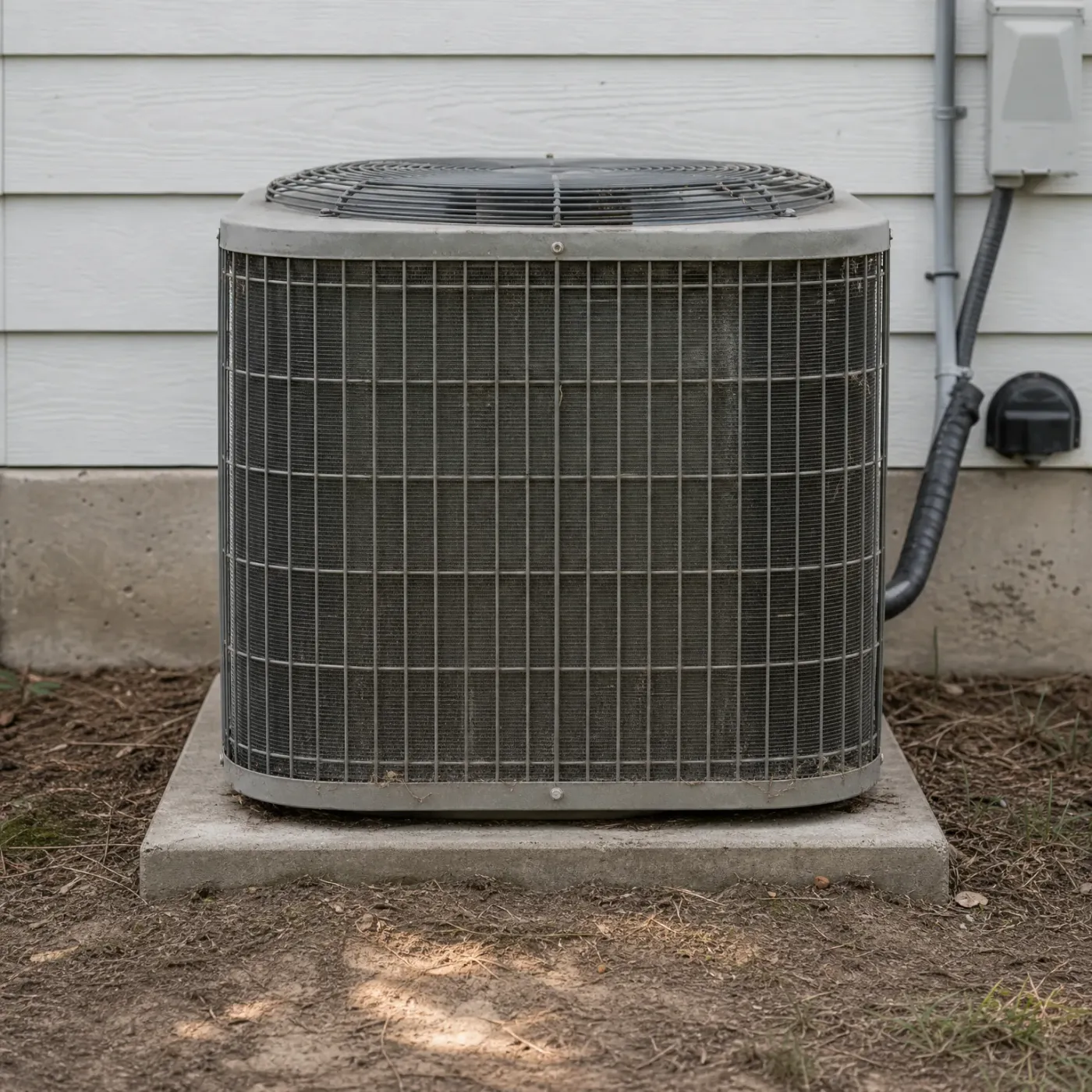
A unit this dirty traps heat against the coil and the motor, and that extra heat is what turns into a burning smell.
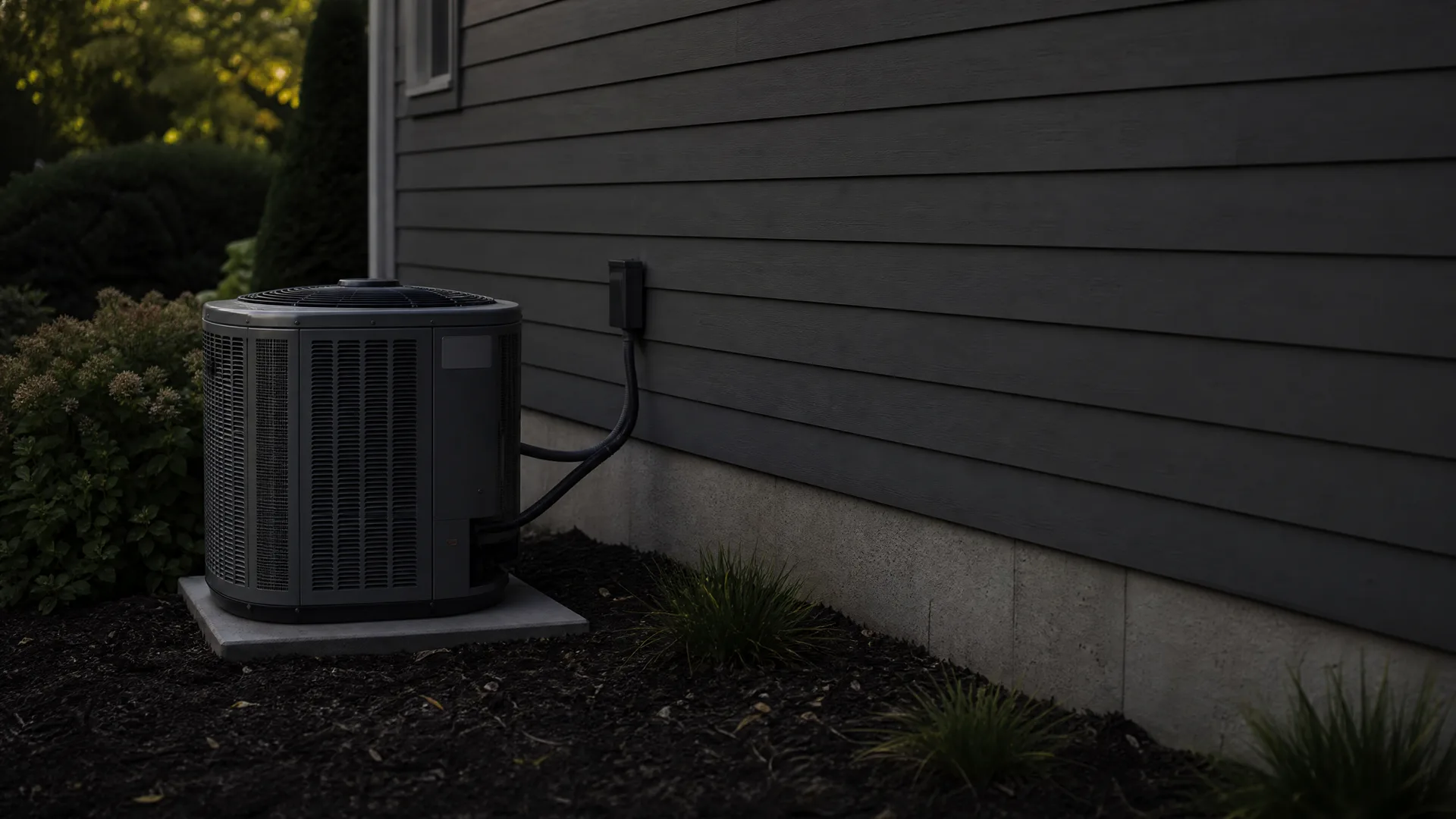
You're out back around seven, watering the tomatoes before it gets too dark to see them. The condenser is right there against the fence, and you notice the fan isn't spinning. The compressor's still humming low inside the unit, but nothing on top is moving. The light's gone gold and flat the way it does in August, and that's when you catch it, a burnt smell riding the air coming off the side vents. Not strong. Just enough that you stop with the hose still running and walk closer, listening for the fan to kick back in. It doesn't.
Keep Running It or Shut It Off
Keep running it
The smell usually means a part is already overheating, so running the unit longer adds heat to something that's already stressed.
A seized motor bearing can go from hot to locked within a day, and a locked motor trips the breaker or stops cooling outright.
A scorched capacitor can short, and a short can take out the control board along with it.
If dust on the coil is trapping the heat, every hour of runtime bakes it in further.
New York humidity keeps the compressor cycling most of the day in summer, so the part under strain gets little time to cool down between cycles.
Shut it off and call
Cutting power at the breaker stops the overheating part from getting worse while you wait for someone to look at it.
A contractor can tell within minutes whether the smell is a motor, a capacitor, or dust on the coil, instead of you guessing in the heat.
Catching a capacitor or motor early is usually a smaller repair than letting it fail and take wiring or the board with it.
You lose cooling for a stretch, but with power priced the way it is here, a damaged system running inefficiently costs more than the gap.
Once you send the request, finding someone to come look is off your plate, not something to chase down between work calls.
Send the request today and stop worrying about who to call.
It costs nothing to send, and you don't have to hire anyone.
What the smell is actually telling you
Burning insulation has a sharper, more acrid smell than dust burning off a coil. If the smell shows up the moment the unit kicks on and fades after a few minutes, that's more likely dust on a coil that hasn't run in a while. If it holds steady or gets stronger the longer the unit runs, that points to a motor or capacitor under continued strain. Either way the breaker is worth checking. A motor pulling more current than it should will sometimes trip it before anything melts, and a breaker that's already tripped once is telling you the same thing the smell is.
Why New York summers make this worse
An AC that runs most of the day through a sticky New York summer gets long stretches with no real break between cycles. A motor bearing that's starting to wear, or a capacitor that's already weak, has less time to cool down between runs than it would on a milder day. That's part of why this smell tends to show up in the thick of summer rather than in spring, when the same worn part might still be running fine. The part isn't failing because of the heat outside. It's failing under a load it's been carrying for weeks with barely any downtime.
What should you be noticing in your own house right now
Walk past the indoor unit and check if the smell is there too, or only outside. A burning smell that follows you room to room usually means it's coming through the ducts, which points to the blower motor or the wiring near the air handler rather than the condenser outside. Check if the smell comes with anything else: a breaker that trips when the AC kicks on, a fan that hums but doesn't spin, warm air coming out of the vents instead of cold. Any of those together with the smell means a part is failing, not just running dirty. If you've got anyone in the house sensitive to smoke or fumes, or you're closing up windows for the night with the AC still pushing that smell through the vents, that's worth acting on before you go to sleep.
What a healthy condenser looks like
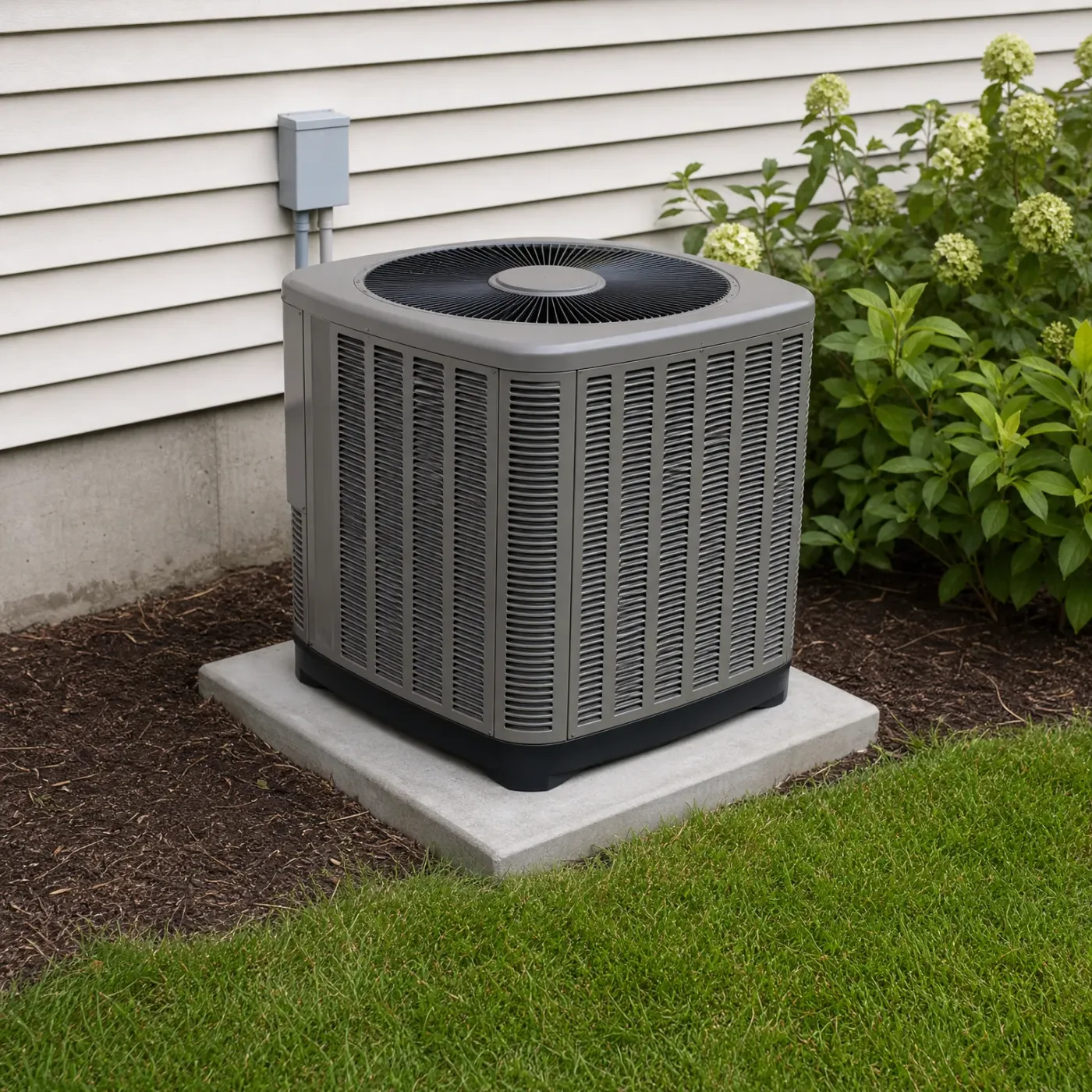
Air moves freely through the fins and out the top. Nothing blocks the coil, so the heat the compressor and motor throw off has somewhere to go. The grass and mulch around it are dry, not packed against the cabinet.
What a struggling condenser looks like
Dirt and grime cake the fins and the cage around them. Air can barely get through, so heat builds up against the coil and the motor instead of venting out. The conduit running to the disconnect box is one more thing a cluttered, overheated cabinet puts at risk.
Power costs 26.39 cents per kilowatt-hour statewide
At 26.39 cents per kilowatt-hour, a struggling AC doesn't just smell wrong, it runs up your bill while it does it. A motor working harder than it should, or a capacitor pulling more current as it fails, adds to what you're already paying some of the highest electric rates in the country for.
EIA-861 2025 statewide residential average
Shut it off and call someone
If you turn the unit off at the first whiff of burning, whatever's overheating gets a chance to cool down before it fails outright. A motor bearing that's just starting to seize isn't locked yet. A capacitor that's warm but hasn't split open can still be replaced instead of causing a bigger mess. You lose the cooling for a day in the middle of a New York summer, which is no small thing, but a contractor can usually get to the actual problem before it takes something else down with it, like the compressor.
Let it keep running
Some people keep the AC on because shutting it off in July feels worse than a strange smell. But the smell means a part is already past where it should be, and running the unit longer puts more hours on something that's failing. A seized motor can trip the breaker on its own, or burn out the wiring around it. What might have been a motor or capacitor swap turns into a bigger repair, and you still lose the cooling, just later and after more damage.
Before you get your air conditioner repairAfter you get your air conditioner repair
A dew point of 62°F is the average across New York summers, and it's what makes the air feel heavy even before the temperature climbs. Your AC has to pull more moisture out of that air to cool the house, which means the compressor and fan run longer stretches without a break. A unit that's already running hard has less room to shed the heat building up around a weak motor or a failing capacitor. That's part of why burning smells show up more in July and August than in a dry stretch of October, when the same worn part might just run a little longer before anyone notices.
Source: NOAA climate normals
NASA POWER T2MDEW county cells weighted by homes
A burning smell has one honest answer: get it looked at
A burning smell from your AC means something electrical is running hotter than it should, a motor, a capacitor, a blower wheel dragging against something it shouldn't touch. You don't need to know which one before you act. You need the unit off and someone qualified to open it up and find out.
Once you send the request, you're not the one tracking down who's free and who answers the phone. A contractor who covers your part of New York gets matched to what you described and reaches out to you directly. The smell doesn't go away on its own, but figuring out who handles it stops being something you have to carry.