
Why your AC unit is buzzing in New York

Step 1 of 3: Equipment

Why is my AC unit buzzing?

A buzzing AC isn't normal noise to live with, especially once it's running flat out through a sticky New York summer. You want to know if this is something minor or the start of a bigger repair, and whether it's safe to keep running while you figure that out.

Usually a loose part or an electrical problem in the outdoor unit

A buzzing sound almost always points to something electrical or something loose. A failing capacitor hums or buzzes right before it fails outright, and that's one of the most common reasons an AC makes this noise. Loose screws or panels on the outdoor unit rattle and buzz too, especially after a few seasons of running hard. So can a contactor with pitted contacts, or a fan blade that's come loose on its motor shaft and is hitting the housing. Some of these keep the system running for now. A bad capacitor usually doesn't, and running the unit on one can strain the compressor, which costs a lot more to replace than the capacitor would have. Worth having it looked at before a hot stretch pushes it past the point of starting at all.

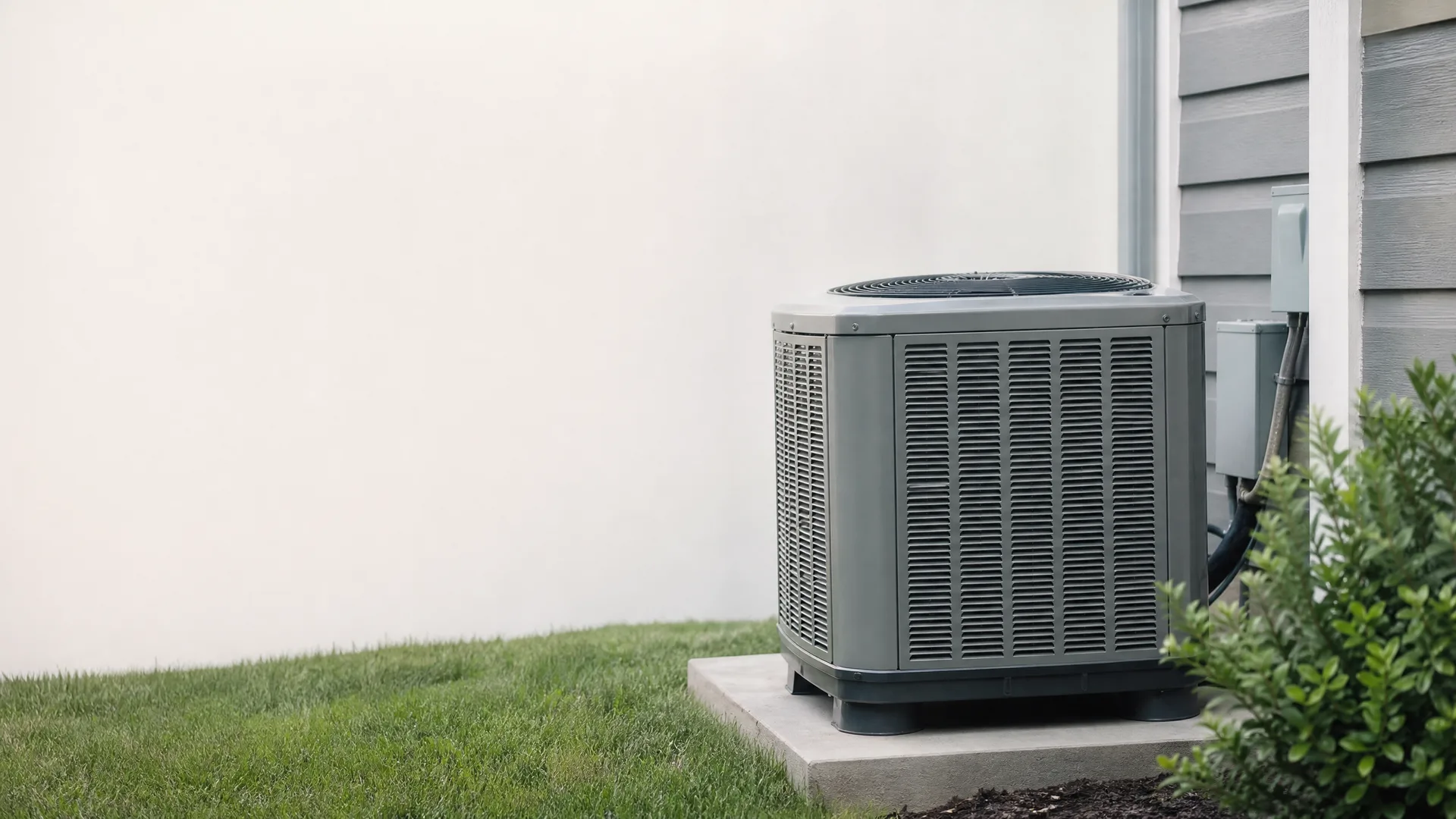
A gray outdoor air conditioner condenser unit on a concrete pad beside a house corner with lap siding and a stucco wall, surrounded by mown green grass.

What the buzz usually means

A buzz often points to the outdoor unit. Loose fan blades, a failing motor mount, or a capacitor starting to go can all make that sound. The compressor itself can buzz when it's struggling to start, which puts more strain on it each time your AC cycles on. Refrigerant lines rattling against the cabinet or a panel that's worked loose will also buzz. None of these fix themselves, and most get louder and more frequent the longer your system keeps running through a New York summer.
An outdoor air conditioning condenser unit on a concrete pad beside a house with light stucco and lap siding, with mown grass to the left and a green shrub to the right.

Why it's worth a second look

Electrical components under stress draw more power to do the same job, and with electricity costs what they are in New York, a part limping along shows up on your bill before it fails outright. A capacitor or contactor that's buzzing is also one of the more common reasons a system stops cooling mid-July, usually on the hottest day, not the mildest one. Catching it while it's just noise, rather than after it quits, is the difference between a quick part swap and being without cooling for days.

Safe to Wait or Time to Shut It Off

Safe to run for now

  • The buzz is steady and low, not a grinding or screeching sound, and the unit still blows cold air.
  • It only happens right when the unit kicks on or shuts off, which can point to a capacitor or relay rather than a part about to fail.
  • The outdoor unit isn't vibrating against the pad or the line set when you look at it.
  • You haven't noticed the breaker tripping or the unit shutting off on its own.
  • The sound hasn't changed or gotten louder over the past few days.

Turn it off and call

  • The buzz is loud enough to hear from inside the house with the windows closed.
  • You smell anything burnt or electrical near the indoor or outdoor unit.
  • The outdoor fan isn't spinning, or it's spinning slower than it sounds like it should.
  • The unit is tripping the breaker, or it shuts off and won't restart.
  • The buzzing comes with the air not getting cold the way it used to.
  • You can see the fan blades wobbling or hitting the housing when the unit runs.
  1. A loose part or worn motor mount starts to vibrate

  2. The vibration shakes the fan blade or fan housing

  3. A weak capacitor makes the compressor struggle to start

  4. The compressor hums and buzzes under the extra strain
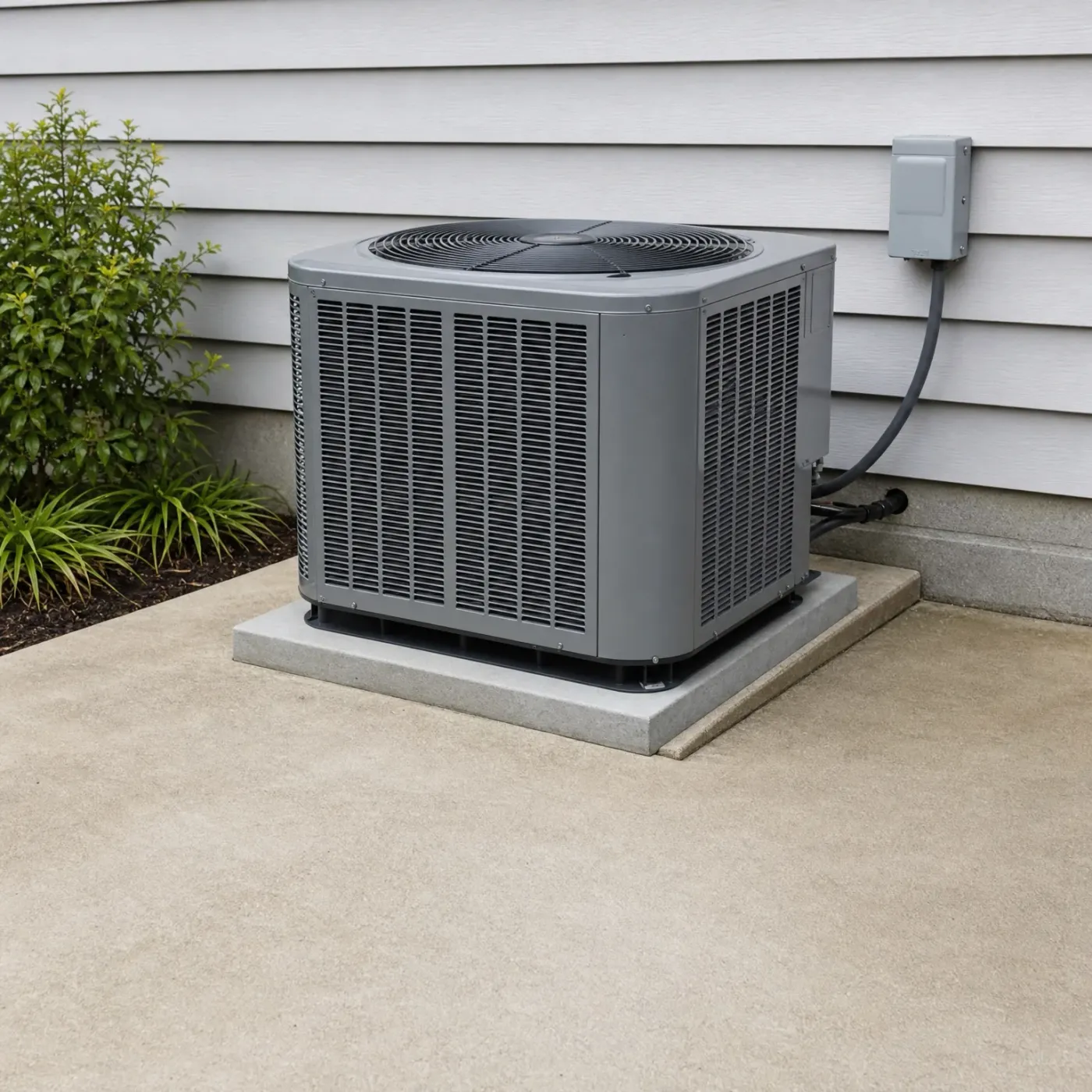
A gray outdoor air conditioning condenser unit on a concrete pad beside a house with horizontal lap siding, with a wall-mounted disconnect box and conduit, and shrubs to the left.
A disconnect box and clean lines like this usually mean the unit is getting the power and airflow it needs to run quiet.
An outdoor air conditioning condenser unit on a concrete pad beside a house with horizontal siding and a concrete foundation, with dry brown leaves on the ground to either side.
Years of leaves and grime packed against the coil make the unit work harder, and that strain often shows up as a buzz.
A bearded man in a plaid flannel shirt stands indoors looking out a frost-covered window, with a steaming dark blue mug on the wooden sill and snow-covered trees outside.
A smiling man in a dark blue T-shirt sits on a light gray sofa in a living room with a wooden shelf and window behind him, with a laptop edge visible in the foreground.
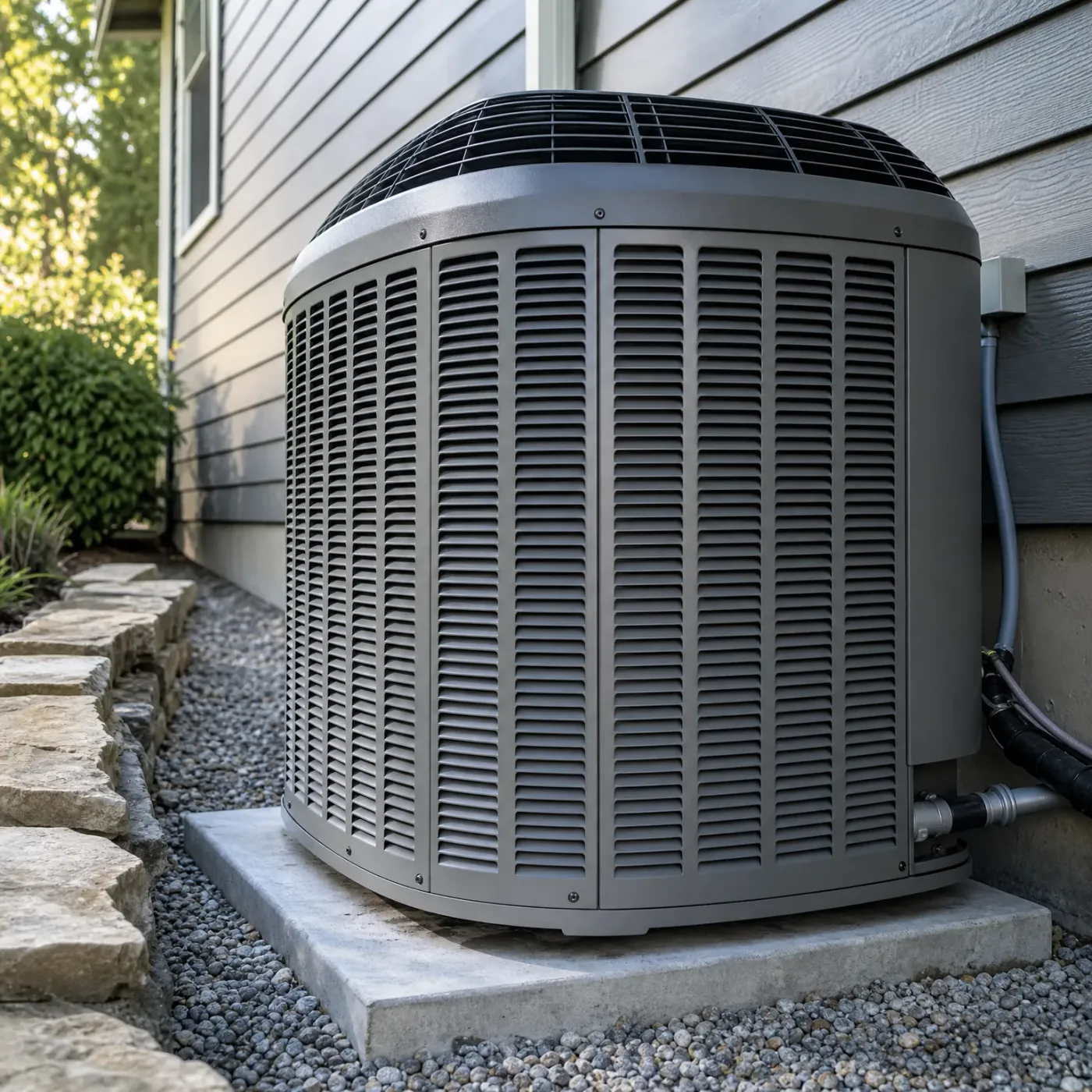
A gray outdoor air conditioning condenser unit with louvered sides and a black top grille sits on a concrete pad beside a house with horizontal lap siding, surrounded by gravel and a stone border.

The right pro for this job

The pro who reaches out is licensed in New York.

A local pro who knows air conditioners gets your details and gets in touch.

Find a local pro

Sending the form costs nothing.

A woman in a cream cowl-neck sweater stands in a lamp-lit room looking out a window at a snow-covered yard with shrubs and bare trees at dusk.
A woman in a gray turtleneck sweater stands near a large window in a lamp-lit living room, looking out at falling snow and snow-covered conifers.
A woman in a chunky knit sweater stands by a large window looking out at snow-covered ground, with a dimly lit living room containing a gray sofa, framed artwork, shelves and table lamps behind her.
A woman in a gray turtleneck sweater stands in a dimly lit living room with a lamp and bookshelves, looking out a multi-pane window at falling snow.

A few more weeks of noise

Keep running the unit and a worn part can wear further. What's a buzz now can turn into a rattle, a grinding sound, or a compressor that won't start at all.

Get a licensed local pro

One call, one contractor

You get matched with a licensed New York contractor who works on AC units all summer and knows what a buzz like yours usually means. They reach out to you directly, so no juggling calls from different companies.

Get a licensed local pro

What are you hearing when you're home

You probably noticed it from another room first, a low buzz that follows the unit's cycle, there when it kicks on, gone when it shuts off. Walk outside and it's louder near the outdoor unit, sometimes with a slight shake you can feel if you put a hand on the casing. Inside, the air coming out of the vents might still feel plenty cold, or it might feel weaker than it used to, like the system is working harder for less. If the sound has changed from a steady hum to something sharper, or the unit has started cycling on and off more than it used to during a hot stretch, that's the compressor or motor under added strain, and left alone it can shorten how long either one lasts.
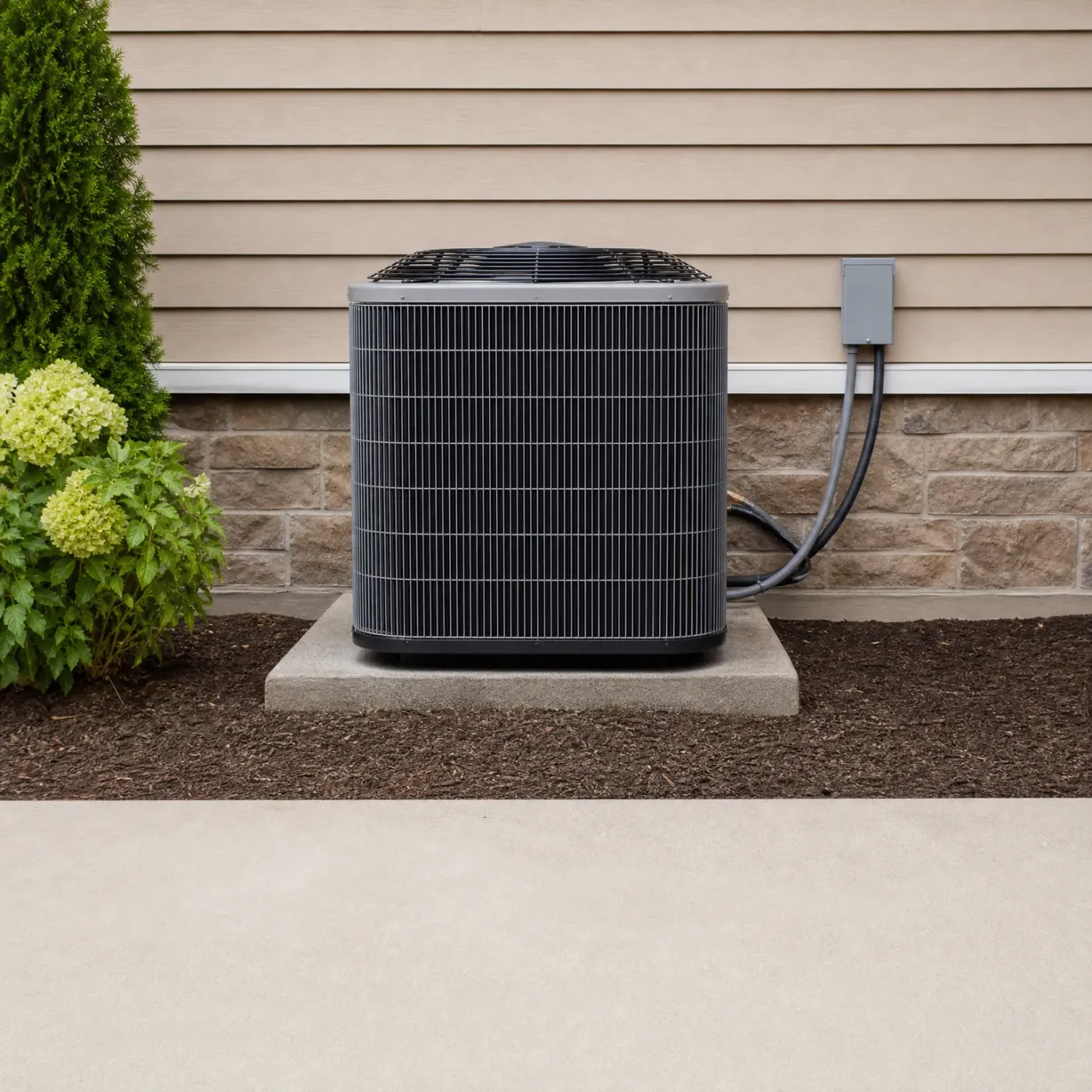
An outdoor air conditioner condenser unit on a concrete pad beside a house with beige horizontal siding and a stone-veneer base, with refrigerant lines running to a gray wall-mounted electrical box, surrounded by dark mulch, a flowering shrub and an evergreen on the left.

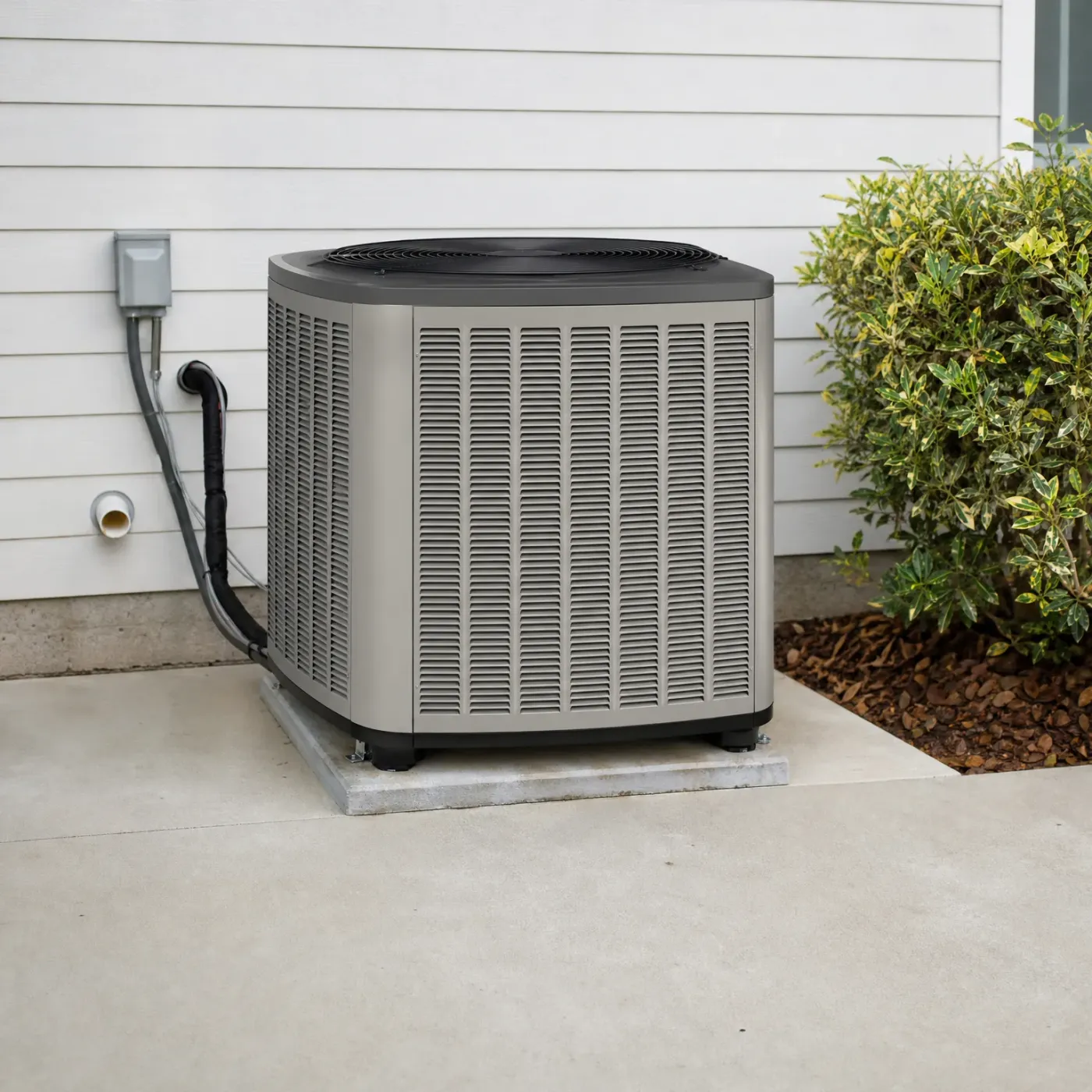
Running the way it should

A unit like this sits level on its pad, fan turning free, nothing touching the housing. Power comes in clean through the disconnect box, so the compressor starts without a struggle. Air moves through the coil instead of fighting through months of buildup.
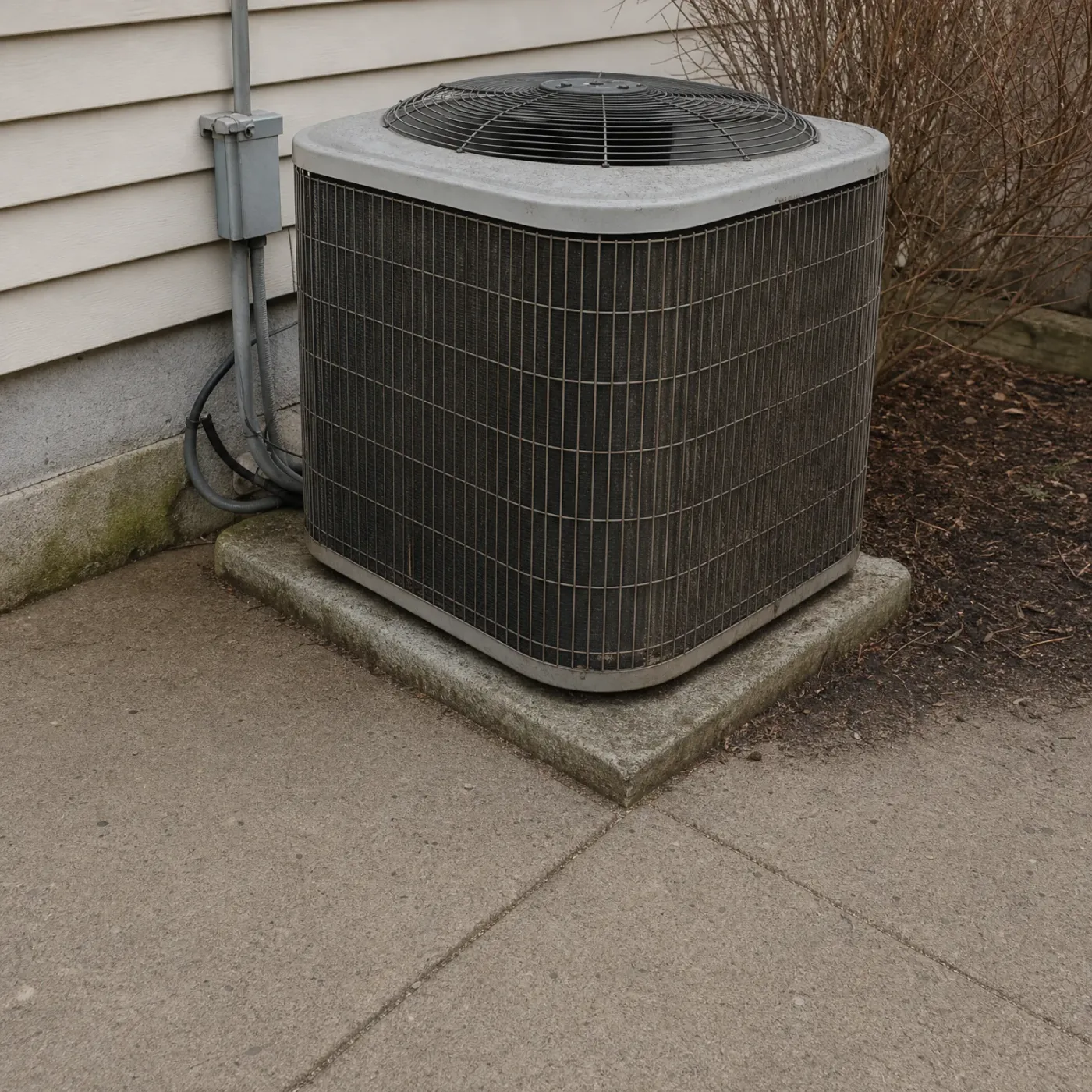
An outdoor air conditioning condenser unit on a concrete pad beside a house with light vinyl siding, an electrical disconnect box and conduit on the wall, bare shrubs and mulch to the right, and a concrete walkway in the foreground.

Something's working against it

Bare ground and no growth around the pad won't cause a buzz by themselves, but a unit left to run unchecked season after season often tells on itself this way. A loose mount, a tired capacitor, or a coil packed with grime makes the motor work harder than it should, and that strain is what you're hearing.
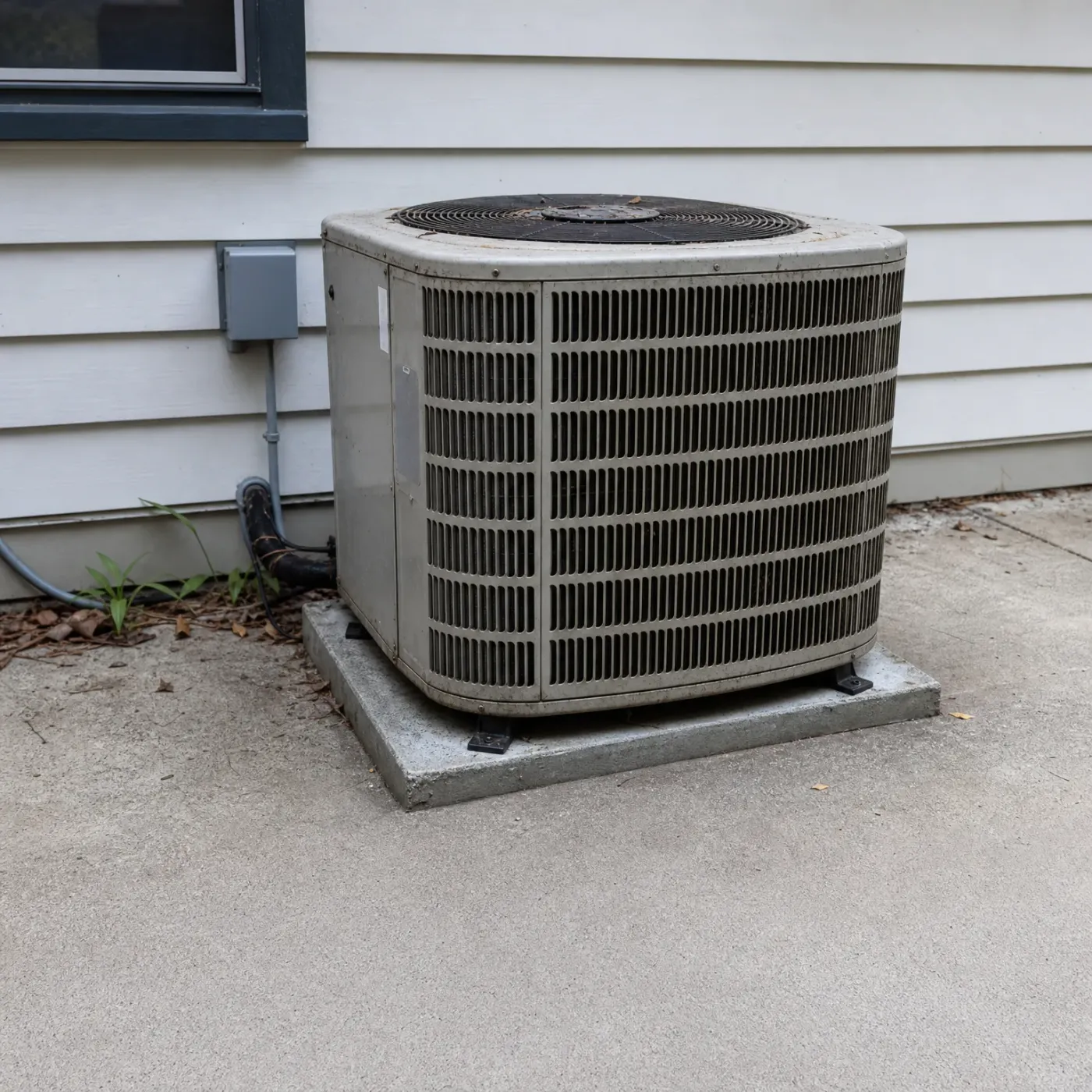
An outdoor air conditioner condenser unit on a concrete pad beside a house with light horizontal lap siding, with an electrical disconnect box and conduit on the wall behind it.
Before you get your air conditioner repair
An outdoor air conditioning condenser unit on a concrete pad beside a house with white horizontal lap siding, with an electrical disconnect box and insulated refrigerant line on the wall and a shrub over mulch to the right.
After you get your air conditioner repair
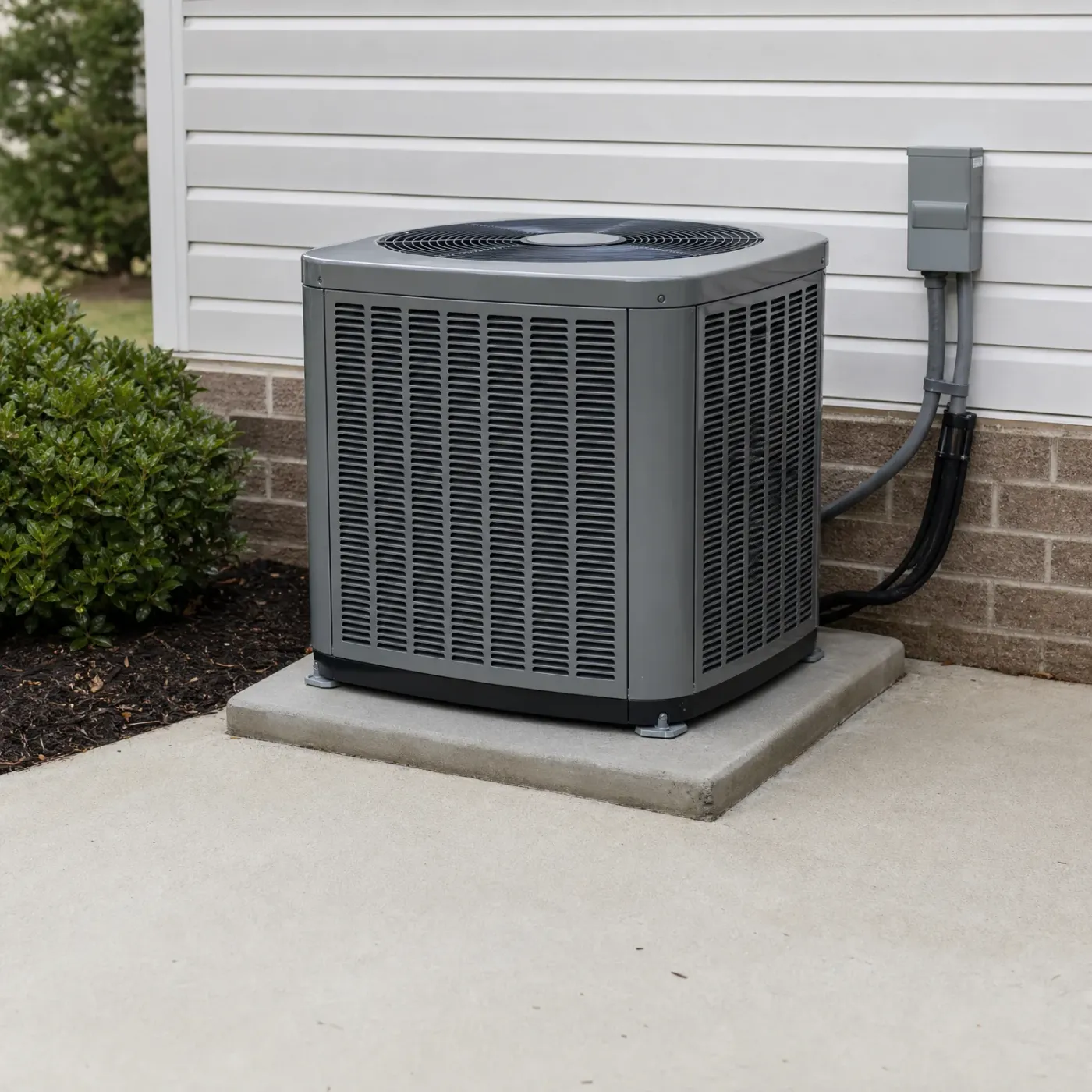
A gray outdoor air conditioner condenser unit on a concrete pad beside a house with white horizontal siding and a brick foundation, with a wall-mounted disconnect box and conduit, and a green shrub with mulch at left.

Clean unit, quiet run

Lines and conduit run straight from the unit to the disconnect box, nothing loose, nothing in the way. A pad like this, level and clear, lets the fan spin free and the compressor start without a fight. That's what a quiet cycle looks like from the outside.
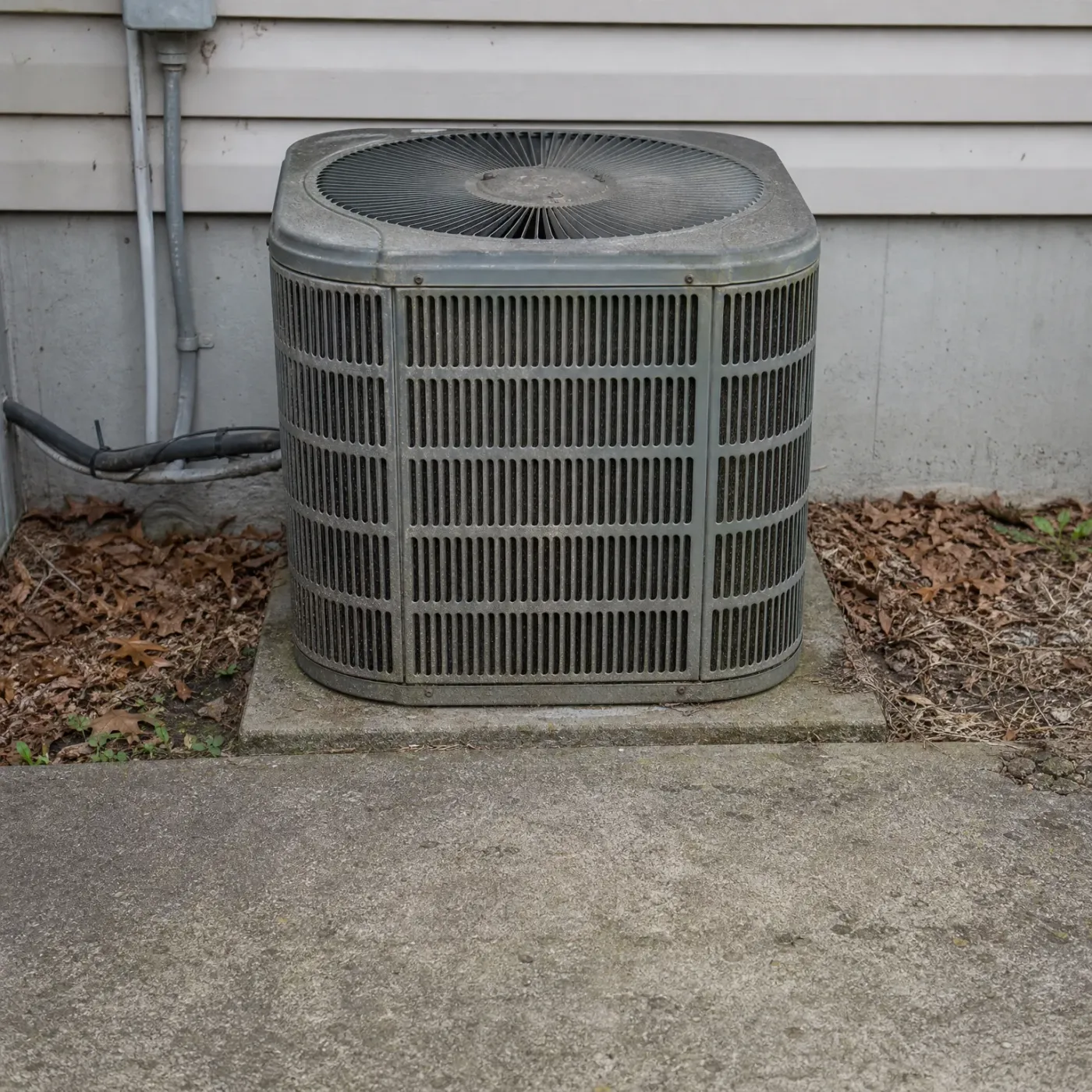
An outdoor air conditioning condenser unit on a concrete pad beside a house with white horizontal vinyl siding, with a gray electrical disconnect box and refrigerant lines on the wall behind it.

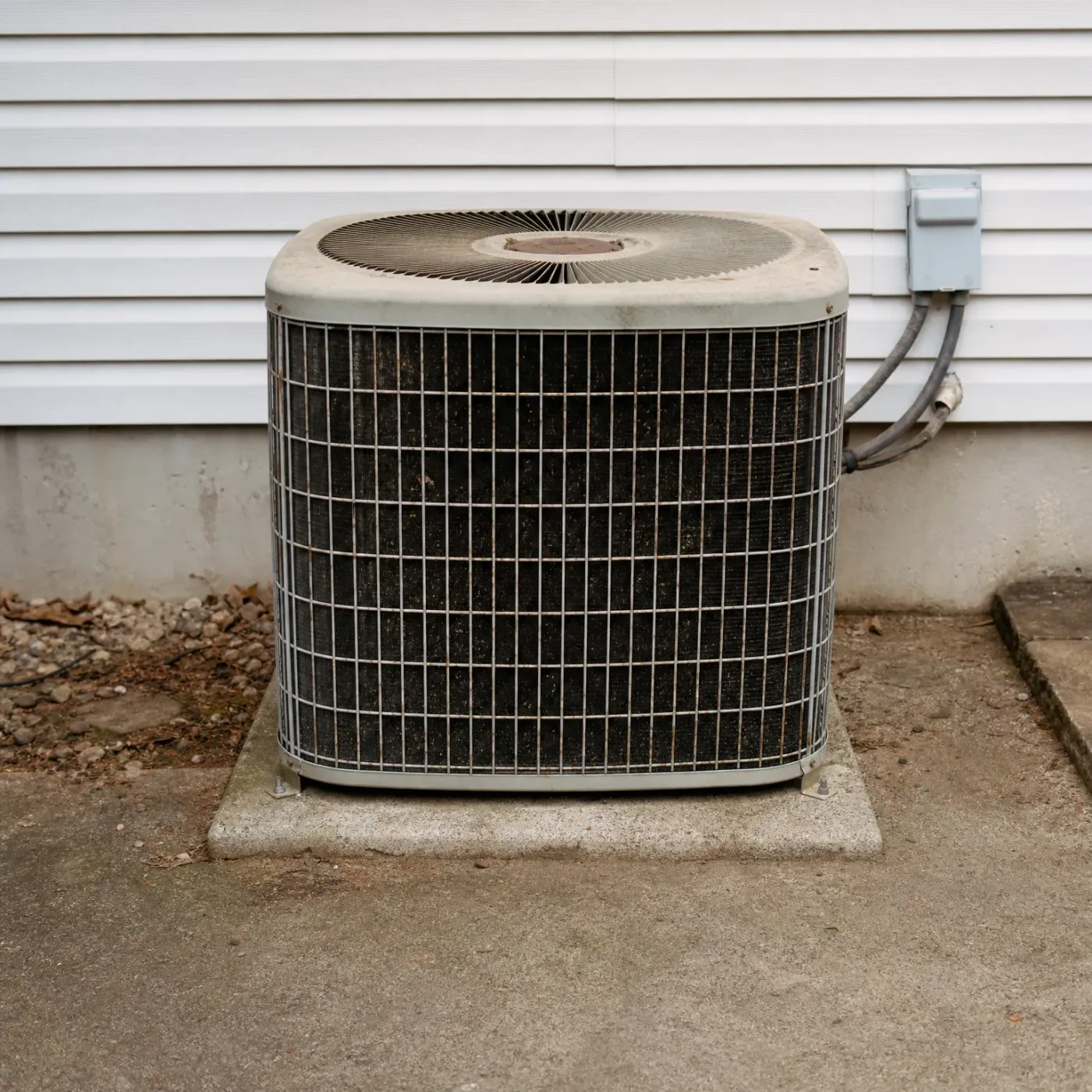
Grime packed into the grille

Dirt and grime cake the wire grille and top cover of this one, built up over seasons. That buildup blocks airflow across the coil, and the unit has to work harder to move the same air. A struggling compressor is often where the buzz starts.

Power costs 26.39 cents per kilowatt-hour statewide

At 26.39 cents per kilowatt-hour, your AC isn't a cheap thing to run flat out all summer. A compressor straining to start because of a weak capacitor pulls more power to do it, so that buzz is already costing you before it costs you a breakdown.

EIA-861 2025 statewide residential average

A buzz from your AC is your unit telling you something specific: a loose part, a weak capacitor, a compressor straining to start. None of that fixes itself, and none of it needs guesswork either, since a tech who services New York units all summer has heard this exact sound plenty of times and knows which part it usually is before the panel's even off. You get matched with one licensed New York contractor, not a handful of companies competing for your callback, so the person who shows up is the one who's going to actually look at your unit. Catch it now and it's a capacitor or a mount. Wait, and the compressor takes the hit instead. Either way, the buzz has already told you what it needed to.


A sunlit room corner with cream walls, white baseboard and window sill molding, a wood floor, and a dark wooden cabinet on the right holding a pale vase with leafy branches below a framed picture.
A round woven basket with a cream fringed throw draped over its rim sits in a corner on a wood floor, beside a dark wooden cabinet holding a stone vessel, with sunlight from a nearby window on the beige walls.
Interior corner of a room with a white-trimmed window and sill, beige walls, white baseboard molding, and a wood floor with sunlight falling across it; green foliage is blurred outside the window.
Interior corner of a room with cream walls, white baseboard molding, a window with a white sill showing blurred green foliage outside, and a wood plank floor lit by sunlight.
Sunlit interior corner showing a beige wall with a small crack above white baseboard molding, wood plank flooring, a patterned rug edge at lower left, and a window with sill at upper left.

An air conditioner pro near you

Your request stays with one local pro.

Connect with a pro

It costs nothing to send, and you don't have to hire anyone.