Tell us about the job
Takes about a minute. No obligation.
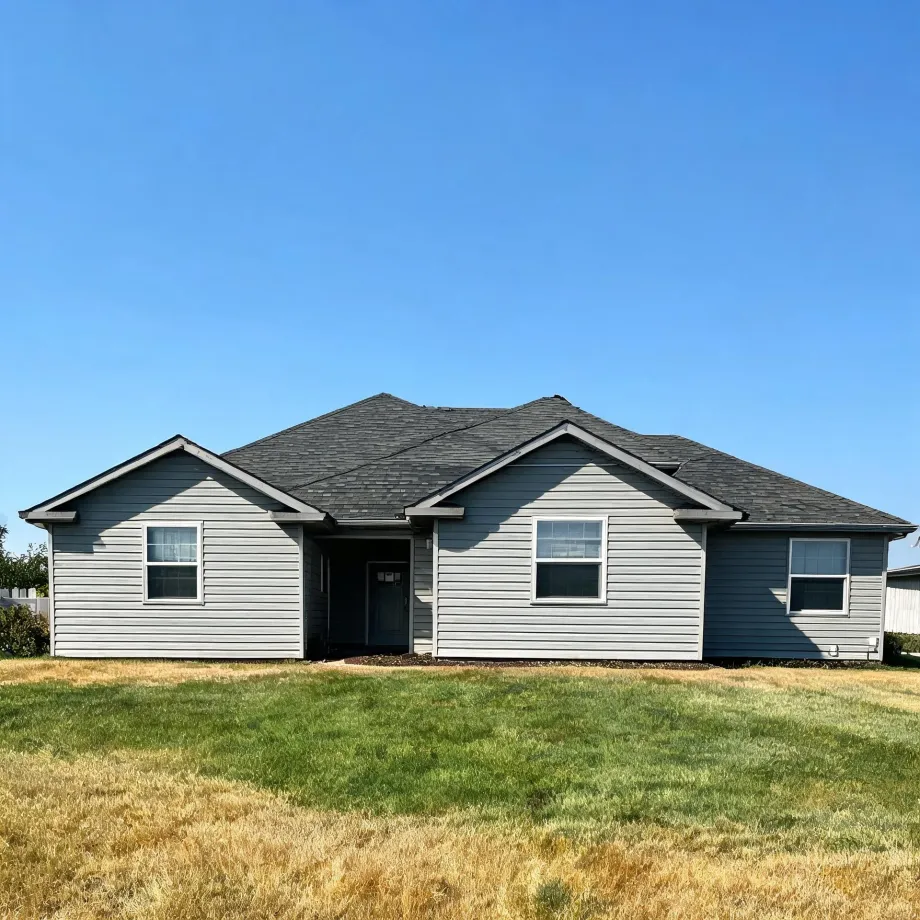
Sizing a central AC system here rewards a careful load calculation. Homes in Broome County, NY run cooling in a single month of the year, July. The compressor, the condenser fan, and the contactor each go from a standing start to full demand within a narrow window, and an undersized unit runs hard through that entire stretch without the slack of an early shoulder season to mask the gap. A contractor who skips the calculation and guesses from square footage puts a homeowner in a position where the first sign of trouble arrives deep into the only month the system is asked to work.
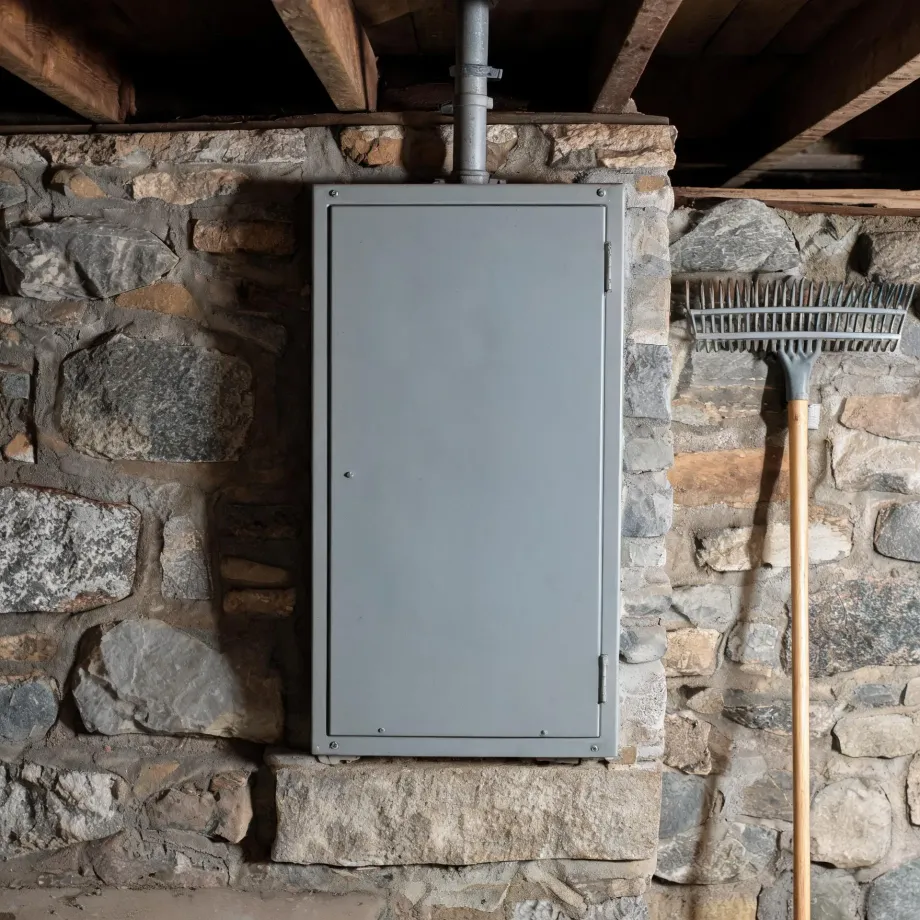
Ductwork sized and routed for an older heating system is what a contractor opens the walls to find in a lot of Broome County houses. Half the homes in Broome County, New York were built in 1958 or earlier (2020-2024 ACS 5-year). That history matters for installation because ductwork built around one kind of system frequently cannot move the air volume a modern central AC unit needs without modification. The electrical panel is a second check: service capacity put in for an earlier era of appliances may fall short of what a new unit draws. Both are physical facts about the house, and both have to be confirmed before any equipment gets priced.
What Gets Installed With a New Central AC
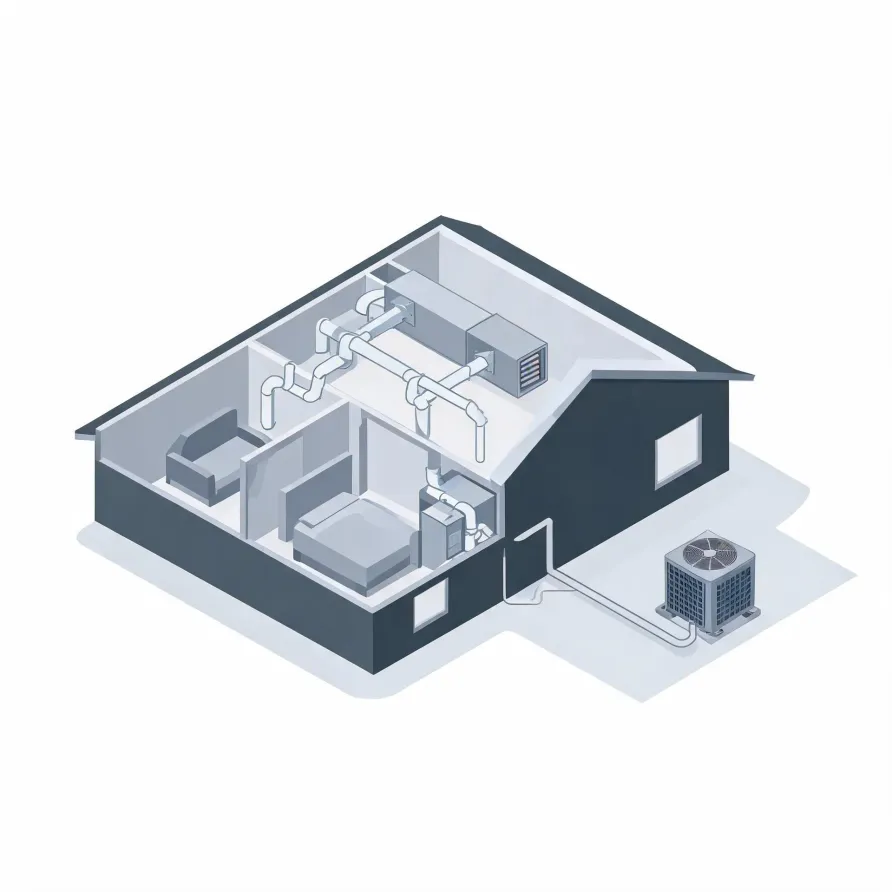
The outdoor condenser unit sits outside the house, usually on a concrete pad at ground level, and holds the compressor and condenser coil. Inside, the air handler mounts in a utility closet, basement, or attic and contains the evaporator coil and blower that push conditioned air through the house.
The refrigerant lines run between the two units, carrying refrigerant back and forth through a set of insulated copper pipes that pass through the wall. A thermostat goes on an interior wall and gives the homeowner control over the whole system.
The drawing shows the general layout of a central AC system, and a licensed contractor determines what applies to this particular house.
Get matched in Broome CountyBroome County, by the numbers
314 severe weather events were recorded in Broome County, New York between 2015 and 2024.
NOAA National Centers for Environmental Information, Storm Events Database, bulk CSV export, events 2015-01-01 through 2024-12-31.Half the homes in Broome County, New York were built in 1958 or earlier (2020-2024 ACS 5-year).
U.S. Census Bureau, 2020-2024 American Community Survey 5-Year EstimatesBroome County, New York holds 93,164 housing units (2020-2024 ACS 5-year).
U.S. Census Bureau, 2020-2024 American Community Survey 5-Year EstimatesOwners occupy 64.5% of the occupied homes in Broome County, New York (2020-2024 ACS 5-year).
U.S. Census Bureau, 2020-2024 American Community Survey 5-Year EstimatesRules & Standards for Central AC Installation in Broome County, New York8 sourced rules and standards
What the Installation Actually Looks Like
Split-system central air conditioners rated below 45,000 Btu/h manufactured on or after January 1, 2023 must meet a federal minimum of 13.4 SEER2.
Split-system central air conditioners rated at or above 45,000 Btu/h manufactured on or after January 1, 2023 must meet a federal minimum of 13.4 SEER2.
Split-system central air conditioners manufactured between January 1, 2015 and December 31, 2022 had to meet 13 SEER, the metric that preceded SEER2.
Single-package central air conditioners manufactured on or after January 1, 2023 must meet a federal minimum of 13.4 SEER2.
Space-constrained central air conditioners manufactured on or after January 1, 2023 must meet a federal minimum of 11.7 SEER2.
Federal efficiency standards for split-system central air conditioners and heat pumps are set on each certified combination of outdoor unit and indoor coil rather than on the outdoor unit alone.
Residential and light commercial air conditioning and heat pump systems assembled in the field, including mini-splits and unitary systems, may not be installed on or after January 1, 2025 using a refrigerant with a global warming potential above 700.
A field-assembled system whose specified components were all manufactured or imported before January 1, 2025 carries no installation compliance date under the refrigerant restrictions and may still be installed.
Severe Weather Events in Broome County
Extreme weather puts real strain on cooling equipment, shortening its working life and exposing sizing decisions that looked fine on paper. What a system needs to handle in Broome County shapes what a contractor should install here.
314 severe weather events, 2015–2024. Source: NOAA National Centers for Environmental Information, Storm Events Database.