Tell us about the job
Takes about a minute. No obligation.

A compressor that runs for a single month, then sits cold until the following summer, develops failure modes a constantly cycling system rarely sees. Seals dry out. Contacts corrode. Homes in Montgomery County, NY run cooling in a single month of the year, July. When a contractor opens a unit on the first hot day of the season, what they find often traces back to that long idle stretch rather than to anything that happened while the system was running. Refrigerant loss, contactor pitting, and capacitor drift all progress during the off months, not through runtime.
Prewar housing carries a repair history that shows up inside the unit, not on the permit. Half the homes in Montgomery County, New York were built in 1944 or earlier (2020-2024 ACS 5-year). A central AC system in a house that old has often been the second or third mechanical tenant of the same ductwork, and each generation of equipment runs against conditions the previous one left behind: accumulated debris, imperfect fits, and parts stressed by a system they were never quite sized for. When a contractor opens the unit, what matters is whether the components inside are still manufactured. In stock this old, that question has a real chance of complicating the job.
The Parts of a Central AC a Contractor Checks First
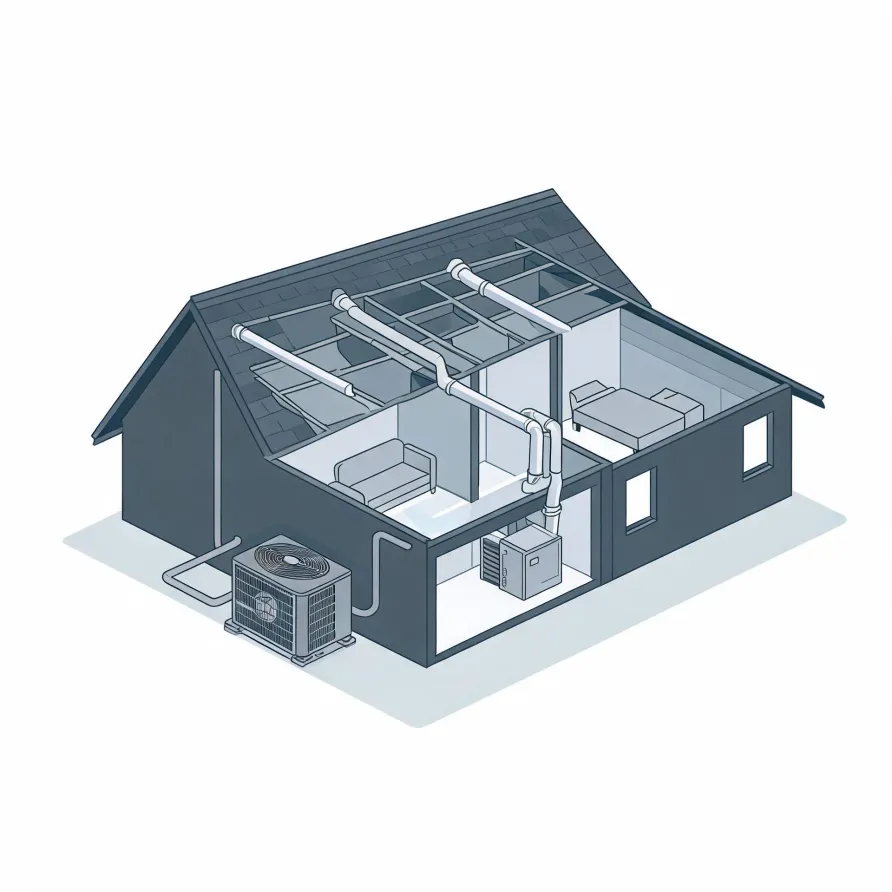
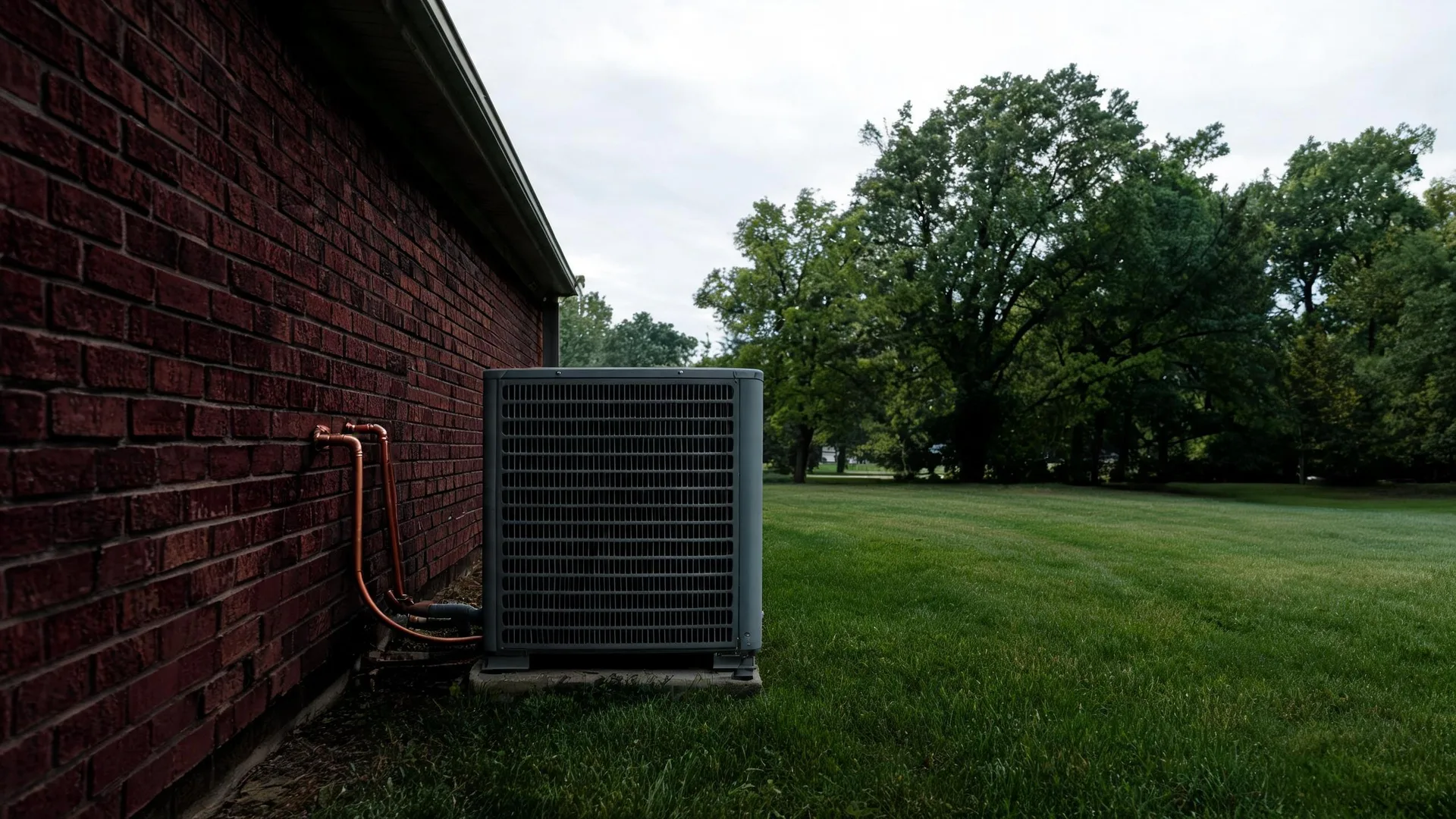
The outdoor condenser unit sits outside the house, usually on a concrete pad at ground level, and it carries the compressor and the condenser coil. These are the pieces a contractor reaches first when a system stops cooling, because the compressor does the hardest mechanical work and the condenser coil sheds heat to the outside air.
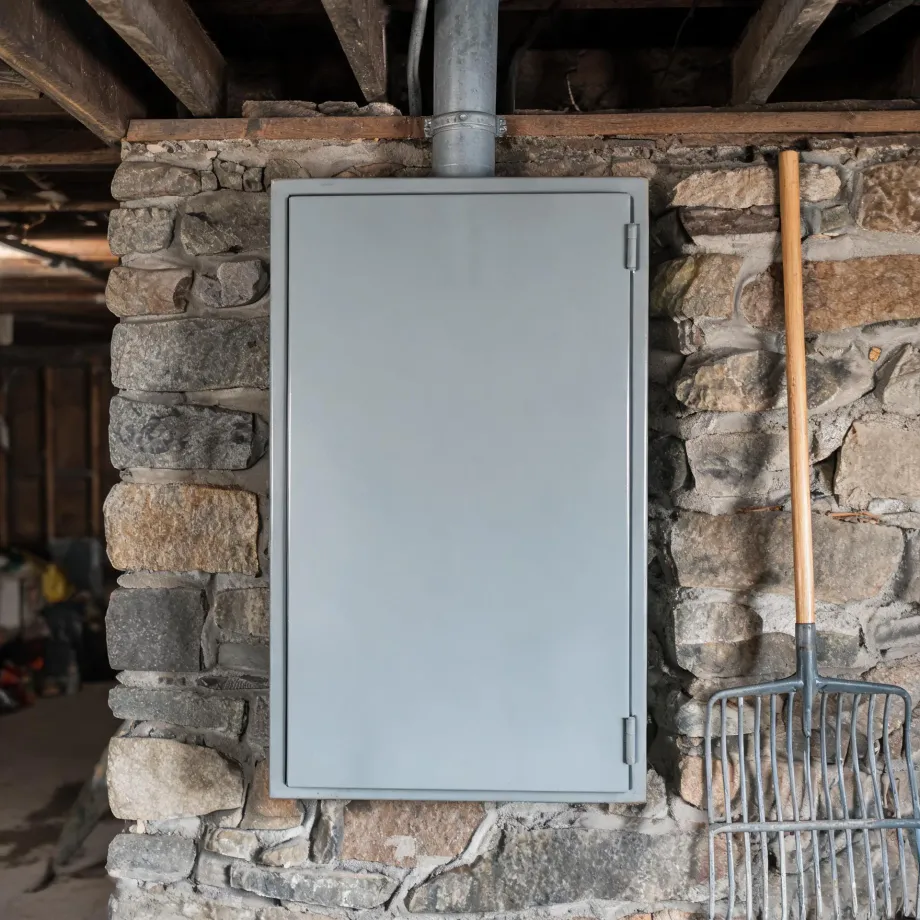
Inside the house, the air handler holds the evaporator coil and the blower fan, typically in a basement, attic, or dedicated closet. The air handler draws warm air across the evaporator coil and pushes conditioned air back through the supply registers. The refrigerant line set connects both units, and a contractor checks it alongside the coils whenever a system is underperforming.
The drawing shows the general layout of a central AC system, and a licensed contractor determines what applies to this particular house.
Get matched in Montgomery CountyMontgomery County, New York, by the numbers
208 severe weather events were recorded in Montgomery County, New York between 2015 and 2024.
NOAA National Centers for Environmental Information, Storm Events Database, bulk CSV export, events 2015-01-01 through 2024-12-31.Half the homes in Montgomery County, New York were built in 1944 or earlier (2020-2024 ACS 5-year).
U.S. Census Bureau, 2020-2024 American Community Survey 5-Year EstimatesMontgomery County, New York holds 22,981 housing units (2020-2024 ACS 5-year).
U.S. Census Bureau, 2020-2024 American Community Survey 5-Year EstimatesOwners occupy 70.4% of the occupied homes in Montgomery County, New York (2020-2024 ACS 5-year).
U.S. Census Bureau, 2020-2024 American Community Survey 5-Year EstimatesRules & Standards Behind Central AC Repair in Montgomery County, New York8 sourced rules and standards
What HVAC Repair Looks Like in Montgomery County
Split-system central air conditioners rated below 45,000 Btu/h manufactured on or after January 1, 2023 must meet a federal minimum of 13.4 SEER2.
Split-system central air conditioners rated at or above 45,000 Btu/h manufactured on or after January 1, 2023 must meet a federal minimum of 13.4 SEER2.
Split-system central air conditioners manufactured between January 1, 2015 and December 31, 2022 had to meet 13 SEER, the metric that preceded SEER2.
Single-package central air conditioners manufactured on or after January 1, 2023 must meet a federal minimum of 13.4 SEER2.
Space-constrained central air conditioners manufactured on or after January 1, 2023 must meet a federal minimum of 11.7 SEER2.
Federal efficiency standards for split-system central air conditioners and heat pumps are set on each certified combination of outdoor unit and indoor coil rather than on the outdoor unit alone.
Residential and light commercial air conditioning and heat pump systems assembled in the field, including mini-splits and unitary systems, may not be installed on or after January 1, 2025 using a refrigerant with a global warming potential above 700.
A field-assembled system whose specified components were all manufactured or imported before January 1, 2025 carries no installation compliance date under the refrigerant restrictions and may still be installed.
Severe Weather in Montgomery County
Weather events put direct stress on cooling equipment: hard starts after outages, sustained runs through heat, and the slow wear that builds up over a season. How much of that your system absorbs depends on what the local climate actually delivers.
208 severe weather events, 2015–2024. Source: NOAA National Centers for Environmental Information, Storm Events Database.