Tell us about the job
Takes about a minute. No obligation.
Central AC in St. Lawrence County spends its entire life on standby. Homes in St. Lawrence County, NY have essentially no cooling season — no month of the year is warm enough to call for it. Seals dry out, contactors corrode, and refrigerant circuits develop slow leaks not from running hard but from sitting still, year after year, in a house that never needed them. When a system finally does fail here, a contractor checks the condition of components that were never worked rather than ones that were worn down by use. Rubber degrades on a shelf the same as in service, and an idle coil left damp collects mold faster than a working one dries itself out.
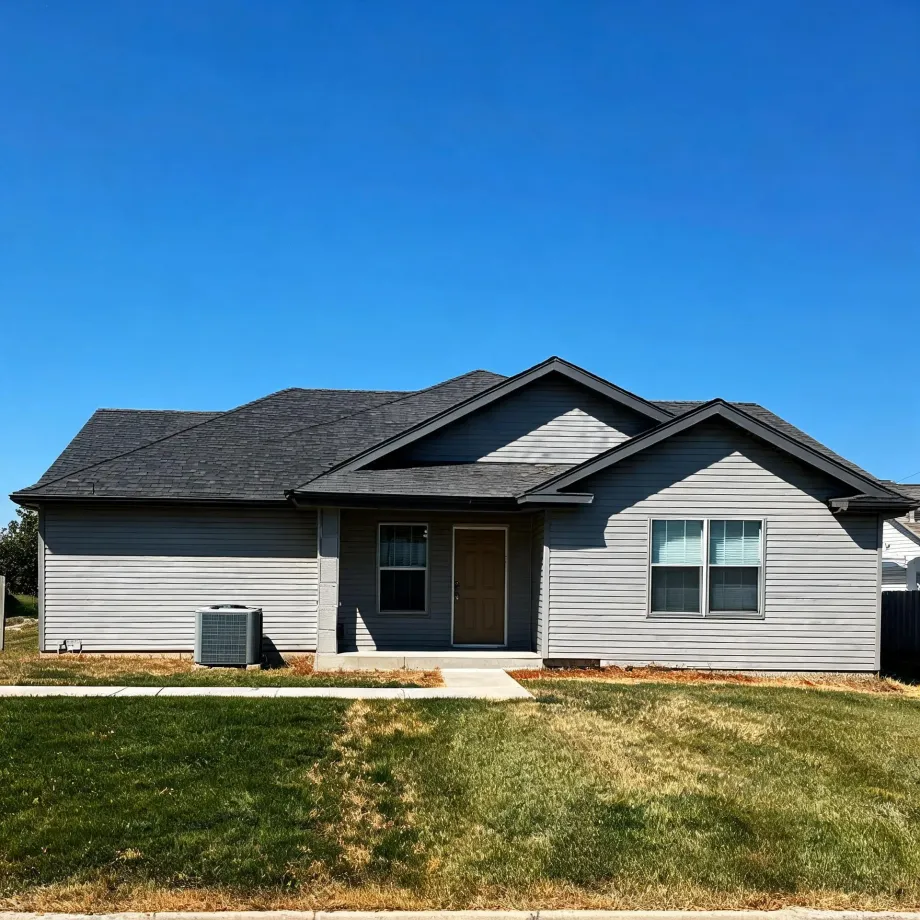
Ductwork laid down for a furnace and a boiler carries a history that shows up once a contractor opens the system. Cracks, collapsed flex runs, and joints that have separated over the years affect how the whole AC system performs, and a repair call often surfaces them. Half the homes in St. Lawrence County, New York were built in 1964 or earlier (2020-2024 ACS 5-year). That span of time is long enough that the central AC equipment in most of these houses is a retrofit, not what the ductwork was designed around, and the condition of those ducts decides whether a repair holds or keeps failing. A contractor who finds a refrigerant or compressor fault still has to account for what the duct system delivers to the rest of the house.
The Parts of a Central AC a Contractor Checks First
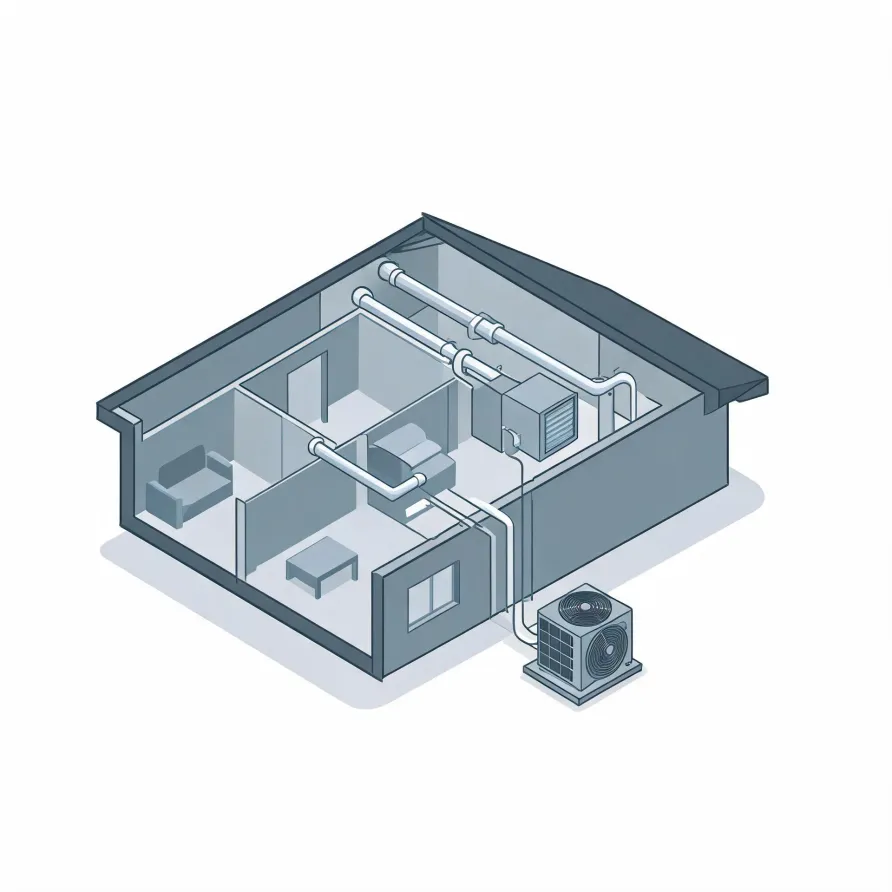
The outdoor condenser unit sits outside the house, usually on a concrete pad beside the foundation, and it carries the compressor and the condenser coil. These are where a contractor starts. A failed compressor, a refrigerant leak at the coil, or a seized condenser fan motor will each stop the system cold, and a contractor can usually tell which one within the first few minutes of a visit.
Inside the house, the air handler holds the evaporator coil and the blower motor. The evaporator coil sits in the airstream above or alongside the furnace or in a dedicated cabinet, and the blower pushes conditioned air through the house. The refrigerant line set runs between the two units, and a faulty expansion valve or a blocked line is often what separates a coil problem from a compressor problem.
The drawing shows the typical layout of these components, and a licensed contractor determines what applies to the specific equipment and configuration in your home.
Get matched in St. Lawrence CountySt. Lawrence County, by the numbers
222 severe weather events were recorded in St. Lawrence County, New York between 2015 and 2024.
NOAA National Centers for Environmental Information, Storm Events Database, bulk CSV export, events 2015-01-01 through 2024-12-31.Half the homes in St. Lawrence County, New York were built in 1964 or earlier (2020-2024 ACS 5-year).
U.S. Census Bureau, 2020-2024 American Community Survey 5-Year EstimatesSt. Lawrence County, New York holds 51,970 housing units (2020-2024 ACS 5-year).
U.S. Census Bureau, 2020-2024 American Community Survey 5-Year EstimatesOwners occupy 71.9% of the occupied homes in St. Lawrence County, New York (2020-2024 ACS 5-year).
U.S. Census Bureau, 2020-2024 American Community Survey 5-Year EstimatesCodes & Standards Governing Central AC Repair in St. Lawrence County, New York8 sourced rules and standards
What HVAC Repair Looks Like in St. Lawrence County
Split-system central air conditioners rated below 45,000 Btu/h manufactured on or after January 1, 2023 must meet a federal minimum of 13.4 SEER2.
Split-system central air conditioners rated at or above 45,000 Btu/h manufactured on or after January 1, 2023 must meet a federal minimum of 13.4 SEER2.
Split-system central air conditioners manufactured between January 1, 2015 and December 31, 2022 had to meet 13 SEER, the metric that preceded SEER2.
Single-package central air conditioners manufactured on or after January 1, 2023 must meet a federal minimum of 13.4 SEER2.
Space-constrained central air conditioners manufactured on or after January 1, 2023 must meet a federal minimum of 11.7 SEER2.
Federal efficiency standards for split-system central air conditioners and heat pumps are set on each certified combination of outdoor unit and indoor coil rather than on the outdoor unit alone.
Residential and light commercial air conditioning and heat pump systems assembled in the field, including mini-splits and unitary systems, may not be installed on or after January 1, 2025 using a refrigerant with a global warming potential above 700.
A field-assembled system whose specified components were all manufactured or imported before January 1, 2025 carries no installation compliance date under the refrigerant restrictions and may still be installed.
Severe Weather Events in St. Lawrence County
Weather in St. Lawrence County puts real hours on cooling equipment. Every storm, temperature swing, and pressure spike is a load the system has to handle, and how that load accumulates over time shapes what repair work looks like here.
222 severe weather events, 2015–2024. Source: NOAA National Centers for Environmental Information, Storm Events Database.